
Riddhish Herbals
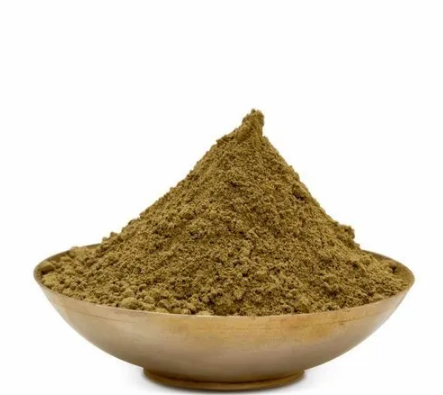
Balchaturbhadra Churna (Bala Chaturbhadra) – Classical Four-Herb Kaumarbhritya Powder – Riddhish Herbals – 100g
Balchaturbhadra Churna (Bala Chaturbhadra) – Classical Four-Herb Kaumarbhritya Powder – Riddhish Herbals – 100g
Couldn't load pickup availability
Balchaturbhadra Churna by Riddhish Herbals is a classical Ayurvedic four-herb (chatur = four) Kaumarbhritya powder combining Musta (Cyperus rotundus), Pippali (Piper longum), Ativisha (Aconitum heterophyllum) and Karkatashringi (Pistacia integerrima). It is traditionally used in classical Ayurvedic paediatric (Kaumarbhritya) care to support Agni (digestive fire) and general childhood wellness, given under the guidance of a qualified Ayurvedic physician.
About Balchaturbhadra Churna
Balchaturbhadra literally reads as Bala (child) joined to Chaturbhadra — the “four auspicious” herbs. It is one of the most quietly relied-upon powders in the Kaumarbhritya (paediatric) branch of Ayurveda, kept in many Gujarati households on a Vaidya’s advice.
Riddhish Herbals sources this as a classical four-herb blend in a convenient 100g pack. The formula is gentle by design — four well-matched dravyas rather than a long, heavy list — which is exactly why classical texts placed it in a child’s daily care routine.
Traditional Ayurvedic Importance
Classical Kaumarbhritya literature (Ashtanga Hridaya, Uttarasthana — Balopacharaniya; and Bhaishajya Ratnavali, Balaroga Chikitsa) places Balchaturbhadra in the context of Agnimandya (weak digestive fire), Kasa (cough) and Jwara (fever states) of childhood — always as a physician-directed supportive measure, never a self-administered remedy.
Musta is a classical Grahi and Deepana-Pachana dravya. Pippali is the well-known Vata-Kapha balancing fruit and a Rasayana carrier. Ativisha (the classical, edible Aconitum heterophyllum, the species used in Ayurvedic paediatrics) is valued for Agni support, and Karkatashringi has a long record in childhood Kasa and Agni care. Together they read as a single balanced action.
Key Features
- Classical four-herb Kaumarbhritya blend — Musta, Pippali, Ativisha and Karkatashringi in the traditional equal proportion.
- Deepana–Pachana focus — traditionally used to support Agni (digestive fire) and general childhood wellness.
- Gentle by design — four well-matched dravyas rather than a long, heavy list.
- Physician-guided — the dose for a child is set by the Vaidya, matched to age, Agni and constitution.
- Sourced by Riddhish Herbals — genuine product, bill provided, since 2015; 100g pack.
Research on the Constituents
◆ Cyperus rotundus (Musta), a principal herb of this blend, has been reviewed for its traditionally recognised digestive and carminative actions in a peer-reviewed ethnopharmacology survey — (Pirzada AM et al., 2015 — Journal of Ethnopharmacology 174:540-560; PMID 26297840).
Results were observed under study conditions. Individual results may vary. This is shared for general educational interest and is not a medical claim. Consult your Ayurvedic physician before use.
Composition — Classical Four Herbs (equal parts)
| Sanskrit / Common | Botanical | Part Used | Proportion |
|---|---|---|---|
| Musta (Nagarmotha) | Cyperus rotundus | Rhizome | Equal part |
| Pippali | Piper longum | Fruit | Equal part |
| Ativisha (Atis) | Aconitum heterophyllum | Root | Equal part |
| Karkatashringi | Pistacia integerrima | Gall | Equal part |
Classical equal-proportion (sama bhaga) formulation, with the exact ratios and base as declared on the physical label.
How to Use
As directed by a qualified Ayurvedic physician. For children, the dose is determined by the physician according to the child’s age, Agni and constitution — no fixed dose is printed here by design. It is traditionally taken with madhu (honey) or warm water as anupan (vehicle).
Who Can Use It
Traditionally used within classical Ayurvedic paediatric (Kaumarbhritya) care, always under physician guidance. Pregnant or lactating women, and anyone managing a health condition or on medication, should consult a qualified Ayurvedic physician before use. Not for self-administration in children.
Safety Information
Use under the guidance of a qualified Ayurvedic physician, especially for children. Ativisha here is the classical, edible species (Aconitum heterophyllum) traditionally used in Ayurvedic paediatrics — it is not a garden aconite, and the difference is why a Vaidya selects and doses the formula. Keep the pack out of reach of children and stored safely. Results may vary from person to person.
Storage
Store in a cool, dry place in an airtight container, away from direct sunlight and moisture. Use a clean, dry spoon to keep the powder free of damp.
Frequently Asked Questions
What is Balchaturbhadra Churna?
It is a classical Ayurvedic four-herb (chaturbhadra) Kaumarbhritya powder — Musta, Pippali, Ativisha and Karkatashringi — traditionally used in physician-guided paediatric care to support Agni and general childhood wellness.
Which four herbs does it contain?
Musta (Cyperus rotundus, rhizome), Pippali (Piper longum, fruit), Ativisha (Aconitum heterophyllum, root) and Karkatashringi (Pistacia integerrima, gall), in the classical equal proportion.
What are its other names?
It is also written as Bala Chaturbhadra, Balchaturbhadrika or Balachaturbhadra Churna. “Bala” means child and “Chaturbhadra” means the four auspicious herbs.
Can I give it to my child without consulting a doctor?
No. This is a physician-guided Kaumarbhritya formulation; the right dose depends on the child’s age, Agni and constitution. Always use it under a qualified Ayurvedic physician’s direction.
Is this AYUSH- or GMP-made?
It is sourced and packed by Riddhish Herbals as a classical raw churna blend. Any AYUSH or GMP mark would appear on the physical pack — please read the pack; we state such marks only where verified.
What is the traditional anupan (vehicle)?
Classically it is given with madhu (honey) or warm water. The exact anupan and quantity for a child are chosen by the attending Vaidya.
How is Riddhish Herbals’ churna different?
You get a genuine product with a proper bill, doctor-guided selection, and the reliability of a store serving Gujarat since 2015 across 4000+ Ayurvedic products and 130+ trusted brands.
Has any of its herbs been studied scientifically?
Yes — Musta (Cyperus rotundus), a principal herb, has been reviewed in peer-reviewed ethnopharmacology literature for its traditionally recognised digestive and carminative actions (Pirzada AM et al., 2015; PMID 26297840). Results may vary; this is educational, not a medical claim.
How should I store it?
Keep it in a cool, dry, airtight container away from sunlight and moisture, and use a dry spoon.
Related at Riddhish Herbals
Ativisha Churna (Atis) · Bala Churna (Bariyar) · Bahufali Churna (Chaksu) · Baheda Akha (Bibhitaki) · All Ayurvedic Raw Herbs