
Riddhish Herbals
Chankabab (Kababchini / Cubeb Pepper) – Piper cubeba – Riddhish Herbals – 100g
Chankabab (Kababchini / Cubeb Pepper) – Piper cubeba – Riddhish Herbals – 100g
Couldn't load pickup availability
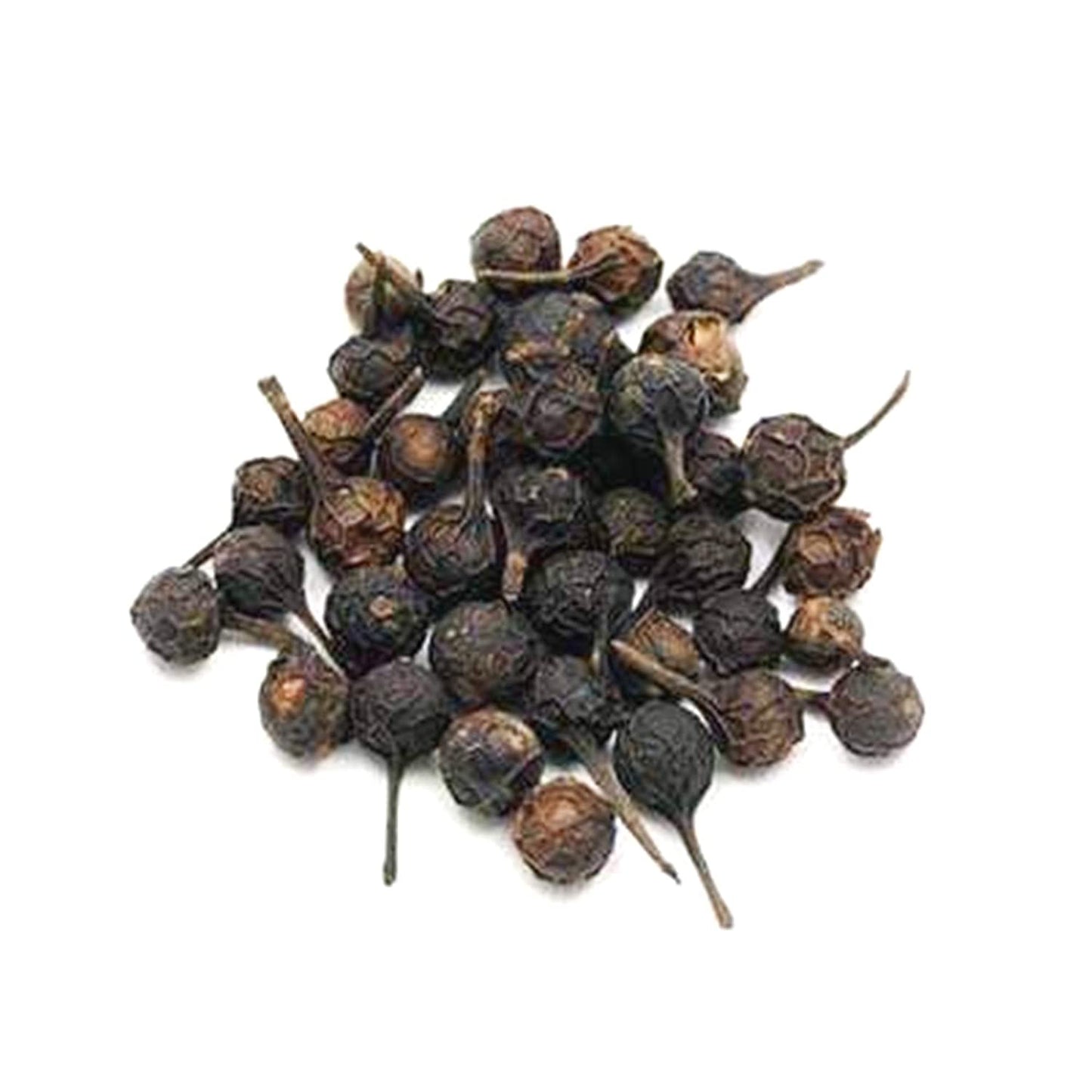
Chankabab from Riddhish Herbals is cubeb pepper (Piper cubeba) — the classical Ayurvedic aromatic known as Kankola or Kababchini. A fragrant ‘tailed pepper’ and cousin of black pepper, it is classically described as Katu (pungent), warming and Kaphahara (Kapha-settling), and is traditionally valued as a Deepana (digestive) and mouth-freshening (mukha-vaishadya) spice. A published study characterised the essential-oil constituents of its fruit. Each pack is genuine, bill-provided material from a doctor-guided store operating since 2015.
About Chankabab (Cubeb Pepper / Kababchini)
Chankabab is the Indian name for cubeb pepper, Piper cubeba — a small, aromatic ‘tailed pepper’ classically called Kankola. Closely related to black pepper (Piper nigrum), it has its own distinct, warm, slightly bitter-camphoraceous fragrance.
Riddhish Herbals supplies it as a clean single-material spice-herb under our doctor-guided selection standard, with a bill on every order. It is best known as a Kaphahara and mouth-freshening aromatic in the classical tradition.
Traditional Ayurvedic Importance
Classical Nighantu literature (Bhavaprakasha Nighantu, Karpuradi Varga) places Kankola among the fragrant Katu (pungent) dravyas and describes it as warming, Kaphahara (Kapha-settling), Deepana (kindling Agni) and mukha-vaishadyakara — valued for oral and throat freshness.
In classical practice it sits with the aromatic Kapha-balancing spices, taken in small amounts and often chewed or powdered for a clean, fresh mouth. A Vaidya matches the amount and the anupana to each person, which is why it is offered here for physician-guided use.
Key Features
- Pure cubeb pepper: single-material Piper cubeba (Kankola / Kababchini) dried fruit, nothing added.
- The classical Kankola: the classical Ayurvedic aromatic named Kankola in the Nighantus.
- Katu & Kaphahara: pungent and warming, classically described as Kapha-settling.
- Mukha-vaishadya: traditionally valued as a natural mouth-freshening and throat-comforting spice.
- Aromatic tailed pepper: a cousin of black pepper with its own distinct fragrant profile.
- Genuine, doctor-guided sourcing: bill provided with every pack; a store trusted since 2015.
Research on the Constituents
◆ A study characterised the essential-oil constituents and antioxidant activity of Piper cubeba L. fruit — (Alminderej F et al., 2020 — Plants (Basel)). PubMed PMID: 33182768
Results were observed under study conditions. Individual results may vary. This is shared for general educational interest and is not a medical claim. Consult your Ayurvedic physician before use.
Ingredients (single-material, label-verified)
| Ingredient | Botanical (part) | Plant Part | Proportion |
|---|---|---|---|
| Chankabab / Kankola (cubeb) | Piper cubeba L.f. (Piperaceae) | Dried fruit | 100% single material |
Single-material genuine cubeb pepper (Piper cubeba) dried fruit. No fillers, colours or preservatives added. A fragrant classical spice-herb. Confirm details against the physical pack label.
How to Use
As directed by your Ayurvedic physician. A common traditional reference is about 1–3 g of the powder with honey or warm water, once or twice daily, or as a mouth-freshening aromatic. The quantity and anupan are matched to you by a qualified Vaidya.
Who Can Use It
Generally suited to adults using it as a classical aromatic spice within a physician-guided routine. Consult a qualified Ayurvedic physician before use if you are pregnant, lactating, on any medication, or managing a health condition. Give to children only on a physician's advice.
Safety Information
Chankabab is a warming aromatic spice best used in small, culinary-to-medicinal amounts on the advice of a qualified Ayurvedic physician. Being Ushna (warming) it is used modestly by those with high Pitta or a sensitive stomach. If you are pregnant, lactating, on medication, or managing any condition, consult your physician before use. Keep out of reach of children. Results may vary from person to person.
Storage
Store in a cool, dry place in an airtight container away from moisture and direct sunlight to preserve the aroma. Keep the pack tightly closed after each use.
Frequently Asked Questions
What is Chankabab?
Chankabab is cubeb pepper (Piper cubeba) — the classical Ayurvedic aromatic Kankola or Kababchini, a fragrant ‘tailed pepper’ valued as a Kaphahara and mouth-freshening spice.
What are the alternate names of Chankabab?
It is Kankola or Kakkola (Sanskrit), Kababchini or Sheetalchini (Hindi), Chanakbab (Gujarati), Val Milagu (Tamil), Toka Miriyalu (Telugu) and Balamenasu (Kannada); in English cubeb, tailed pepper or Java pepper. Botanically Piper cubeba.
How is Chankabab different from black pepper?
Both are true peppers, but cubeb (Piper cubeba) is the ‘tailed pepper’ with a small stalk and a distinct warm, camphoraceous aroma, while black pepper is Piper nigrum. They are related but different spices.
How is it traditionally used?
Classically it is taken as about 1–3 g of powder with honey or warm water, or chewed as a mouth-freshening aromatic, as advised by your Ayurvedic physician.
What are its classical properties?
Bhavaprakasha Nighantu describes Kankola as Katu (pungent), warming, Kaphahara (Kapha-settling), Deepana (digestive) and mukha-vaishadyakara (mouth-freshening).
Is this AYUSH- or GMP-made?
This is a raw single-herb cubeb powder in Riddhish Herbals' own pack. Any AYUSH or GMP mark would appear on the physical pack — we state such marks only where verified on the pack.
Can pregnant women or children take it?
Being a warming spice, it is best used by pregnant or lactating women only on the advice of a qualified Ayurvedic physician, and given to children only on a physician's direction.
Has Piper cubeba been studied scientifically?
Yes — a study characterised the essential-oil constituents and antioxidant activity of its fruit (Alminderej F et al., 2020, Plants). This is shared for general educational interest, not as a medical claim.
How should I store Chankabab?
Keep it in a cool, dry, airtight container away from moisture and sunlight to preserve the aroma, and use a clean, dry spoon.
Regional Names & Spelling Variants
| Language | Name |
|---|---|
| Local / common | Kababchini / Chanakbab (ચણકબાબ / कबाबचीनी) |
| Sanskrit | Kankola, Kakkola, Kosphala (कङ्कोल) |
| Hindi | Kababchini, Sheetalchini (कबाबचीनी / शीतलचीनी) |
| Gujarati | Chanakbab / Kababchini (ચણકબાબ) |
| Marathi | Kababchini (romanised) |
| Bengali | Kababchini / Kabab chini (romanised) |
| Tamil | Val Milagu / Vaal Milagu (romanised) |
| Telugu | Toka Miriyalu / Chalava Miriyalu (romanised) |
| Kannada | Balamenasu / Bala Menasu (romanised) |
| Malayalam | Val Mulaku / Cheenamulaku (romanised) |
| English + Botanical | Cubeb / Tailed Pepper / Java Pepper — Piper cubeba L.f. (Piperaceae) — dried fruit |
| Search variants | chankabab, kababchini, kabab chini, sheetalchini, kankola, cubeb, tailed pepper, piper cubeba, val milagu |
| Common misspellings | chankbab, chanakbab, kabab chinni, cubab pepper, piper cubaba, shitalchini |
Related at Riddhish Herbals
Bijora Churna (Citron digestive) · Chavak Churna (Piper chaba) · Ayurvedic Raw Herbs & Materials · Doctor-Guided Product Selection