

Riddhish Herbals
Haritaki Churna 100g | Harde Powder (Terminalia chebula Fruit) | Riddhish Herbals
Haritaki Churna 100g | Harde Powder (Terminalia chebula Fruit) | Riddhish Herbals
Couldn't load pickup availability
About Haritaki Churna
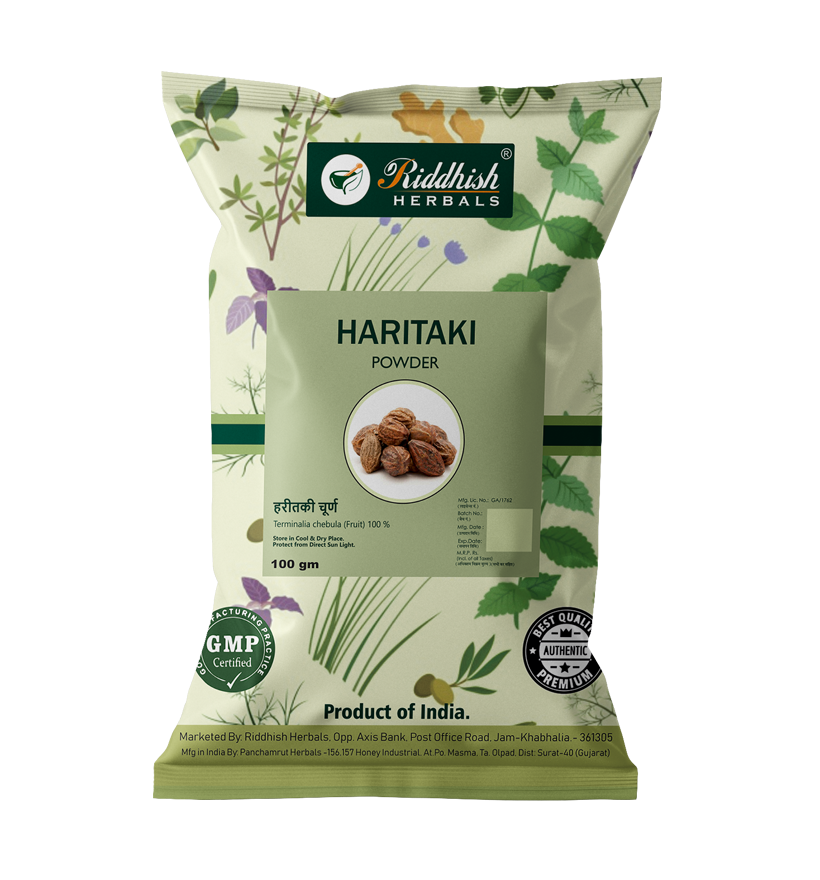
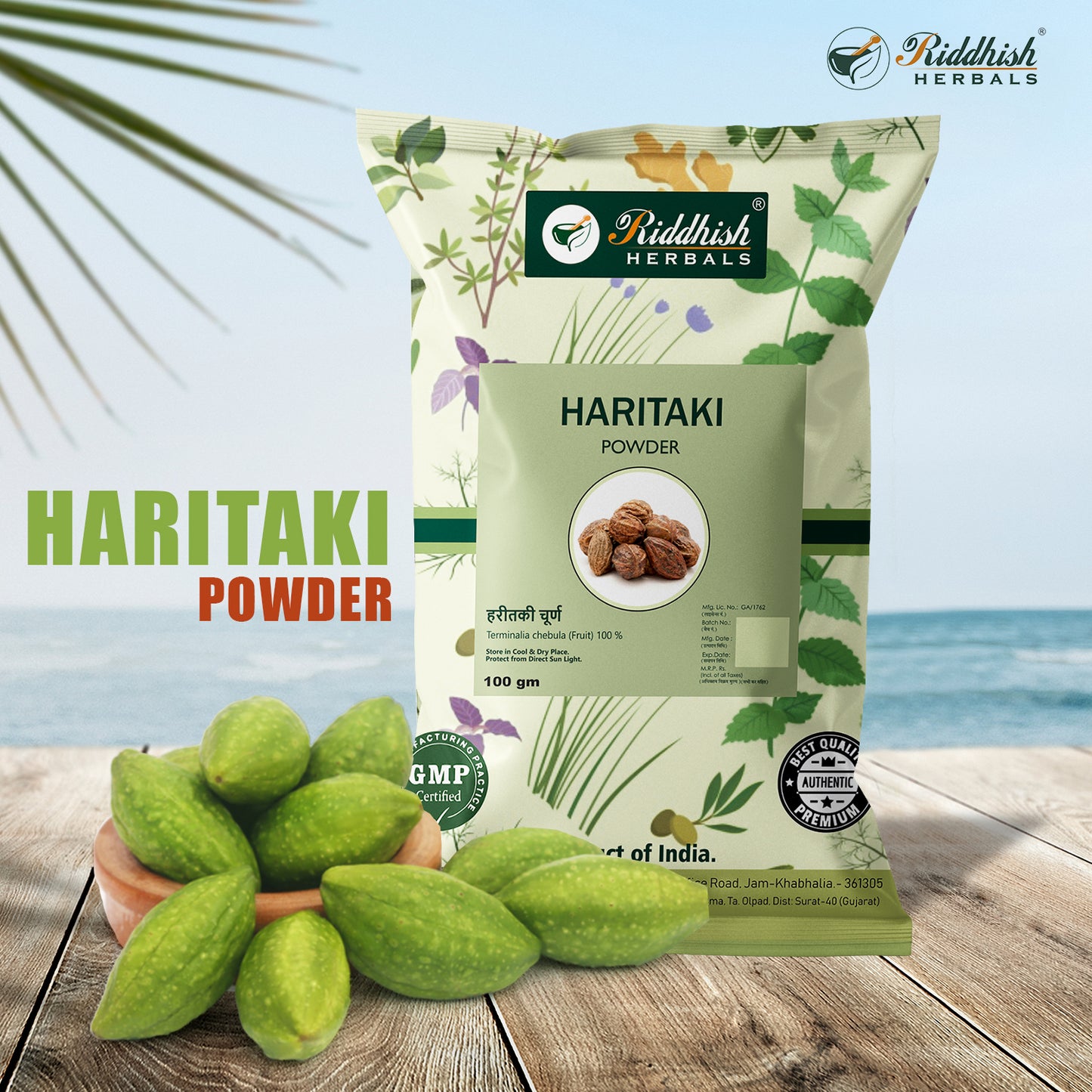
Haritaki Churna is a fine powder made from the dried, mature fruit of Terminalia chebula — known in Gujarat as Harde, across north India as Harad, and in Sanskrit as Haritaki. Riddhish Herbals offers this churna as a 100% single-herb preparation: one ingredient, with no oils, no blending and nothing added. The Sanskrit name sits at the very head of the herbal section of the Bhavaprakasha Nighantu, in the Haritakyadi Varga, which tells you a great deal about the place this fruit holds in classical Ayurveda.
Each pack contains only Haritaki fruit powder, milled from clean, sorted fruit. It is the same herb that forms one of the three fruits in the celebrated Triphala — offered here on its own, so you know exactly what you are taking.
Traditional Ayurvedic Importance
Few herbs carry as many affectionate names as this one. Classical texts call it Abhaya, the fearless, and Pathya, the wholesome. The Charaka Samhita places Haritaki among the foremost Rasayana, the rejuvenative substances of Ayurveda. The Bhavaprakasha Nighantu opens its herbal catalogue with Haritaki and records its principal classical actions: Deepana (kindling of digestive fire), Pachana (aiding digestion), Anulomana (supporting the natural downward rhythm and daily regularity) and Rasayana (nourishing rejuvenation).
Ayurveda also describes a graceful idea called Ritu Haritaki — taking Haritaki with a different anupan, or carrier, through the seasons. Classical sources pair it with rock salt in the rains, with mishri in autumn, with jaggery in early winter, with dry ginger in late winter, and with honey in spring. This seasonal pairing shows how thoughtfully classical Ayurveda matched a single herb to the body's changing needs across the year.
The Aaryabhishak, the Gujarati Ayurvedic compendium referenced on several Riddhish Herbals labels, likewise records Harde as a trusted household herb for daily digestive balance and a feeling of lightness.
Key Features
- Single-herb purity: 100% Terminalia chebula fruit powder — one ingredient, nothing else.
- Fruit, not seed: milled from the fruit pulp (pericarp), the part classical Ayurveda actually uses.
- Classically documented: anchored to the Bhavaprakasha Nighantu (Haritakyadi Varga) and Charaka Samhita.
- Rasayana herb: traditionally valued among Ayurveda's prime rejuvenative substances.
- Daily digestive support: traditionally taken to support Agni and natural regularity.
- Foundation of Triphala: the same Haritaki that forms one of Triphala's three fruits, offered on its own.
- Genuine and billed: sourced and supplied by Riddhish Herbals, serving Ayurveda since 2015.
Ingredients
- Haritaki (Terminalia chebula) — Fruit — 100%
No oils, no excipients, and no added colours, parabens or synthetic preservatives.
Research and Scientific References
Terminalia chebula has been the subject of published phytochemical and pharmacological research exploring its traditionally recognised antioxidant and digestive-support properties. A peer-reviewed review of the plant's research literature catalogued its phytoconstituents and the breadth of laboratory study it has received. — (Bag et al., 2013 — Asian Pacific Journal of Tropical Biomedicine; PMID: 23620847)
Results observed in study conditions. Individual results may vary. Consult your Ayurvedic physician before use.
How to Use
General traditional guidance is 1–3 g, roughly a quarter to half a teaspoon, once daily — usually at night, mixed in warm water — or as directed by your Ayurvedic physician. In the classical Ritu Haritaki practice the anupan changes with the season (for example, honey in spring or rock salt in the rainy months). Take it consistently alongside a balanced diet, good hydration and adequate rest.
Safety Information
Generally well tolerated by adults in the quantities traditionally described. Begin with a small dose. Not recommended during pregnancy. If you are pregnant, lactating, taking any medication or managing a health condition, consult a qualified Ayurvedic physician before use. Results may vary from person to person. Keep out of reach of children.
Storage
Store in a cool, dry place, away from direct sunlight. Keep the pack tightly closed to protect the powder from moisture.
Frequently Asked Questions
Is this Haritaki Churna AYUSH or GMP certified?
Riddhish Herbals supplies genuine, billed Ayurvedic products and has served customers since 2015. Certification marks belong to the manufacturer, and we do not add certification claims to a listing unless we hold the supporting documentation on file.
Can I take Haritaki Churna without a doctor?
Haritaki is sold freely as a classical single-herb churna. For the right dose, timing and seasonal anupan for your constitution, guidance from an Ayurvedic physician is helpful — particularly if you take other medicines.
What is Haritaki?
Haritaki is the dried fruit of Terminalia chebula, one of Ayurveda's most documented herbs and one of the three fruits in Triphala. Classical texts also call it Abhaya and Pathya.
What are the alternate names for Haritaki?
Also known as Harde or Himej in Gujarati, Harad in Hindi, Hirda in Marathi, Kadukkai in Tamil, Karakkaya in Telugu, and Chebulic Myrobalan in English. Spelling variants include Haritaki, Harītakī and Harytaki.
How is this different from other Haritaki powders?
This is a 100% single-herb fruit powder — not a Bhrusht (oil-roasted) version and not a blend. It is milled from the fruit pulp, the part classical Ayurveda specifies, rather than from seed, and the listing is anchored to its classical text sources.
Is it available at Riddhish Herbals?
Yes. It is in stock at riddhishherbals.com with pan-India delivery, and at our Gujarat retail counter.
What is the recommended anupan?
Warm water is the everyday carrier. The classical Ritu Haritaki tradition pairs it with rock salt, jaggery, dry ginger, mishri or honey depending on the season.
How should I store it?
In a cool, dry place away from sunlight, in a tightly closed pack.
Has Haritaki been studied scientifically?
Yes. Terminalia chebula has attracted considerable published research; a peer-reviewed review by Bag et al. (2013, Asian Pacific Journal of Tropical Biomedicine; PMID 23620847) summarised its phytochemistry and study literature. Results observed in study conditions, and individual results may vary.
Regional Names
Sanskrit: हरीतकी (Harītakī); also Abhayā, Pathyā · Hindi: हरड़ / हरीतकी (Harad / Haritaki) · Gujarati: હરડે / હિમેજ (Harde / Himej) · Marathi: हिरडा (Hirda) · Bengali: হরীতকী (Haritaki) · Tamil: கடுக்காய் (Kadukkai) · Telugu: కరక్కాయ (Karakkaya) · Kannada: ಅಳಲೆಕಾಯಿ (Alalekayi) · Malayalam: കടുക്ക (Kadukka) · English: Chebulic Myrobalan · Botanical: Terminalia chebula (Retz.) · Plant part: Fruit (pericarp)
Spelling and search variants: Haritaki Churna, Haritaki Powder, Harde Powder, Harde Churna, Harad Powder, Hirda Powder, Kadukkai Podi, Karakkaya Podi.