

Riddhish Herbals
Himej Akhi (Haritaki / Abhaya Whole Fruit, Small Grade) – Terminalia chebula – Riddhish Herbals – 100g
Himej Akhi (Haritaki / Abhaya Whole Fruit, Small Grade) – Terminalia chebula – Riddhish Herbals – 100g
Couldn't load pickup availability
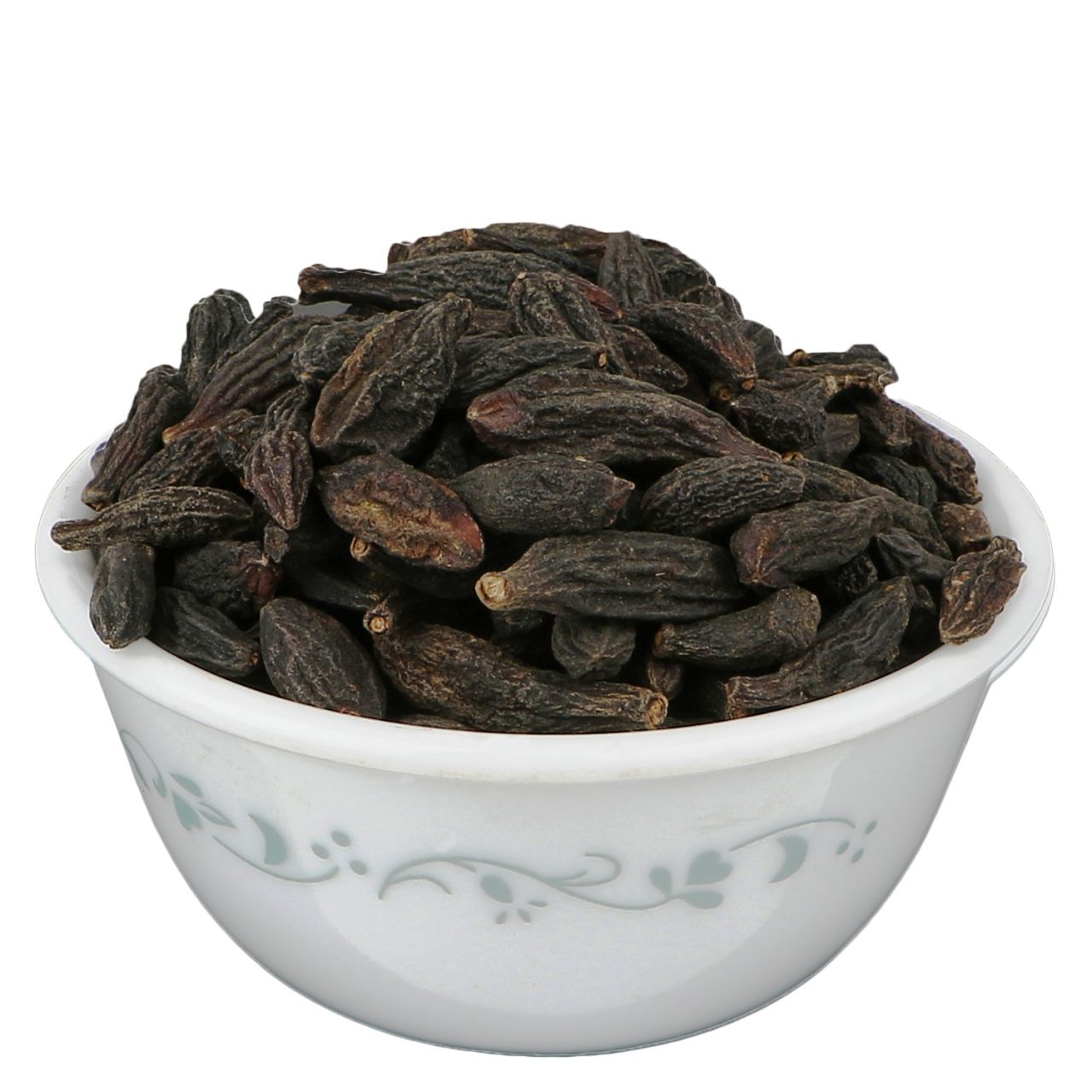
Himej Akhi from Riddhish Herbals is the whole (Akhi) smaller-grade dried fruit of Haritaki — Himej, Terminalia chebula (chebulic myrobalan), the classical Abhaya. Himej is the Gujarati name for Haritaki (the larger grade is sold as Harde Akhi Moti). Classically it is Pancharasa (five tastes, predominantly Kashaya), Ushna, Tridoshahara (all-dosha balancing), Rasayana (rejuvenative), Deepana (digestion-kindling) and Anulomana (bowel-regularising), and one of the three fruits of Triphala. It is used within a physician-guided routine. Each pack is genuine, bill-provided material from a doctor-guided store operating since 2015.
About Himej Akhi (Haritaki, Small Grade)
Himej — the Gujarati name for Haritaki, Terminalia chebula — is one of the most revered Rasayana fruits of Ayurveda, so esteemed that the classical texts call it Abhaya and Pathya. ‘Akhi’ means whole: these are the intact, smaller-grade Haritaki fruits (the larger ‘Moti’ grade is our Harde Akhi Moti).
Riddhish Herbals supplies them as clean single-material whole Himej fruits under our doctor-guided selection standard, with a bill on every order. The whole fruit is traditionally soaked, chewed or decocted, within a physician-guided routine. (See also our Harde Akhi Moti — the same herb in the larger grade.)
Traditional Ayurvedic Importance
Classical texts describe Haritaki (Himej) as Pancharasa (five tastes, only Lavana absent, predominantly Kashaya), Laghu and Ruksha in Guna, Ushna in Virya and Madhura in Vipaka, with a Tridoshahara (all-dosha balancing), Rasayana (rejuvenative), Deepana (digestion-kindling), Anulomana (bowel-regularising) and Medhya character. The smaller (young) grade is traditionally regarded as the more Rechana (gently bowel-clearing).
Because it is Anulomana and Ushna, Himej is used within a physician-guided routine and is avoided in pregnancy. It is one of the three fruits of Triphala, alongside Amalaki and Bibhitaki, with the amount and anupana chosen by a Vaidya to suit each person.
Key Features
- Whole small-grade Haritaki: whole (Akhi) Himej — the smaller-grade Haritaki fruit of Harde (Terminalia chebula), nothing blended in.
- Himej = Haritaki: Himej is the Gujarati name for Haritaki; the larger grade is sold as Harde Akhi Moti.
- The classical Abhaya / Pathya: one of Ayurveda's most celebrated Rasayana fruits.
- Tridoshahara & Anulomana: classically all-dosha balancing and bowel-regularising.
- One of Triphala's three fruits: alongside Amalaki and Bibhitaki.
- Genuine, doctor-guided sourcing: bill provided with every pack; a store trusted since 2015.
Research on the Constituents
◆ Researchers analysed the phytochemical composition of Terminalia chebula extracts — (Chang CL et al., 2012 — Evidence-Based Complementary and Alternative Medicine). PubMed PMID: 21754945
Results were observed under study conditions. Individual results may vary. This is shared for general educational interest and is not a medical claim. Consult your Ayurvedic physician before use.
Ingredients (single-material, label-verified)
| Ingredient | Botanical (part) | Plant Part | Proportion |
|---|---|---|---|
| Himej / Haritaki (whole fruit) | Terminalia chebula Retz. (Combretaceae) | Whole dried fruit (Akhi, smaller grade) | 100% single material |
Single-material genuine whole Haritaki fruit (Terminalia chebula, Himej / Harde). No fillers, colours or preservatives added. This is the whole smaller-grade dried fruit; the larger grade is our Harde Akhi Moti. Confirm details against the physical pack label.
How to Use
As directed by your Ayurvedic physician. The whole fruit is traditionally soaked overnight, chewed, decocted (Kwath) or ground fresh; a common reference is about 3–6 g. The exact amount and anupan are matched to you by a Vaidya.
Who Can Use It
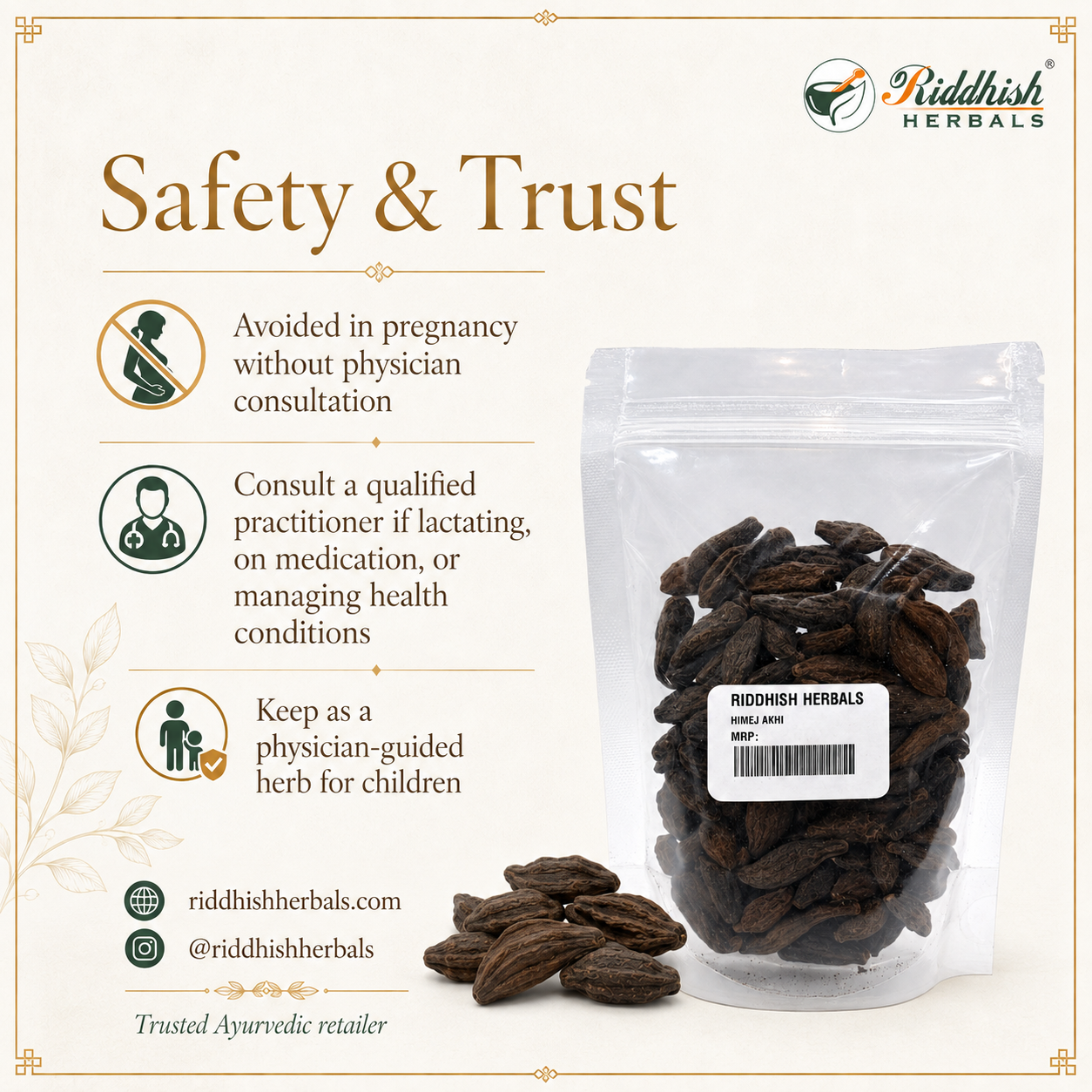
For adults within a physician-guided Ayurvedic routine. It is avoided in pregnancy without a physician's advice, as it is bowel-directing and warming. Consult a qualified Ayurvedic physician before use if you are lactating, on medication, or managing a health condition. Keep it as a physician-guided herb for children.
Safety Information
Himej (Haritaki fruit) is a classical Rasayana and Anulomana herb long used in Ayurveda. Use it within a physician-guided routine; it is avoided in pregnancy without advice. Consult your physician before use if you are lactating, on medication, or managing any condition. Keep out of reach of children. Results may vary from person to person.
Storage
Store in a cool, dry place in an airtight container away from moisture and direct sunlight. Keep the pack tightly closed after each use.
Frequently Asked Questions
What is Himej Akhi?
It is the whole (Akhi) smaller-grade dried fruit of Haritaki (Himej, Terminalia chebula), the classical Abhaya — a Tridoshahara, Rasayana, Deepana and Anulomana fruit, and one of the three fruits of Triphala.
Is Himej the same as Harde / Haritaki?
Yes — Himej is the Gujarati name for Haritaki (Terminalia chebula). This listing is the whole smaller-grade fruit; the larger ‘Moti’ grade is our Harde Akhi Moti — the same herb.
What are the alternate names of Haritaki?
Haritaki, Abhaya or Pathya (Sanskrit), Harad or Harre (Hindi), Himej or Harde (Gujarati), Hirda (Marathi), Kadukai (Tamil), Karakkaya (Telugu) and Kadukka (Malayalam). Botanically Terminalia chebula.
What are its classical properties?
Classical texts describe Haritaki as Pancharasa (five tastes, predominantly Kashaya), Laghu-Ruksha, Ushna Virya, Madhura Vipaka, and as Tridoshahara, Rasayana, Deepana, Anulomana (bowel-regularising) and Medhya.
Is Himej part of Triphala?
Yes — Haritaki (Himej) is one of the three fruits of Triphala, together with Amalaki (Amla) and Bibhitaki (Baheda).
Is this AYUSH- or GMP-made?
This is a raw single-herb whole fruit in Riddhish Herbals' own pack. Any AYUSH or GMP mark would appear on the physical pack — we state such marks only where verified on the pack.
How is it traditionally used?
The whole fruit is classically soaked overnight, chewed, decocted or ground fresh, about 3–6 g, under your Ayurvedic physician's guidance.
Has Terminalia chebula been studied scientifically?
Yes — researchers have analysed the phytochemical composition of Terminalia chebula (Chang CL et al., 2012, Evid Based Complement Alternat Med). This is shared for general educational interest, not as a medical claim.
How should I store Himej Akhi?
Keep it in a cool, dry, airtight container away from moisture and sunlight, and close the pack tightly after use.
Regional Names & Spelling Variants
| Language | Name |
|---|---|
| Local / common | Himej / Harde (હિમેજ / હરડે) |
| Sanskrit | Haritaki, Abhaya, Pathya, Kayastha (हरीतकी / अभया) |
| Hindi | Harad, Harre (हरड़) |
| Gujarati | Himej, Harde (હિમેજ / હરડે) |
| Marathi | Hirda, Harda (हिरडा) |
| Bengali | Haritaki (হরীতকী) |
| Tamil | Kadukai (கடுக்காய்) |
| Telugu | Karakkaya (కరక్కాయ) |
| Kannada | Anilekayi, Alalekai (ಅಣಿಲೆಕಾಯಿ) |
| Malayalam | Kadukka (കടുക്ക) |
| English + Botanical | Chebulic Myrobalan — Terminalia chebula Retz. (Combretaceae) — whole fruit |
| Search variants | himej akhi, himej, harde, harad, haritaki, terminalia chebula, chebulic myrobalan, whole harad, choti harad, kadukai, harad sabut |
| Common misspellings | himej aakhi, himaj, himej harad, terminalia chebula fruit, haritki, himej churna |
Related at Riddhish Herbals
Harde Akhi Moti (same herb, larger grade) · Baheda Akha (Bibhitaki — Triphala fruit) · Amla Akha (Amalaki — Triphala fruit) · Ayurvedic Raw Herbs & Materials · Doctor-Guided Product Selection