
Riddhish Herbals
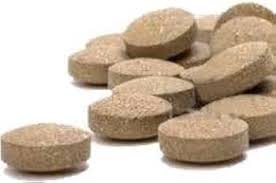
Jatamansi Tablets (Balchhad) – Nardostachys jatamansi Spikenard – Riddhish Herbals – 100g
Jatamansi Tablets (Balchhad) – Nardostachys jatamansi Spikenard – Riddhish Herbals – 100g
Couldn't load pickup availability
Jatamansi Tablets from Riddhish Herbals are the classical Medhya herb Jatamansi — Balchhad, Nardostachys jatamansi (Indian spikenard) — in a convenient compressed tablet form. Jatamansi is a foremost Medhya (mind-nourishing) dravya of Ayurveda: Tikta-Kashaya-Madhura in Rasa, Sheeta in Virya, and Medhya, Tarpana (nourishing to nervous tissue), Nidrajanana and Vata-Pitta shamaka in character. The tablets are the same herb as our Jatamansi Akhi and Churna, and are used within a physician-guided routine. Each pack is genuine, bill-provided material from a doctor-guided store operating since 2015.
About Jatamansi Tablets
Jatamansi Tablets present Jatamansi (Balchhad, Nardostachys jatamansi, Indian spikenard) — one of Ayurveda’s most prized Medhya herbs, a fragrant high-altitude Himalayan root long valued for a calm, settled mind — in a ready, easy-to-take tablet. It is the same herb as our whole Jatamansi Akhi and our Jatamansi Churna, simply given in a convenient format.
Riddhish Herbals supplies the tablets under our doctor-guided selection standard, with a bill on every order. They are taken within a physician-guided routine, with the number of tablets set by a Vaidya. (See also our whole-root Jatamansi Akhi and Jatamansi Churna.)
Traditional Ayurvedic Importance
Classical texts describe Jatamansi as Tikta, Kashaya and Madhura in Rasa, Laghu and Snigdha in Guna, Sheeta in Virya and Katu in Vipaka, with a Medhya (mind-nourishing), Tarpana (nourishing to Majja dhatu / nervous tissue), Nidrajanana and Vata-Pitta shamaka character. It is a classical Medhya Rasayana traditionally used to support a calm, clear and settled state of mind.
Because it is a potent aromatic herb, Jatamansi is used within a physician-guided routine, with the number of tablets and the timing chosen by a Vaidya to suit each person. It is best avoided in pregnancy without a physician’s advice.
Key Features
- Jatamansi in tablet form: the classical Medhya herb Jatamansi (Nardostachys jatamansi) compressed into convenient tablets — the same herb as our Jatamansi Akhi and Churna.
- Premier Medhya herb: one of Ayurveda's most valued Medhya (mind-nourishing) dravyas.
- Tarpana & calming: classically nourishing to Majja (nervous tissue) and traditionally used for a calm, settled mind.
- Vata-Pitta shamaka: classically pacifying to Vata and Pitta.
- Convenient daily format: tablets are simple to carry and measure — the number is set by your Vaidya.
- Genuine, doctor-guided sourcing: bill provided with every pack; a store trusted since 2015.
Research on the Constituents
◆ Researchers isolated an unusual homoguaiane sesquiterpene lactone (narjatamolide) from Nardostachys jatamansi — (Chai T et al., 2021 — The Journal of Organic Chemistry). PubMed PMID: 33326231
Results were observed under study conditions. Individual results may vary. This is shared for general educational interest and is not a medical claim. Consult your Ayurvedic physician before use.
Ingredients (label-verified)
| Ingredient | Botanical (part) | Form | Proportion |
|---|---|---|---|
| Jatamansi / Balchhad | Nardostachys jatamansi (D.Don) DC. (syn. N. grandiflora; Caprifoliaceae) | Rhizome / root, compressed into tablets | Single-herb tablet |
Single-herb Jatamansi tablets (Nardostachys jatamansi, Balchhad). Compressed tablets ordinarily contain small amounts of standard binding excipients; confirm the full composition and any excipients against the physical pack label, which is the final authority.
How to Use
As directed by your Ayurvedic physician. A common reference is 1–2 tablets with a suitable anupana such as warm water or milk; the exact number, timing and anupan are set entirely by your Vaidya. It is not for self-use.
Who Can Use It
For adults within a physician-guided Ayurvedic routine. As a potent aromatic herb, it is used under professional guidance; seek a physician’s advice before use in pregnancy or lactation, on medication, or when managing a health condition. Keep it as a physician-guided herb for children.
Safety Information
Jatamansi Tablets present a classical Medhya herb long used in Ayurveda within a physician-guided routine, and are not for self-use. Consult a qualified Ayurvedic physician before use, especially in pregnancy or lactation, on medication, or when managing any condition. Keep out of reach of children. Results may vary from person to person.
Storage
Store in a cool, dry place in an airtight container away from moisture and direct sunlight. Keep the pack tightly closed after each use.
Frequently Asked Questions
What are Jatamansi Tablets?
They are the classical Medhya herb Jatamansi (Balchhad, Nardostachys jatamansi, Indian spikenard) in a convenient compressed tablet form — a Tarpana and Vata-Pitta shamaka herb traditionally used for a calm, settled mind.
How do the tablets compare with Jatamansi Akhi and Churna?
All three are the same Jatamansi herb (Nardostachys jatamansi): Akhi is the whole root, Churna is the milled powder, and the Tablets are the herb compressed into an easy-to-take format.
How many tablets should I take?
The number of tablets, timing and anupana are set entirely by your Ayurvedic physician. A common reference is 1–2 tablets, but Jatamansi is a potent herb and is not for self-use.
What are the alternate names of Jatamansi?
Jatamansi, Bhutajata, Tapasvini or Mansi (Sanskrit), Jatamansi or Balchhad (Hindi), Jatamansi (Gujarati, Marathi, Bengali). In English it is Indian Spikenard or Muskroot; botanically Nardostachys jatamansi.
What are its classical properties?
Classical texts describe Jatamansi as Tikta-Kashaya-Madhura in Rasa, Laghu-Snigdha in Guna, Sheeta in Virya and Katu in Vipaka, and as Medhya, Tarpana, Nidrajanana and Vata-Pitta shamaka.
Is this AYUSH- or GMP-made?
Any AYUSH or GMP mark would appear on the physical pack — we state such marks only where verified on the pack. Please also confirm the tablet composition and any excipients on the label.
Is Jatamansi related to Valerian?
Jatamansi (Nardostachys jatamansi) belongs to the same botanical family as Valerian (Caprifoliaceae / Valerianaceae) and shares its aromatic, calming reputation in traditional use, but it is a distinct Himalayan herb.
Has Nardostachys jatamansi been studied scientifically?
Yes — researchers have isolated an unusual sesquiterpene lactone (narjatamolide) from Nardostachys jatamansi (Chai T et al., 2021, The Journal of Organic Chemistry). This is shared for general educational interest, not as a medical claim.
How should I store Jatamansi Tablets?
Keep them in a cool, dry, airtight container away from moisture and sunlight, and close the pack tightly after use.
Regional Names & Spelling Variants
| Language | Name |
|---|---|
| Local / common | Jatamansi / Balchhad (જટામાંસી) |
| Sanskrit | Jatamansi, Bhutajata, Tapasvini, Mansi (जटामांसी) |
| Hindi | Jatamansi, Balchhad (जटामांसी / बालछड़) |
| Gujarati | Jatamansi, Kalichhad (જટામાંસી) |
| Marathi | Jatamansi (जटामांसी) |
| Bengali | Jatamansi (জটামাংসী) |
| Tamil | Jatamanji (romanised) |
| Telugu | Jatamamsi (romanised) |
| Kannada | Jatamavashi (romanised) |
| Malayalam | Jatamanchi (romanised) |
| English + Botanical | Indian Spikenard / Muskroot — Nardostachys jatamansi (D.Don) DC. (Caprifoliaceae) — rhizome / root (tablets) |
| Search variants | jatamansi tablets, jatamansi tablet, jatamansi, balchhad, nardostachys jatamansi, indian spikenard, spikenard tablets, muskroot, jatamansi tab, mansi |
| Common misspellings | jatamansi tabs, jatamamsi tablet, jatamasi tablets, jattamansi, nardostachys jatamansi tablet, balchhar, jatamanshi |
Related at Riddhish Herbals
Jatamansi Akhi (same herb, whole root) · Jatamansi Churna (same herb, powder form) · Jethimadh Akha (Licorice — soothing root) · Ayurvedic Raw Herbs & Materials · Doctor-Guided Product Selection