
Riddhish Herbals
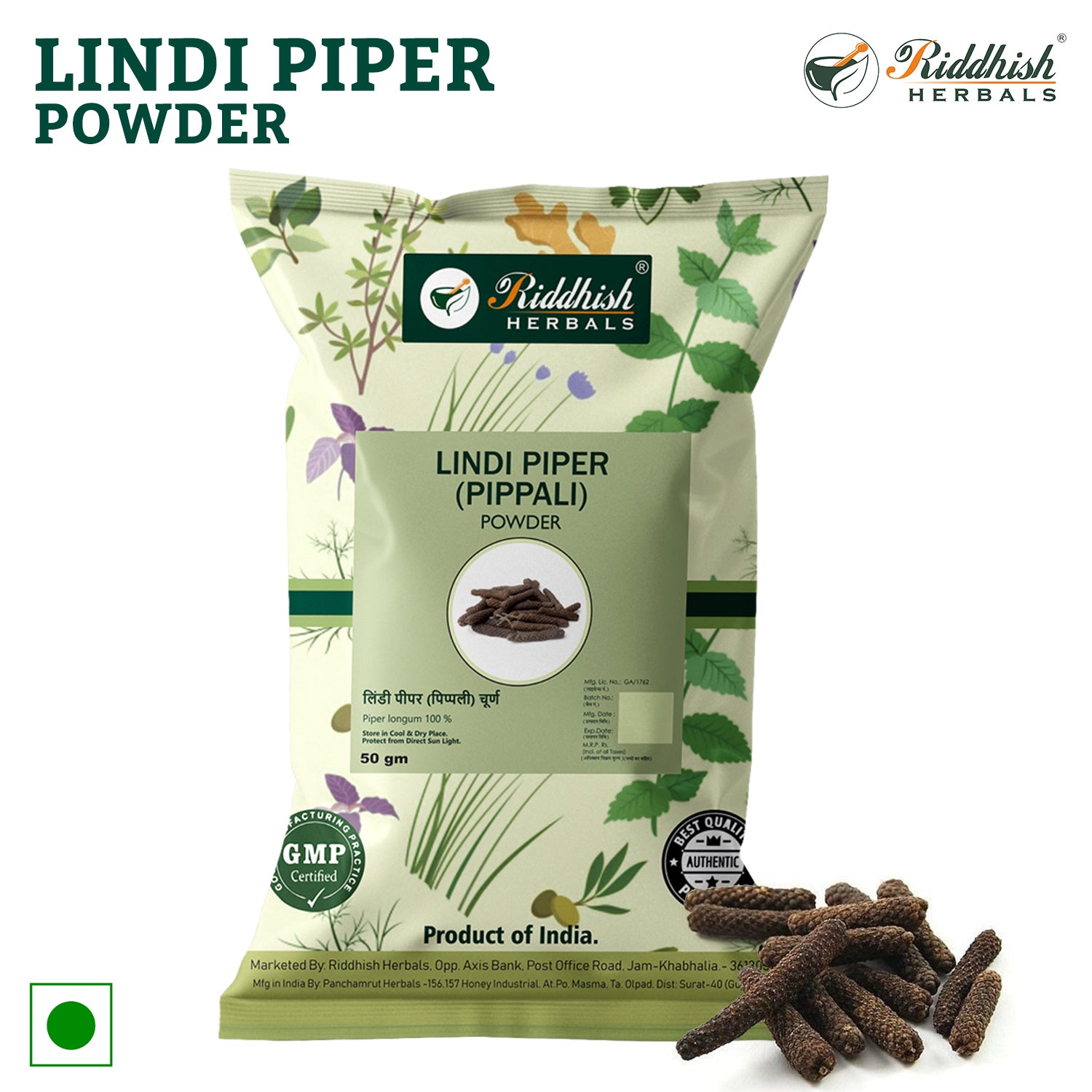
Lindi Piper Churna (Pippali) | Piper longum Fruit | 50g | Riddhish
Lindi Piper Churna (Pippali) | Piper longum Fruit | 50g | Riddhish
Couldn't load pickup availability
About Lindi Piper Churna (Pippali)
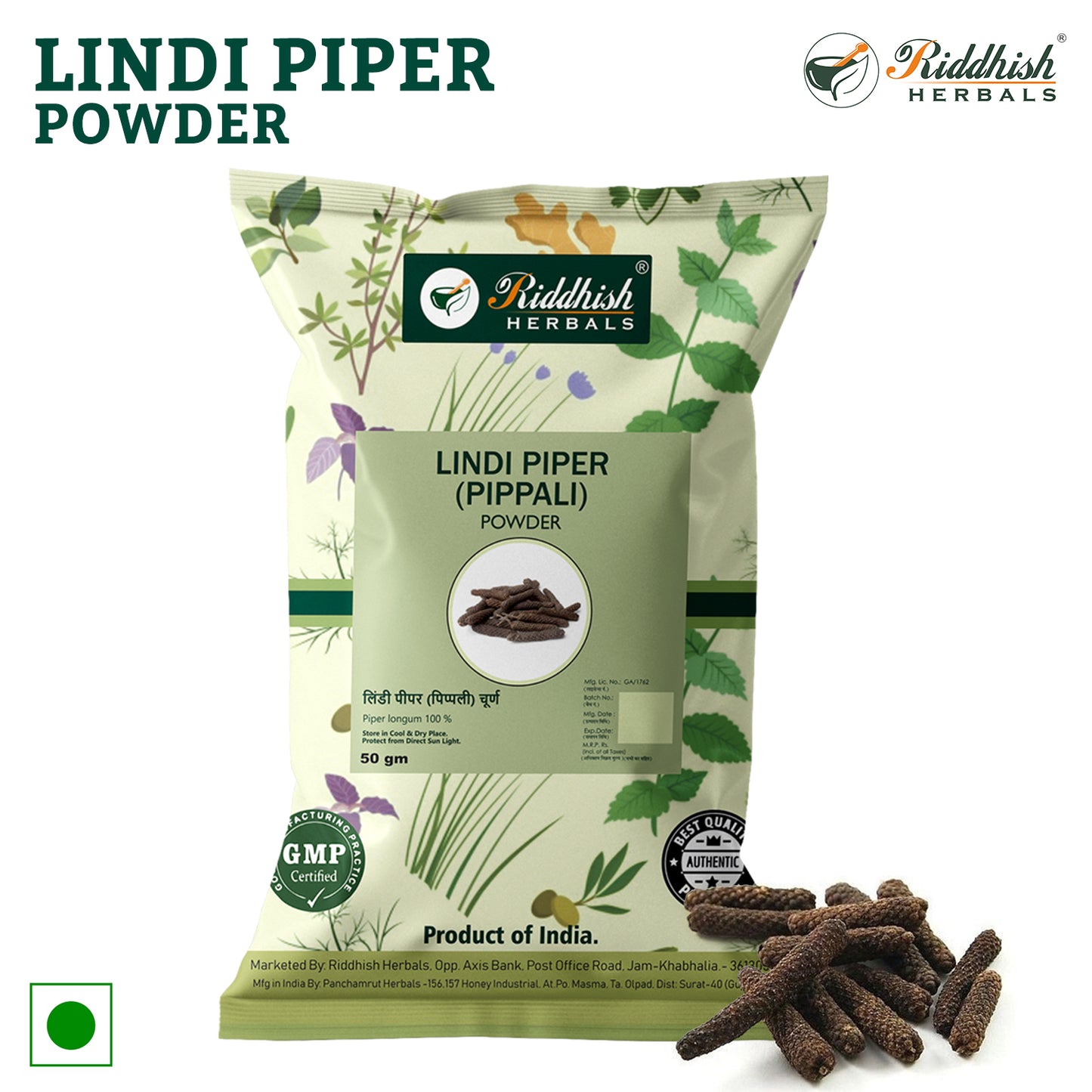
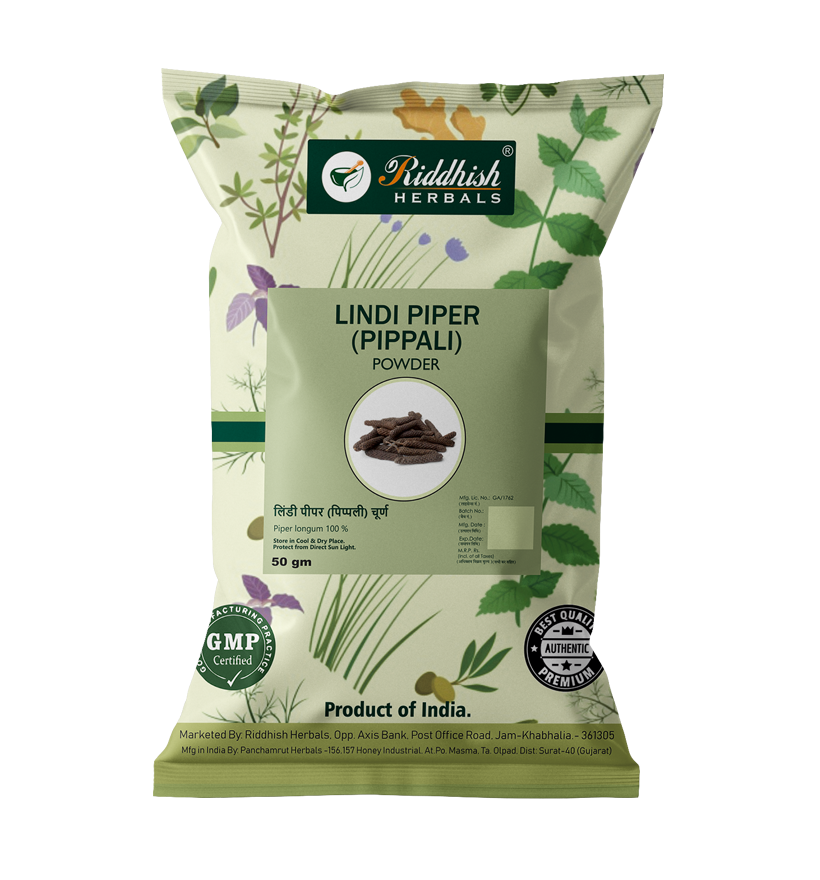
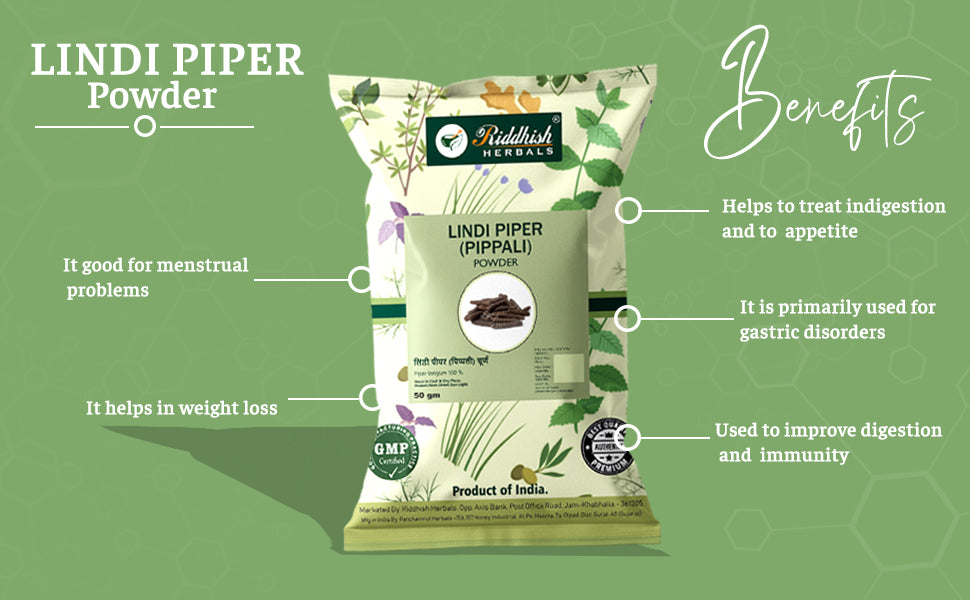
Lindi Piper is the Gujarati name for Pippali — the dried fruit of Piper longum, the long pepper vine. It is one of the most frequently cited single herbs in the whole of Ayurveda. The slender, cone-shaped catkins are harvested unripe, dried, and milled into this churna. This is a single-herb powder: 100% Piper longum fruit, nothing added.
Pippali (Fruit) and Pippalimool (Root)
One point clears up most of the confusion in the market. Pippali is the fruit of the long pepper vine — this product. Pippalimool, sold as Ganthoda, is the root of the same plant. They share a parent vine but are treated as separate medicines in classical texts. If you want the root, look for Ganthoda.
Traditional Ayurvedic Importance
Classical literature holds Pippali in unusually high regard. The Bhavaprakasha Nighantu, in its Haritakyadi Varga (verses 211–214), describes the fruit as katu (pungent) with anushna (mildly heating) potency, deepana (digestive-kindling), and counts it among the rasayana (rejuvenative) herbs. The Charaka Samhita devotes a section of its Rasayana chapter to Pippali, including the graduated regimen known as Vardhamana Pippali Rasayana. The texts also describe it as vrishya and as a herb traditionally valued for kasa (cough) and shwasa (breathing comfort). Because it is heating, classical authors advise care for pitta-dominant individuals.
Key Features
- 100% Single Herb: Pure Piper longum fruit powder — no fillers, no blending.
- Correct Plant Part: Made from the dried fruit (Pippali), distinct from the root (Pippalimool/Ganthoda).
- Classically Documented: Bhavaprakasha Nighantu (Haritakyadi Varga) and Charaka Samhita Rasayana.
- Rasayana Tradition: Classically described as a rejuvenative and digestive herb.
- Quality Facility: Milled in a GMP-, ISO 9001:2015- and HACCP-certified facility.
- Genuine & Billed: Sourced and sold by Riddhish Herbals, trusted in Gujarat since 2015.
- Everyday Versatility: Traditionally taken with honey or warm water, and used in Trikatu and Chyawanprash.
Ingredients
- Pippali (Piper longum) — Fruit — 100%
Research and Scientific References
Researchers have studied the Pippali fruit and its principal compound, piperine. A review focused specifically on the fruit summarised its traditional and phytochemical profile (Kumar, Kamboj & Sharma, 2011 — Journal of Acupuncture and Meridian Studies). Piperine has been reviewed for its broad physiological effects and its recognised role as a bio-enhancer that can influence the absorption of co-administered substances (Srinivasan, 2007 — Critical Reviews in Food Science and Nutrition, PMID 17987447). Earlier work observed that dietary pungent principles influenced digestive enzyme activity under study conditions (Platel & Srinivasan, 1996 — Int. J. Food Sciences and Nutrition). Results observed in study conditions. Individual results may vary. Consult your Ayurvedic physician before use.
How to Use
As directed by your Ayurvedic physician. Traditionally, ¼ to ½ teaspoon of the churna is taken with warm water or honey, usually after meals. The classical anupan (vehicle) is honey or warm water; with warm milk it is taken as a seasonal tonic.
Safety Information
This is a warming, potent herb. Those with a pitta constitution, acidity, or sensitive digestion should use it cautiously and in small quantity. Not recommended during pregnancy or lactation except under qualified Ayurvedic supervision. Use strictly under the guidance of a qualified Ayurvedic physician, especially if you are taking any medication or managing any health condition. Keep out of reach of children. Results may vary from person to person.
Storage
Store in a cool, dry place, away from direct sunlight. Keep the pack tightly closed to preserve aroma and potency.
Want the full background? See our Piper longum guide, which explains how this fruit (Pippali) differs from the root (Pippalimool / Ganthoda).