
Riddhish Herbals
Revanchini (Revan Chini / Indian Rhubarb) – Ayurvedic Root Powder – Riddhish Herbals – 100g
Revanchini (Revan Chini / Indian Rhubarb) – Ayurvedic Root Powder – Riddhish Herbals – 100g
Couldn't load pickup availability
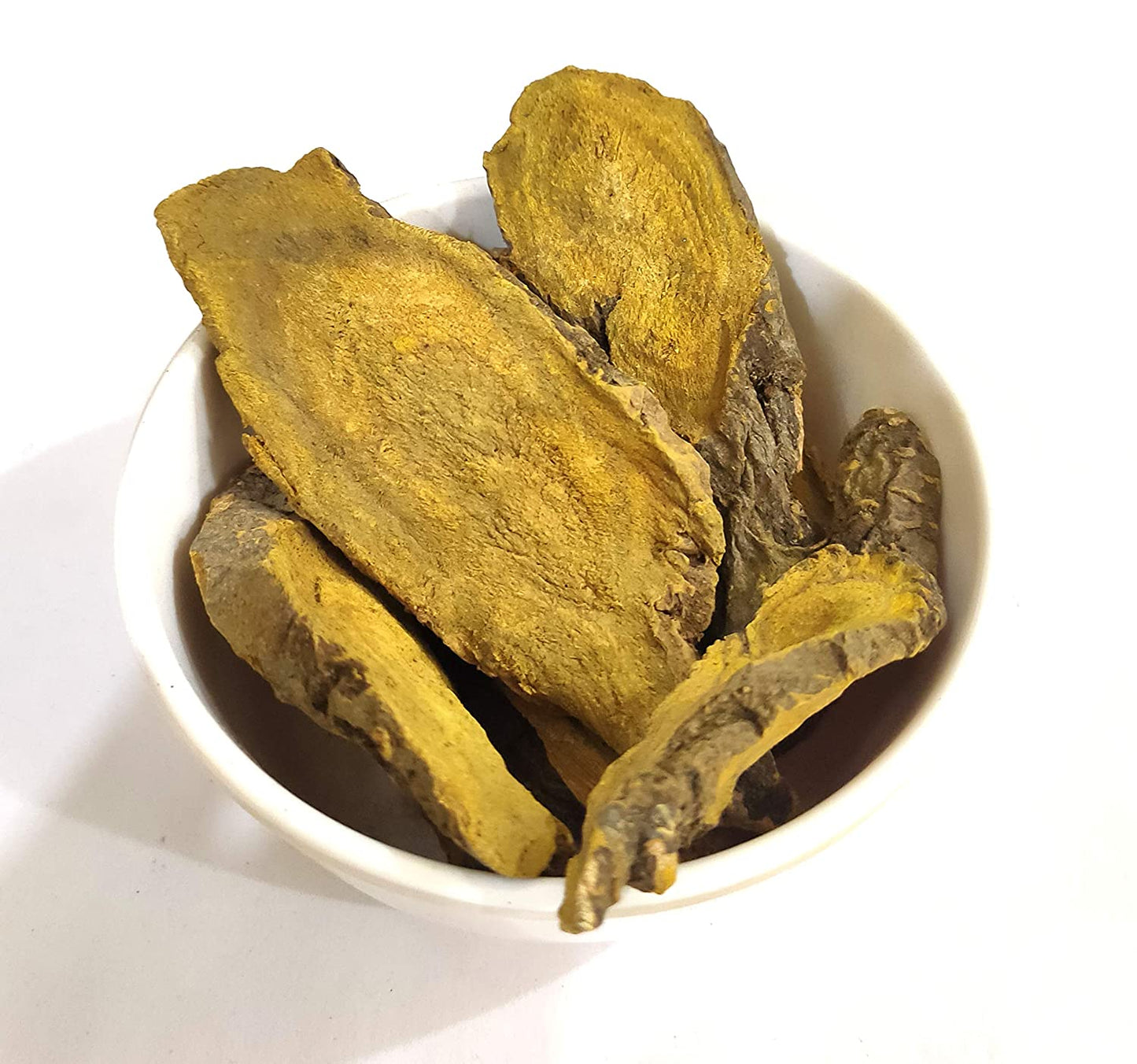
Revanchini from Riddhish Herbals is a single-herb root powder of Rheum emodi (Indian/Himalayan Rhubarb), known in classical Ayurvedic literature under the Sanskrit synonym Pitamulika. It is traditionally described as Katu-Tikta (pungent-bitter) with Ushna (hot) potency and Kapha-Pitta shamaka action, traditionally used in small, physician-guided doses to support occasional digestive regularity. Each pack is genuine, bill-provided material from a doctor-guided store operating since 2015.
About Revanchini
Revanchini, also traded as Revan Chini or Revand Chini, is the root of Rheum emodi (Indian/Himalayan Rhubarb), long used in both Ayurvedic and Unani trade traditions across India. Note: the historical Unani term "Revand Chini" (literally "Chinese rhubarb") originally referred to true imported Chinese rhubarb species (Rheum officinale/Rheum palmatum); the Himalayan-grown Rheum emodi sold in Indian trade today under the same name is the long-established local substitute, and is what this listing supplies.
This is a raw, single-ingredient root powder, best used within a physician-guided routine given its traditional Virechana (mild purgative) action at higher doses.
Traditional Ayurvedic Importance
Revanchini (Pitamulika) is classified in the Bhavaprakasha Nighantu's Dhatwadi Varga and in Nighantu Adarsha's Nagapushpadi Varga. It is classically described with Katu (pungent) and Tikta (bitter) rasa, Laghu (light) and Ruksha (dry) guna, Ushna (hot) virya, and Katu vipaka. Its classical karma is described as Kaphapittashamaka (balancing vitiated Kapha and Pitta dosha).
Within a physician-guided routine, Revanchini is traditionally used in small doses for supporting occasional digestive regularity and Apana Vata balance, and is often included as a component within broader Ayurvedic formulations designed by a Vaidya rather than used alone in large amounts.
Key Features
- Single-herb Revanchini root powder: the sole named ingredient is Revanchini (Rheum emodi) root, coarsely processed into powder.
- Classical Pitamulika: known in Ayurvedic literature under the Sanskrit synonym Pitamulika ("yellow-rooted plant"), referenced in Bhavaprakasha's Dhatwadi Varga.
- Katu-Tikta, Ushna Virya: classically described with a pungent-bitter taste, light and dry qualities, and hot potency.
- Kapha-Pitta shamaka: traditionally described as balancing vitiated Kapha and Pitta dosha.
- Traditional Virechana/laxative use: traditionally used in small, physician-guided doses for occasional constipation and digestive regularity.
- Genuine, doctor-guided sourcing: bill provided with every pack; a store trusted since 2015.
Research on the Constituents
◆ A published phytochemical study assessed conventional and novel extraction techniques for five anthraquinone constituents of Revanchini (Rheum emodi) root — (Arvindekar AU, Pereira GR & Laddha KS, 2015 — Journal of Food Science and Technology, 52(10):6574–6582). PubMed PMID: 26396403
Results were observed under study conditions. Individual results may vary. This is shared for general educational interest and is not a medical claim. Consult your Ayurvedic physician before use.
Ingredients
| Sanskrit / Common Name | Botanical | Part | Quantity |
|---|---|---|---|
| Revanchini (Pitamulika) | Rheum emodi Wall. ex Meissn. | Root (dried, powdered) | Sole ingredient |
Revanchini root powder is confirmed as the sole named ingredient of this raw material pack.
How to Use
As directed by your Ayurvedic physician. Classical reference: approximately 0.2–1 g of the root powder, once daily with warm water or another anupan advised by your Vaidya. Not intended for regular high-dose or prolonged self-use.
Who Can Use It
For use within a qualified Ayurvedic physician's guidance, generally for short-term or periodic use rather than continuous daily use. Not recommended during pregnancy or lactation except on physician advice. If you are on medication or managing any health condition, seek advice before use. Not intended for children without professional guidance.
Safety Information
Revanchini is a classical single-herb raw material with a traditional Virechana (mild purgative) action; use only in the dose and duration advised by your Ayurvedic physician, as excess or prolonged use may cause loose motions or digestive discomfort. Discontinue and consult your physician if any discomfort occurs. Keep out of reach of children. Results may vary from person to person.
Storage
Store in a cool, dry place away from direct sunlight and moisture.
Frequently Asked Questions
What is Revanchini?
It is a single-herb root powder of Rheum emodi (Indian/Himalayan Rhubarb), classically known as Pitamulika, traditionally used in small physician-guided doses for occasional digestive regularity.
Is Revanchini the same as "Revand Chini" in Unani medicine?
The name overlaps. Historically, Unani "Revand Chini" referred to true Chinese rhubarb (Rheum officinale/Rheum palmatum); Indian trade today commonly sells the Himalayan-grown Rheum emodi under the same name as an established local substitute, which is what this listing supplies.
Is this suitable for daily use?
Revanchini is traditionally used for short-term or periodic wellness routines rather than continuous daily use; frequency and duration should be decided by your Ayurvedic physician.
What are the alternate names for Revanchini?
Also known as Revan Chini, Revand Chini, Indian Rhubarb and Himalayan Rhubarb; classical Sanskrit synonym Pitamulika.
Is this AYUSH- or GMP-made?
Any AYUSH or GMP mark would appear on the physical pack — we state such marks only where verified on the pack; this has not yet been confirmed for this listing.
How do I know this is the genuine pack?
Every Riddhish Herbals order ships with a bill and is sourced directly through authorised channels — never a grey-market or re-packed unit.
Is it available at Riddhish Herbals?
Yes — Revanchini is available at Riddhish Herbals as a genuine, bill-provided product.
How should Revanchini be used?
As directed by your Ayurvedic physician — classically around 0.2–1 g with warm water, once daily, or as your Vaidya advises.
Has Revanchini (Rheum emodi) been studied scientifically?
Yes — a 2015 study examined extraction techniques for anthraquinone compounds in Rheum emodi root (Arvindekar et al., 2015, Journal of Food Science and Technology). This is shared for general educational interest, not as a medical claim.
How should I store Revanchini?
Keep it in a cool, dry place away from direct sunlight and moisture.
Regional Names & Spelling Variants
| Language | Name | |
|---|---|---|
| Local / common name | Revanchini / Revan Chini | the common pan-Indian trade name buyers search for |
| Sanskrit | Pitamulika (romanised) | "yellow-rooted plant" — Bhavaprakasha, Dhatwadi Varga; Nighantu Adarsha, Nagapushpadi Varga |
| Hindi | रेवंचिनी | Revanchini |
| Gujarati | રેવંચિની | Revanchini |
| Marathi | रेवंचिनी | Revanchini |
| Bengali | romanised only | Revanchini |
| Tamil | ரேவஞ்சினி | Revanchini |
| Telugu | రేవంచిని | Revanchini |
| Kannada | ರೇವಂಚಿನಿ | Revanchini |
| Malayalam | രേവഞ്ചിനി | Revanchini |
| English + Botanical + Part | Indian Rhubarb, Himalayan Rhubarb | Rheum emodi Wall. ex Meissn. (syn. Rheum australe) — Root |
| Romanised search variants | — | revanchini, revan chini, revand chini, revand khatai (related but distinct Unani trade term) |
| Common misspellings | — | revanchni, revanchinni, rewand chini |
Related at Riddhish Herbals