
Riddhish Herbals
Baheda Powder | Bibhitaki Churna | Riddhish Herbals | 100gm
Baheda Powder | Bibhitaki Churna | Riddhish Herbals | 100gm
Couldn't load pickup availability
About Baheda Powder (Bibhitaki Churna)
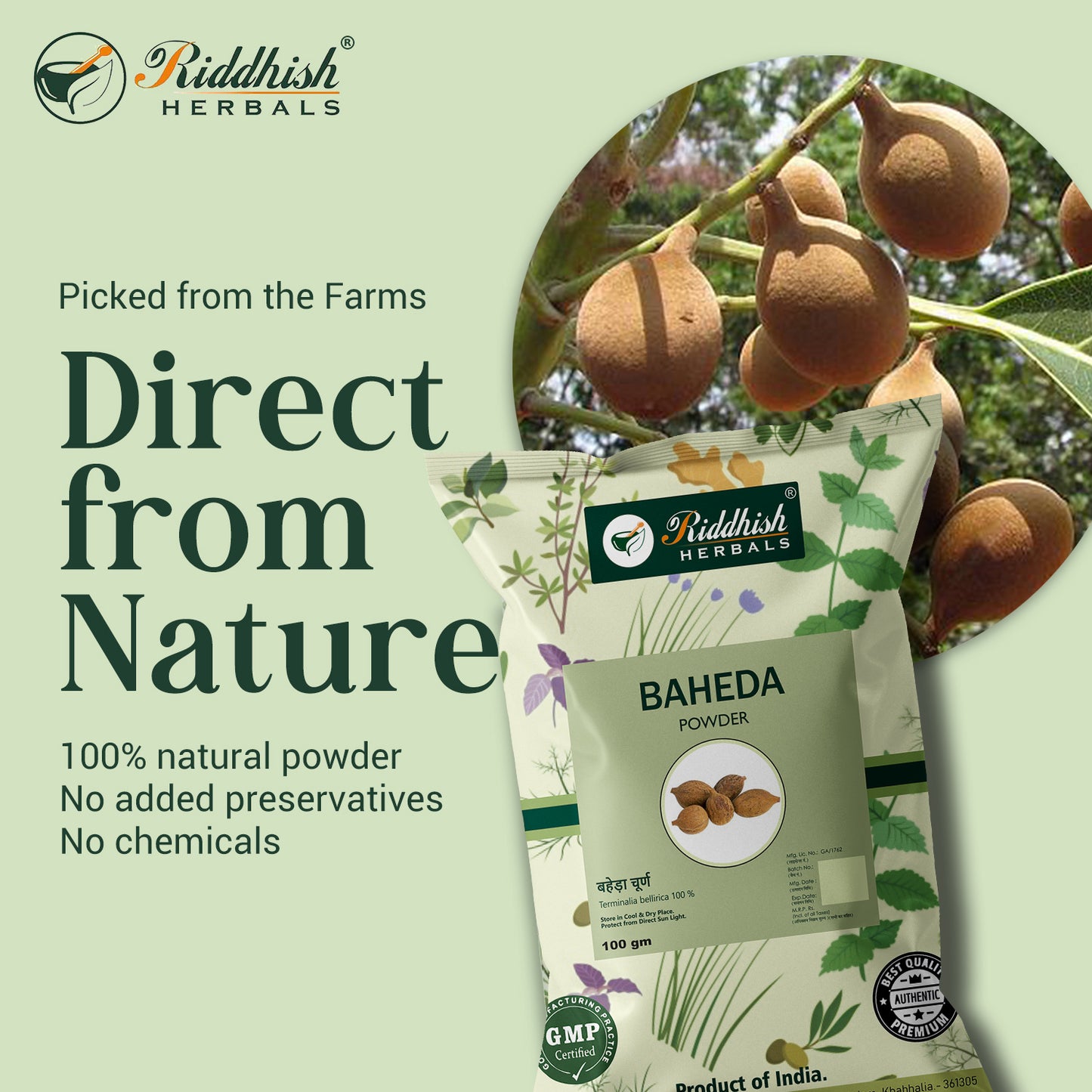
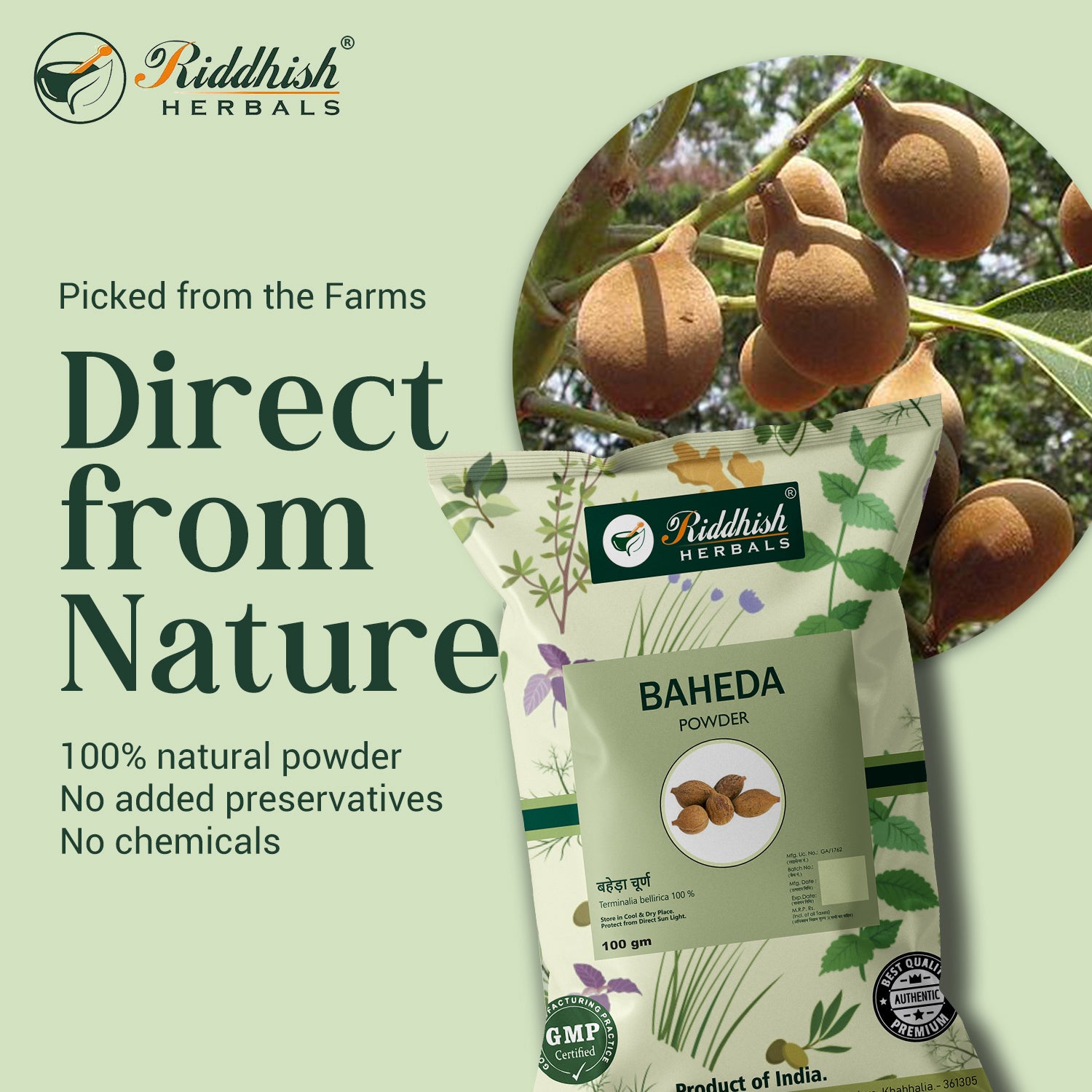
Baheda — called Bibhitaki in Sanskrit, Vibhitaka in older classical references, and known across India as Baheda, Beda, or Bahera — is the second of the three fruits that make up Triphala, Ayurveda's most widely prescribed classical formulation. Botanically identified as Terminalia bellirica, this medium-to-large deciduous tree grows across India and Southeast Asia, and its fruit has held a central place in Ayurvedic practice for well over fifteen centuries. Riddhish Herbals Baheda Churna is prepared from the dried fruit of Terminalia bellirica, finely powdered without chemical preservatives or fillers, making it a genuine single-herb preparation for those seeking classical Ayurvedic digestive and Kapha-balancing support.
Traditional Ayurvedic Importance
Charaka Samhita and Sushruta Samhita both describe Bibhitaki as a primary herb for Kapha-related imbalances — a classical property behind its traditional association with respiratory comfort, mucus balance, and the wider Kapha sphere of physiology. Ashtanga Hridayam (Sutra Sthana 6) places Bibhitaki within the Triphala group and notes its Keshya (hair-supporting) quality, a use that aligns with its long history in Ayurvedic hair-care preparations. The fruit is classed as Katu-vipaka — undergoing a pungent post-digestive transformation — which classical pharmacologists link to its digestive and Kapha-clearing action. Its Laghu (light) and Ruksha (dry) qualities reinforce its place in Kapha-balancing formulations. Bhavaprakasha Nighantu, the classical materia medica, lists Bibhitaka in the Haritakyadi Varga and describes it as Kasahara (cough-relieving) in nature.
Key Features
- Triphala's second fruit: Bibhitaki is one of Triphala's three constituent herbs — classically the primary Kapha-balancing fruit of the three.
- Kapha-Nashaka herb: Classified in classical texts for its Kapha-reducing nature, traditionally linked to respiratory comfort and mucus balance.
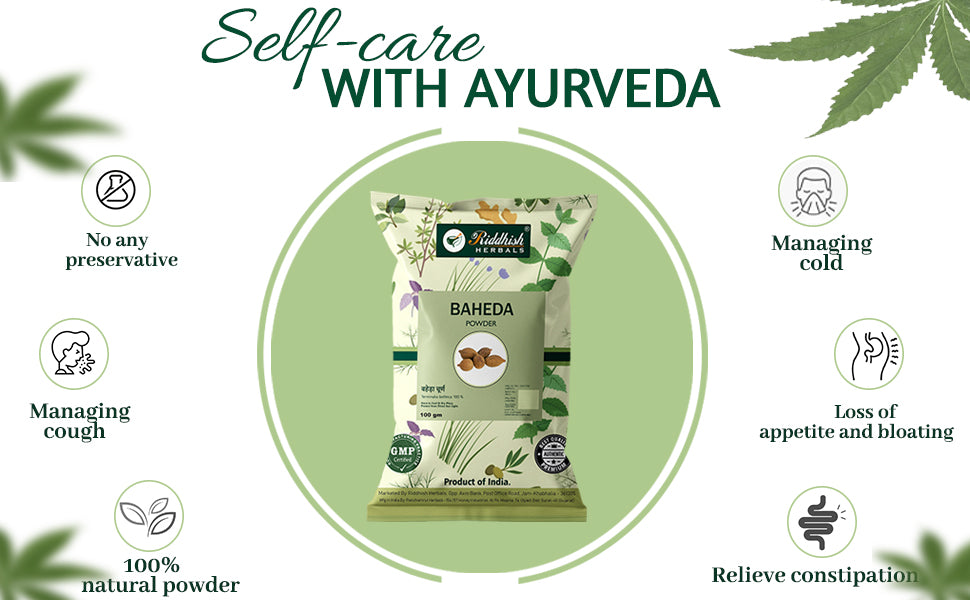
- Digestive wellness support: Traditionally valued for supporting natural bowel rhythm and digestive comfort as described in classical Ayurvedic pharmacology.
- Keshya (hair-supporting) classification: Ashtanga Hridayam lists Bibhitaki among Keshya herbs, making it a classical choice in hair-care traditions.
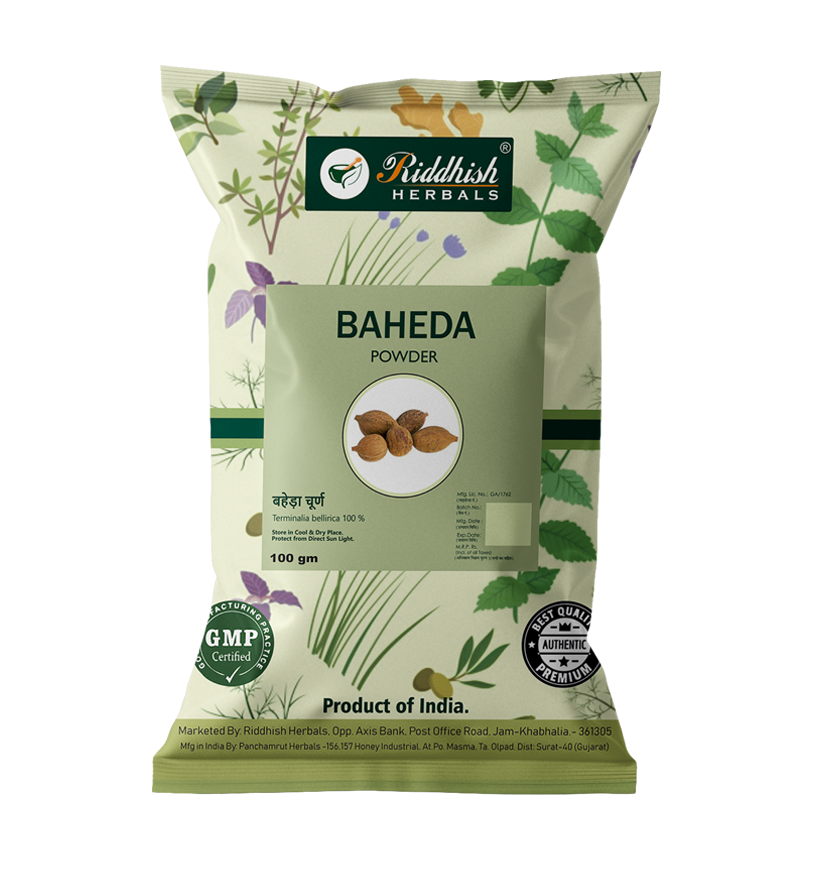
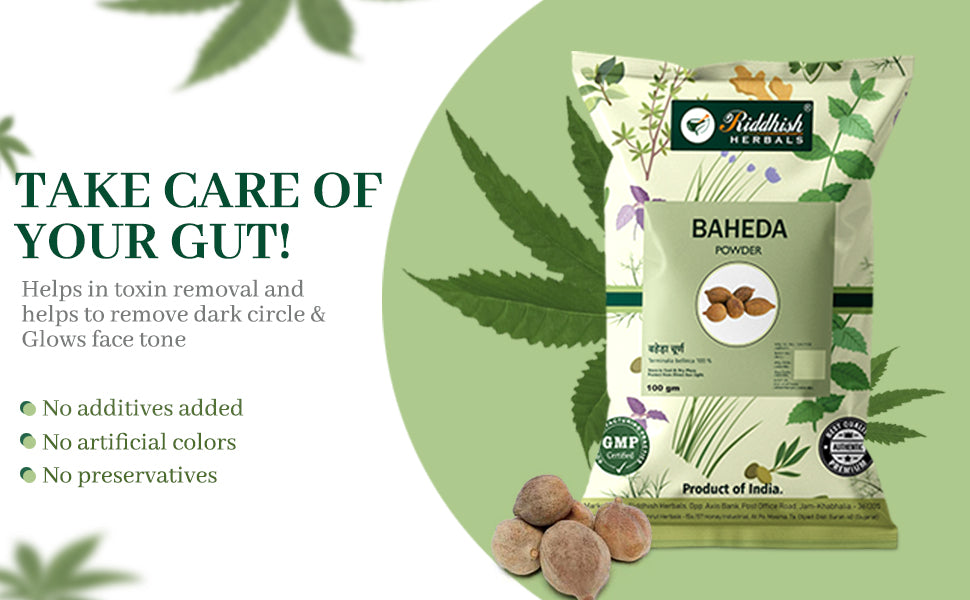
- Pure single-herb formula: 100% Terminalia bellirica fruit as printed on the pack — free from synthetic preservatives, mineral oils, and additives.
- Quality-certified manufacturing: Made in India under Ayurvedic manufacturing licence GA/1762 in a GMP-, ISO 9001:2015- and HACCP-certified facility; the pack carries the GMP Certified seal. Bill provided on every order.
- Dual application: Used internally under Vaidya guidance and topically in Ayurvedic hair-care preparations such as masks and scalp packs.
Ingredients
- Bibhitaki (Terminalia bellirica Roxb.) — Dried fruit — 100 g
100% single-herb Baheda, as stated on the pack (Terminalia bellirica 100%). No added preservatives, colours, or fillers. Product of India.
Research and Scientific References
Terminalia bellirica has been the subject of phytopharmacological research. A review published in the Asian Pacific Journal of Tropical Biomedicine (Bag et al., 2013) surveyed the phytochemistry and biological activities of Terminalia bellirica and discussed parameters consistent with its traditional Ayurvedic classifications. The WHO monograph series on selected medicinal plants recognises Terminalia species for their traditional pharmacological applications across several medical systems. Results observed in study conditions. Individual results may vary. Consult your Ayurvedic physician before use.
How to Use
As directed by your Ayurvedic physician. General classical guidance for internal use: 1–3 g (¼ to ½ teaspoon) once or twice daily with warm water or honey, before or after meals as advised. For topical hair use: mix 2–3 teaspoons with water or coconut oil into a paste, apply to the scalp, leave 20–30 minutes, then rinse thoroughly. Traditional anupan (vehicle): warm water or honey for internal use.
Safety Information
Generally well tolerated at classical recommended doses. Pregnant and lactating women should consult a qualified Ayurvedic physician before use. Children below 12 should use only under Vaidya guidance. If any digestive discomfort occurs, reduce the dose and consult your practitioner. Results may vary from person to person.
Storage
Store in a cool, dry place away from direct sunlight and moisture. Keep tightly sealed after use. Keep out of reach of children.
Frequently Asked Questions
What is Bibhitaki (Baheda) in Ayurveda?
Bibhitaki (Terminalia bellirica), known as Baheda or Beda in Hindi and Gujarati, is the second of the three Triphala fruits. Classical texts classify it as Kapha-nashaka (Kapha-reducing), traditionally associated with digestive wellness, respiratory comfort, and hair-supporting properties. It is described in Charaka Samhita, Sushruta Samhita, Ashtanga Hridayam, and Bhavaprakasha.
Is this Baheda Powder AYUSH or GMP certified?
The pack carries the GMP Certified seal, and the product is made in India under Ayurvedic drug manufacturing licence No. GA/1762 in a facility that also holds ISO 9001:2015 and HACCP certifications — these are quality-management and food-safety certifications of the manufacturing facility. We do not claim separate organic certification for this product unless stated on the label. A bill is provided with every order.
Can I take Baheda Powder without consulting a doctor?
Baheda is a single raw herb traditionally used in daily Ayurvedic routines. While it is widely taken at classical doses, we recommend guidance from a qualified Ayurvedic physician — especially if you are pregnant, lactating, on medication, or managing any health condition. Riddhish Herbals follows a doctor-guided selection approach.
What are the alternate names for Baheda?
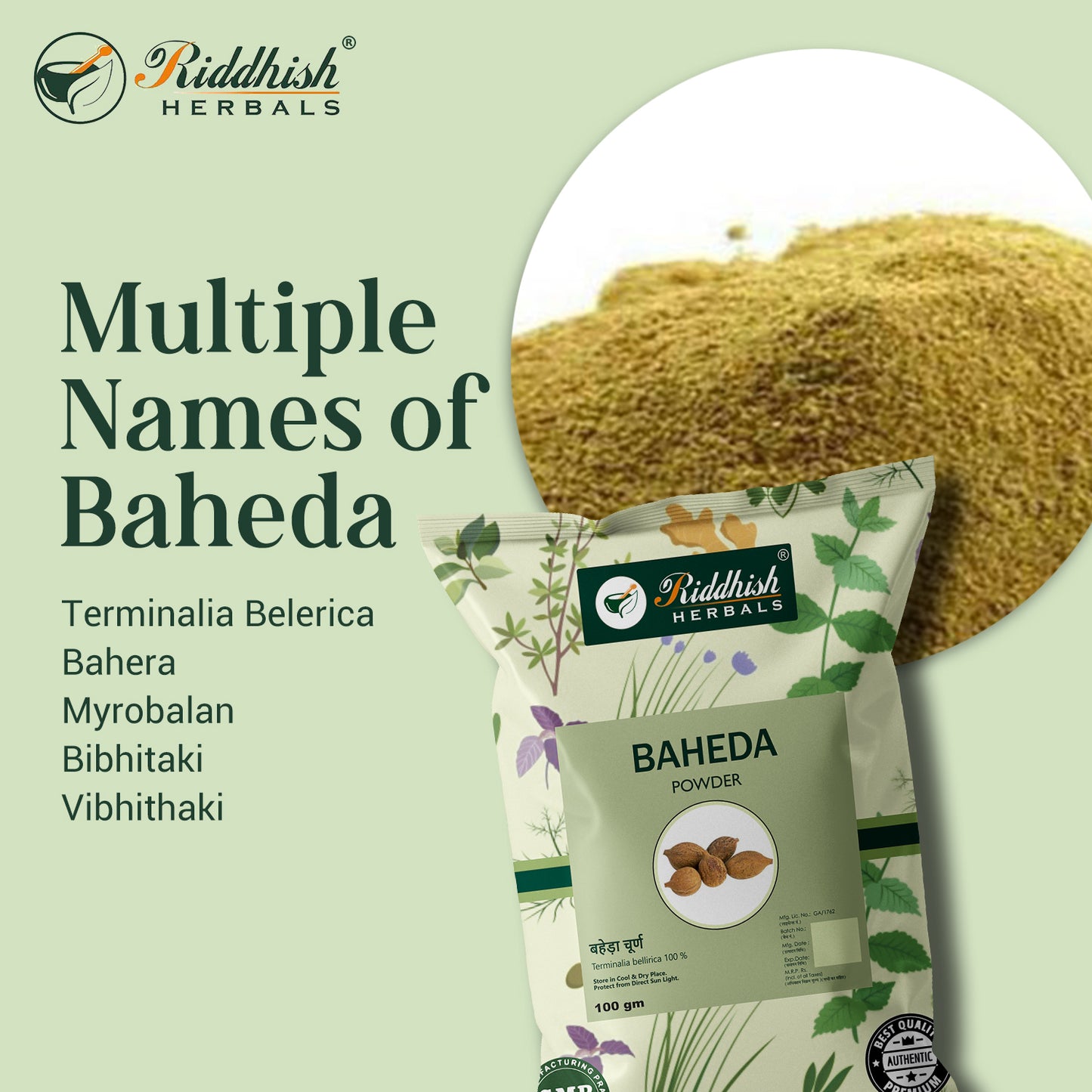
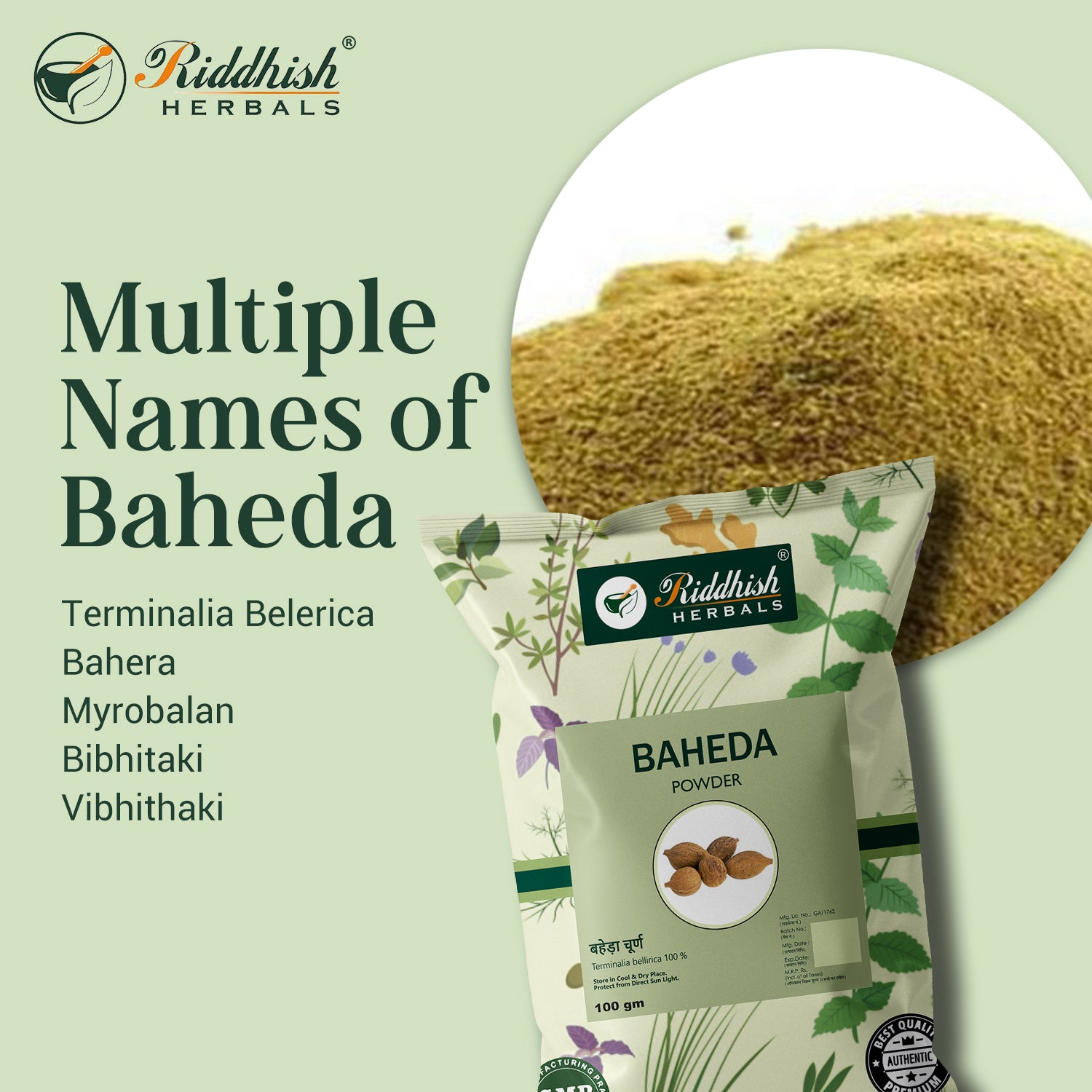
Baheda (Hindi/Gujarati), Bibhitaki (Sanskrit), Vibhitaka (classical variant), Thanri (Tamil), Tani (Telugu), Thani (Malayalam), Tare (Kannada), Bahera (Odia). Botanical: Terminalia bellirica. Also spelled Beheda, Bahera, Bibheetaki.
How is Baheda different from Haritaki and Amla?
In Triphala each fruit plays a distinct classical role: Amalaki (Amla) is Pitta-balancing and Rasayana; Haritaki is Vata-balancing; Bibhitaki (Baheda) is primarily Kapha-balancing. Baheda is the Ruksha (drying) and Laghu (light) fruit — classical pharmacology links its Katu-vipaka to digestive-fire stimulation and Kapha clearance.
Can Baheda Powder be used for hair?
Yes. Bibhitaki is classified as Keshya (hair-supporting) in Ashtanga Hridayam, making it a classical ingredient in Ayurvedic hair-care traditions. It is commonly used as a hair pack, often combined with Amla and Shikakai. Results may vary.
Has Terminalia bellirica been studied scientifically?
Yes. A review published in the Asian Pacific Journal of Tropical Biomedicine (Bag et al., 2013) examined the phytochemistry and biological parameters of Terminalia bellirica in line with its traditional Ayurvedic profile. WHO monographs also recognise Terminalia species. Results are from study conditions; individual responses vary.
What is the recommended anupan (vehicle) for Baheda?
The traditional anupan for internal use is warm water or honey. Classical guidance suggests 1–3 g once or twice daily, or as directed by your Ayurvedic physician.
Is it available at Riddhish Herbals?
Yes. Available at our Jam-Khambhalia, Gujarat store (361305) and online at riddhishherbals.com — Rs. 50 for 100 g with Pan-India delivery and a bill provided. ✓ Since 2015 ✓ Genuine Products ✓ Doctor-Guided Selection
રીધ્ધીશ હર્બલ્સ — ગુજરાતની વિશ્વાસપાત્ર આયુર્વેદિક સ્ટોર, જ્યાં સાચી સલાહ અને genuine Ayurvedic products એક જ જગ્યાએ મળે છે.