Riddhish Herbals
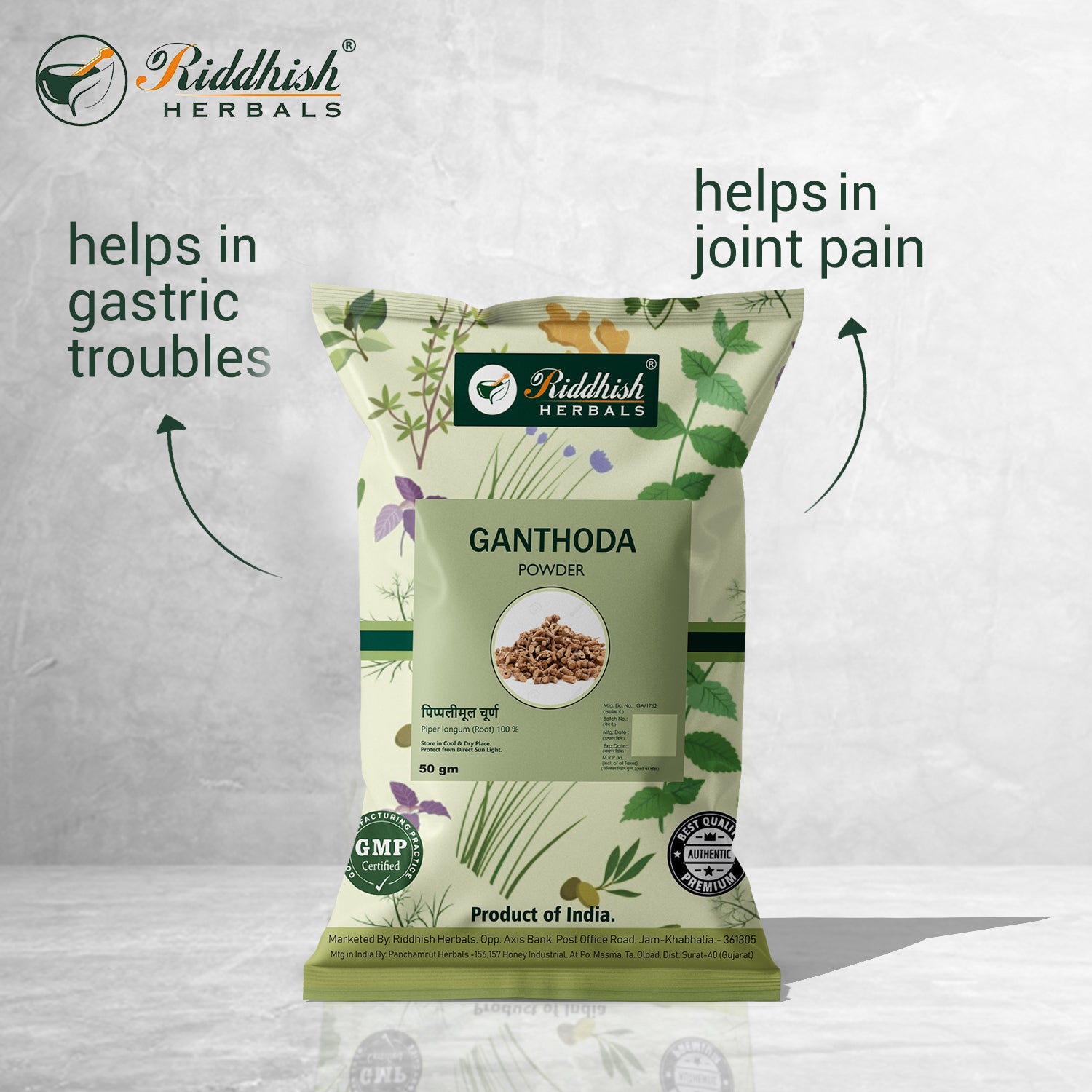
Ganthoda Powder (Pippalimool) | Piper longum Root | 50g | Riddhish
Ganthoda Powder (Pippalimool) | Piper longum Root | 50g | Riddhish
Couldn't load pickup availability
About Ganthoda Powder (Pippalimool Churna)
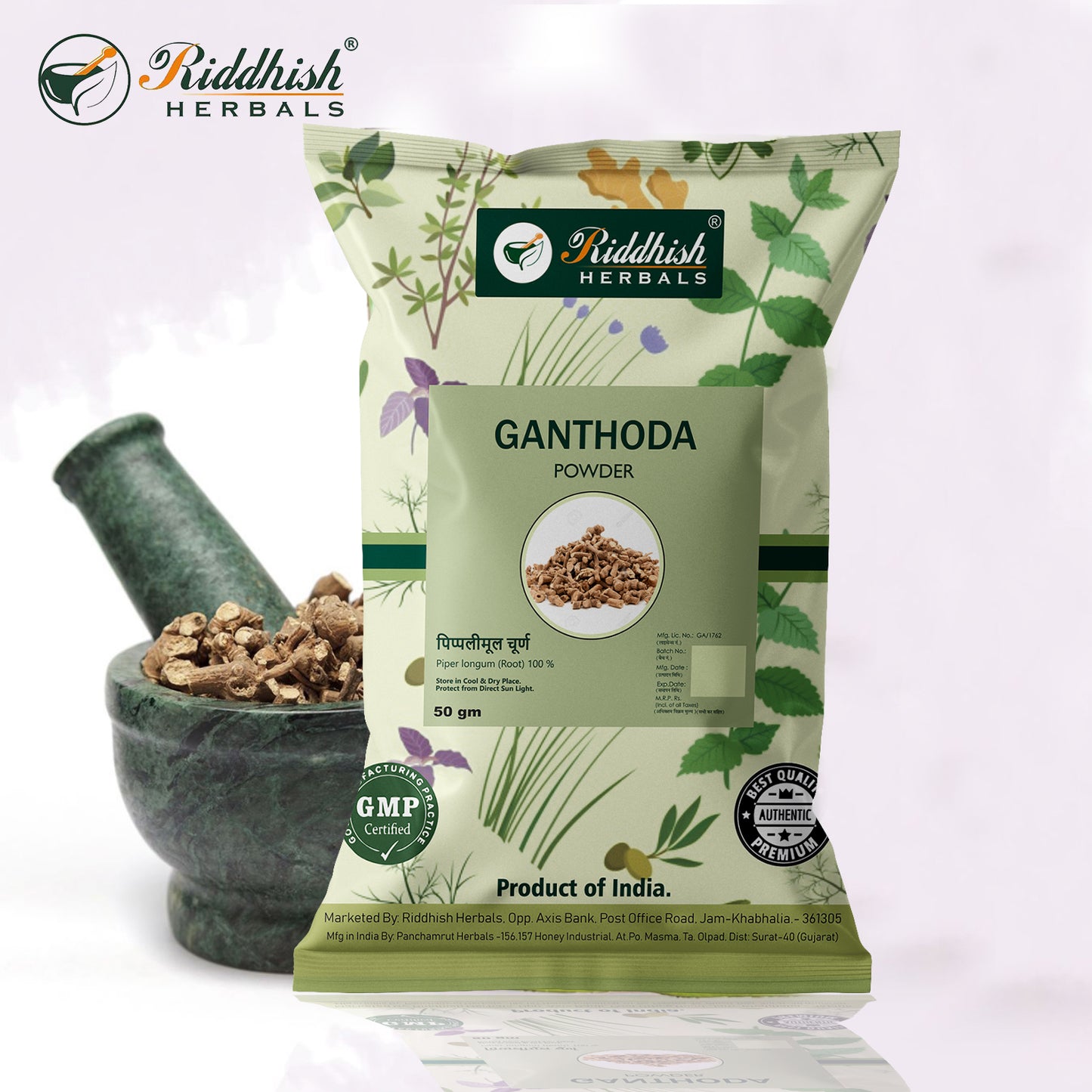
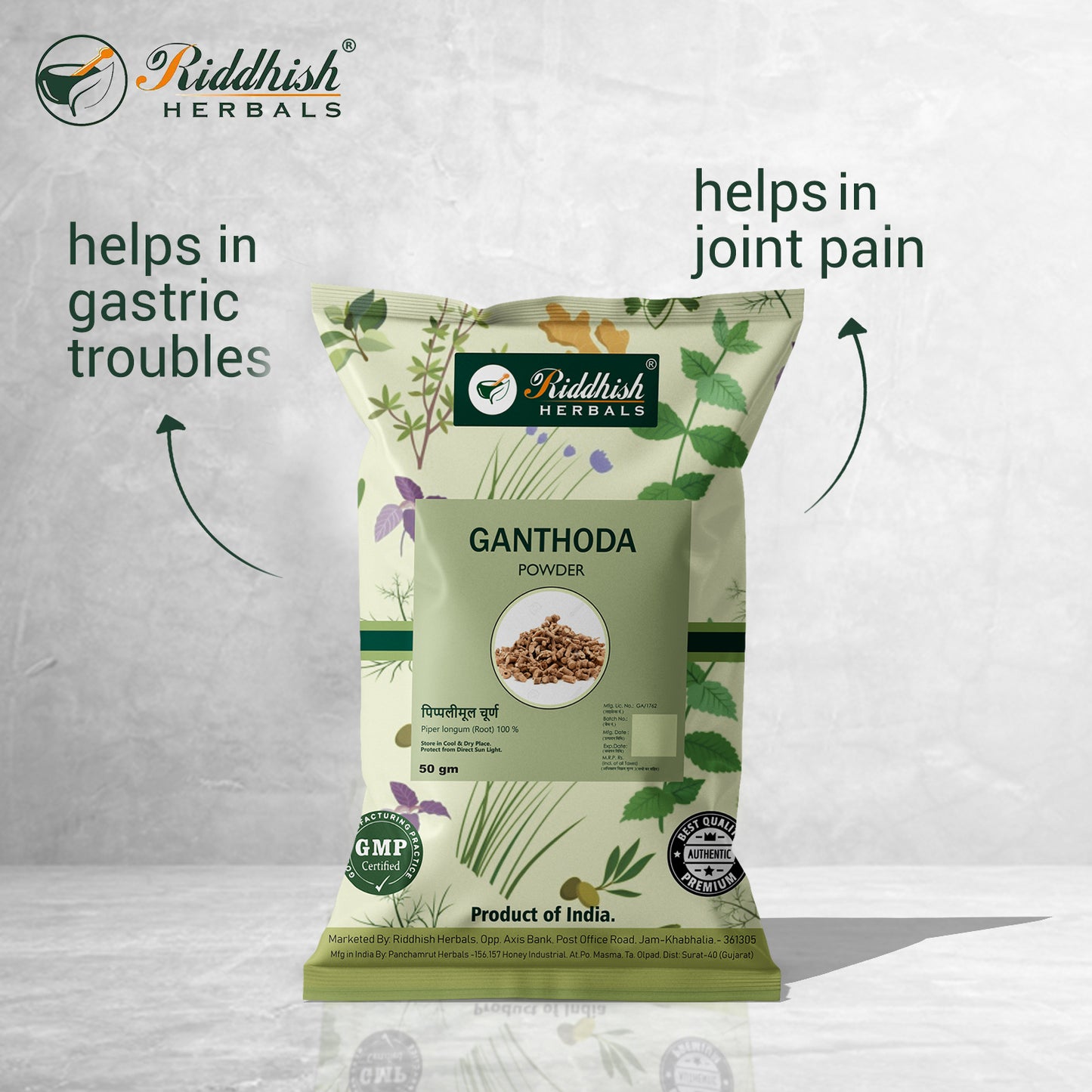
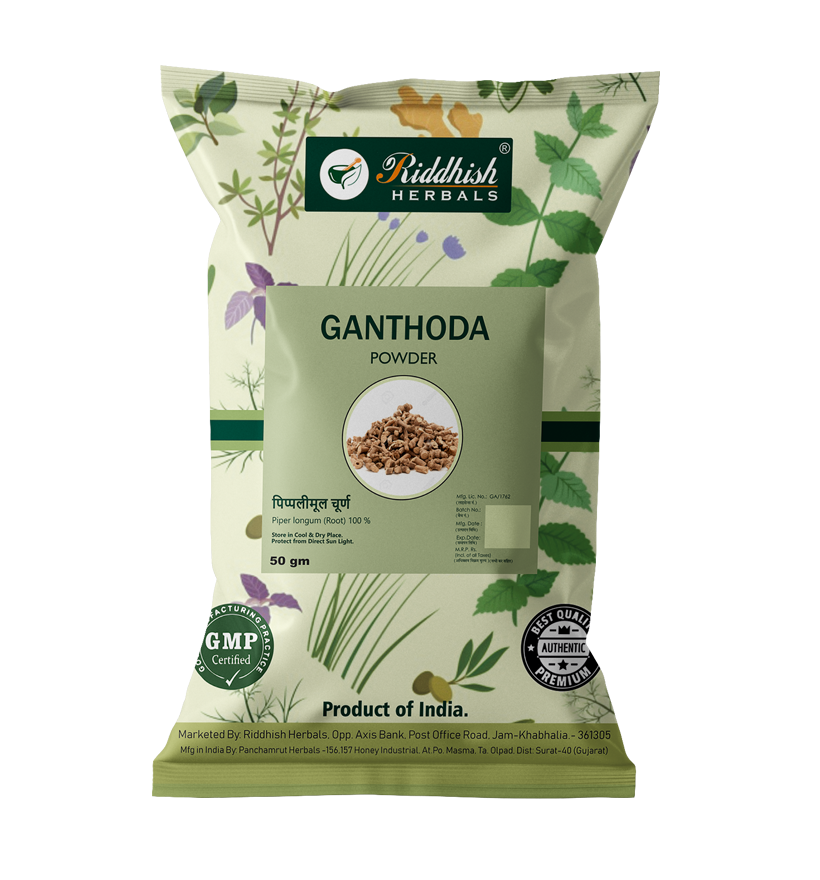
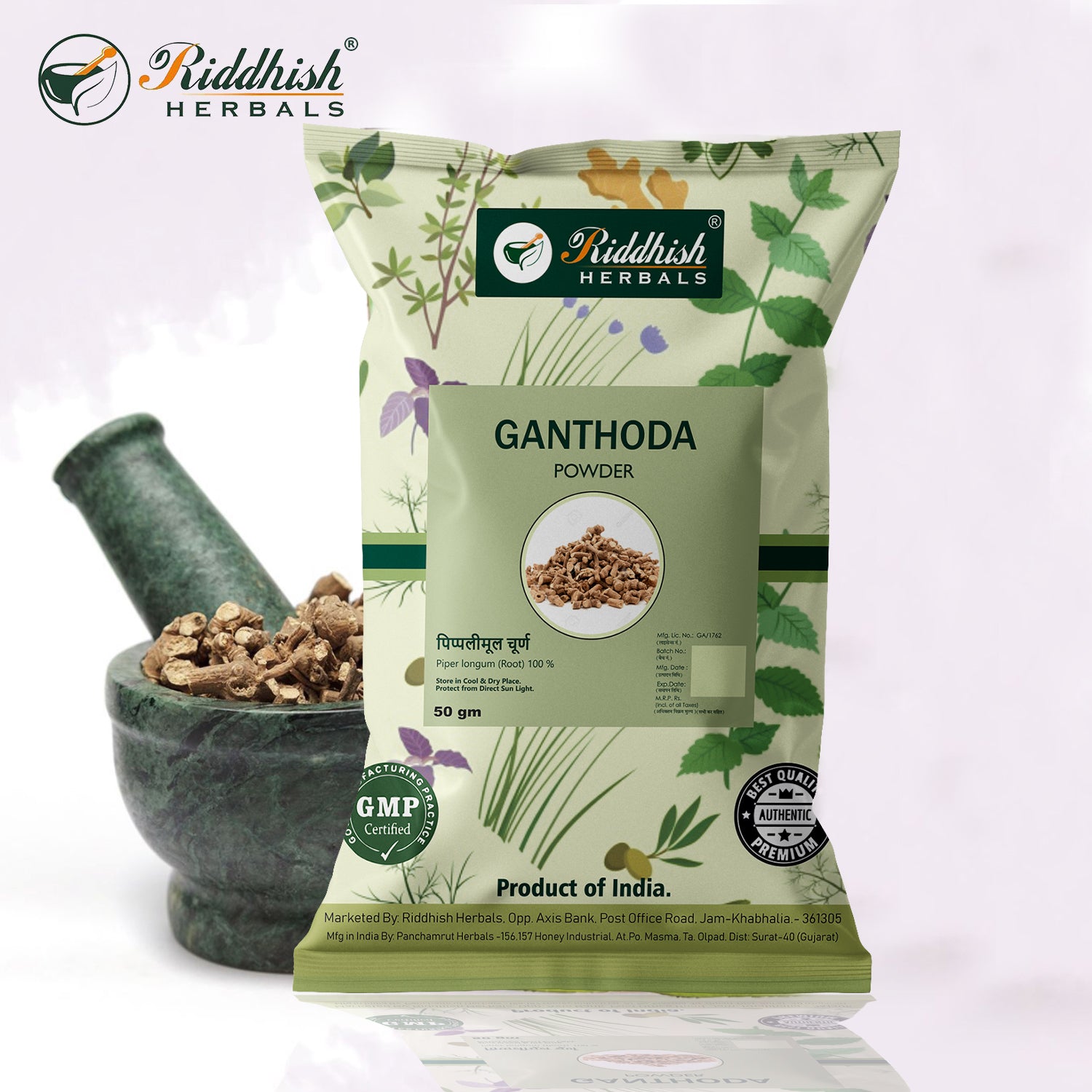
Ganthoda is the dried, ground root of Piper longum, the plant known across India as long pepper. In Sanskrit this root carries its own name — Pippalimool — to distinguish it from Pippali, the fruit of the same plant. Gujarat has used Ganthoda for generations, both in winter kitchens and in classical Ayurvedic practice. This is a single-herb powder: 100% Piper longum root, with nothing added.
Traditional Ayurvedic Importance
Classical Ayurvedic literature places Pippalimool among the warming digestive roots. The Bhavaprakasha Nighantu, in its Haritakyadi Varga, describes it as katu (pungent) and ushna (heating), with deepana and pachana qualities — the kindling of digestive fire and the support of healthy metabolism. Charaka Samhita references the root in formulations aimed at kapha–vata balance and abdominal comfort. Because it is heating by nature, classical authors recommend it with care for those of pitta constitution.
Key Features
- 100% Single Herb: Pure Piper longum root powder — no fillers, no blending.
- Correct Plant Part: Made from the root (Pippalimool), not the fruit (Pippali).
- Classically Documented: Described in Bhavaprakasha Nighantu and referenced in Charaka Samhita.
- Warming by Nature: Traditionally valued in Ayurveda as a deepana–pachana root.
- Quality Facility: Milled in a GMP-, ISO 9001:2015- and HACCP-certified facility.
- Genuine & Billed: Sourced and sold by Riddhish Herbals, trusted in Gujarat since 2015.
- Everyday Versatility: Used traditionally in kwath, warm water, and Gujarati winter dishes.
Ingredients
- Pippalimool (Piper longum) — Root — 100%
Research and Scientific References
Researchers have studied Piper longum in the context of digestion and metabolism. A 2025 chapter published by Springer Nature examined the root specifically as a source of pseudoalkaloids and alkamides, noting its distinct phytochemistry from the more commonly studied fruit (Guar & Shanker, 2025 — Springer Nature). Earlier work observed that dietary pungent principles such as piperine influenced digestive enzyme activity in study conditions (Platel & Srinivasan, 1996 — Int. J. Food Sciences and Nutrition). Results observed in study conditions. Individual results may vary. Consult your Ayurvedic physician before use.
How to Use
As directed by your Ayurvedic physician. Traditionally, ¼ to ½ teaspoon of the churna is taken with warm water, or prepared as a light kwath, typically after meals. The classical anupan (vehicle) is warm water or honey, chosen to suit the individual.
Safety Information
This is a warming root. Those with a pitta constitution, acidity, or sensitive digestion should use it cautiously and in small quantity. Not recommended during pregnancy or lactation except under qualified Ayurvedic supervision. Use strictly under the guidance of a qualified Ayurvedic physician, especially if you are taking any medication or managing any health condition. Keep out of reach of children. Results may vary from person to person.
Storage
Store in a cool, dry place, away from direct sunlight. Keep the pack tightly closed to preserve aroma and potency.
Want the full background? See our Piper longum guide, which explains how this root (Pippalimool) differs from the fruit (Pippali).