

Riddhish Herbals
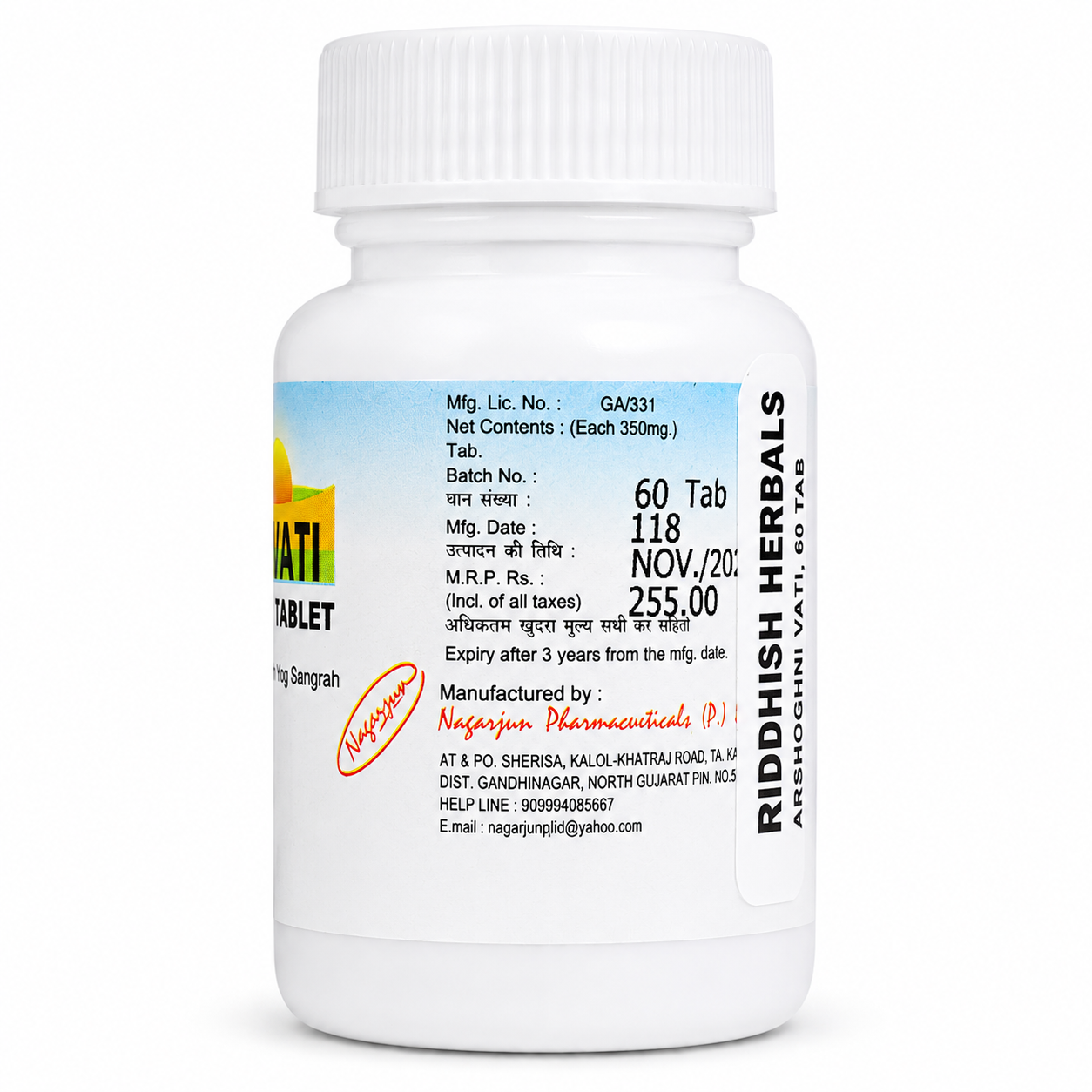
Arshoghni Vati | Classical Herbo-Mineral Vati | Nagarjun | 30 Tablets
Arshoghni Vati | Classical Herbo-Mineral Vati | Nagarjun | 30 Tablets
Couldn't load pickup availability
✓ Since 2015 · ✓ Genuine Products · ✓ Bill Provided · ✓ Doctor-Guided Selection · ✓ Pan-India Delivery
About Arshoghni Vati
Arshoghni Vati is one of the better-known classical compound tablets in the Ayurvedic Arsha tradition. The name joins Arsha — the classical Ayurvedic term for ano-rectal conditions — with ghni, meaning “that which acts against.” The formulation is documented in Siddha Yoga Sangraha under Arsha Rogadhikara, with a parallel reference in the Ayurvedic Formulary of India.
What gives this vati its character is the dominance of Rasanjana (purified Daruharidra extract), which makes up more than half the formula, supported by Nimba and Mahanimba and finished with two classical resin-and-mineral components — dragon’s blood resin and amber pishti. This presentation is prepared by Nagarjun Pharmaceuticals, an Ayurvedic manufacturer based in Gujarat.
Traditional Ayurvedic Importance
Rasanjana / Daruharidra (Berberis aristata) — the principal of the formula — is described across the classical canon, including Bhavaprakasha Nighantu and Sushruta Samhita, as a kashaya-tikta (astringent-bitter) drug valued for shodhana (cleansing) and ropana (restorative) qualities. It is classically described in the context of Arsha and Twak Vikara.
Nimba (Azadirachta indica) is among the most respected tikta dravyas in Ayurveda, classically associated with kandu (itching) and krimi contexts in texts such as Charaka Samhita. Mahanimba (Melia azedarach), its larger cousin, shares this tikta-kashaya profile.
Khunakharaba / Raktaniryasa (dragon’s blood resin) and Trinakanta / Kaharuba Pishti (amber) are classical resin and mineral-resin components long used in Arsha-directed compound formulations, as recorded in Siddha Yoga Sangraha. Together the five components form the balanced classical ratio described in the source text.
Key Features
- Authentic classical formula — built to the Siddha Yoga Sangraha / AFI Vol. II 10:3 reference ratio (24:24:24:48:144).
- Rasanjana-dominant — purified Daruharidra (Berberis aristata) extract forms 54.55% of the composition.
- Herbo-mineral classical preparation — includes Trinakanta / Kaharuba (amber) Pishti, prepared in the traditional manner.
- Gujarat-made — prepared by Nagarjun Pharmaceuticals, a licensed Ayurvedic manufacturer.
- Label-verified composition — every ingredient, part used and ratio cross-checked against the source composition.
- Doctor-guided selection — stocked and dispensed by Riddhish Herbals with a proper bill.
- Practical 30-tablet pack — a convenient course size for use under physician guidance.
Composition (Ratio per 100%)
| Ingredient | Botanical / English | Part Used | Ratio |
|---|---|---|---|
| Nimba Phala | Neem (Azadirachta indica) | Fruit | 9.09% |
| Mahanimba | Bakain / Persian Lilac (Melia azedarach) | Seed | 9.09% |
| Khunakharaba / Raktaniryasa | Dragon’s Blood Resin (Daemonorops draco) | Exudate / resin | 9.09% |
| Trinakanta / Kaharuba Pishti | Amber Pishti (succinite) | Pishti / mineral-resin prep. | 18.18% |
| Shuddha Rasauta / Rasanjana | Daruharidra extract (Berberis aristata) | Solid extract | 54.55% |
Classical reference: Siddha Yoga Sangraha, Arsha Rogadhikara / AFI Vol. II, 10:3. Classical quantity 24 : 24 : 24 : 48 : 144 = 264 parts. Per-tablet milligram values follow the tablet weight printed on the physical Nagarjun pack. Spelling variants: Arshoghani Bati, Arshogani Vati, Arshoghni Ghanvati, Arsoghni Vati.
Research & Scientific References
The principal of this formula, Daruharidra / Rasanjana (Berberis aristata), and its main alkaloid berberine have been the subject of published phytopharmacological research exploring their traditionally recognised astringent and restorative qualities.
Results were observed under study conditions and relate to the isolated ingredient, not to this finished product. Individual results may vary. This information is shared for educational context and is not a therapeutic claim. Consult your Ayurvedic physician before use.
How to Use & Anupan
Adults: 1–2 tablets, one to two times a day, before or after food, or as directed by your Ayurvedic physician. The classical anupan (vehicle) for Arsha-directed formulations is takra (buttermilk) or plain water. Dose and duration should always be set by a qualified Ayurvedic physician.
Who Can Use It
Intended for adults using the product under the guidance of a qualified Ayurvedic physician. Not recommended during pregnancy or lactation except on a physician’s advice. Anyone taking regular medication or managing a medical condition should consult their physician before use.
Safety Information
Use strictly under the guidance of a qualified Ayurvedic physician. Consult your physician before use, especially if you are pregnant, lactating, taking any medication, or managing any medical condition. Keep out of reach of children. Results may vary from person to person.
Storage
Store in a cool, dry place away from direct sunlight. Keep the container tightly closed. Keep out of reach of children.
Frequently Asked Questions
Is this Arshoghni Vati AYUSH or GMP certified?
This is a licensed classical Ayurvedic medicine manufactured by Nagarjun Pharmaceuticals under an Ayurvedic manufacturing licence. This particular presentation does not carry the separate AYUSH Standard Mark. If you specifically want the AYUSH Standard Mark–certified presentation of the same classical formula, see the Virgo Arshoghni Vati listed under related products.
Can I take Arshoghni Vati without consulting a doctor?
No. This is a classical herbo-mineral preparation and should be used strictly under the guidance of a qualified Ayurvedic physician, who will set the correct dose, anupan and duration for you.
What is Arshoghni Vati?
It is a classical Ayurvedic compound tablet documented in Siddha Yoga Sangraha (Arsha Rogadhikara) and the Ayurvedic Formulary of India. It combines Rasanjana (Daruharidra), Nimba, Mahanimba, dragon’s blood resin and amber pishti in a fixed classical ratio.
What is it classically described for?
In its source text it is classically described in the context of Arsha and Raktarsha — the traditional Ayurvedic terms for ano-rectal conditions. This is a description of classical textual use, not a claim of treatment or cure.
What are the alternate names and spellings?
Also written as Arshoghani Bati, Arshogani Vati, Arshoghni Ghanvati and Arsoghni Vati. The principal ingredient, Daruharidra, is also called Rasanjana, Rasaut and Indian Barberry.
How is the Nagarjun presentation different from the Virgo one?
Both are the same classical Arshoghni Vati formula. The Nagarjun presentation is a 30-tablet pack from Nagarjun Pharmaceuticals (Gujarat). The Virgo presentation additionally carries the AYUSH Standard Mark. Choose whichever suits your preference; both are sold by Riddhish Herbals with a proper bill.
What is the recommended anupan?
The classical anupan for Arsha-directed formulations is takra (buttermilk) or plain water. Your physician may advise a specific vehicle based on your constitution.
How should I store this product?
Keep it in a cool, dry place away from direct sunlight, with the container tightly closed and out of reach of children.
Has its main ingredient been studied scientifically?
Yes. Daruharidra (Berberis aristata) and its alkaloid berberine have been studied in published phytopharmacological research for their astringent, anti-inflammatory and tissue-restorative properties under experimental conditions (e.g. PubMed PMID 36824006). These findings relate to the isolated ingredient under study conditions, not to this finished product.
Is this the same as Arsaquit or Pilewell?
They belong to the same ano-rectal wellness family but are different formulations. Arshoghni Vati is the classical Siddha Yoga Sangraha formula; Arsaquit (Virgo) and Pilewell (Therachem) are separate proprietary preparations. See the related products below.
▸ Arshoghni Vati (Virgo, AYUSH Standard Mark) — 40 Tablets
▸ Arshakuthar Rasa (Virgo) — classical herbo-mineral tablet (B.B.R. 336)
▸ Arsaquit Tablet (Virgo) — 30 Tablets
▸ Pilewell Capsule (Therachem) — 30 Capsules
▸ Piloyam Capsule (Rutarth) — Saptavimsatika Guggul + Suran
▸ Full Ano-Rectal Wellness range