
Riddhish Herbals
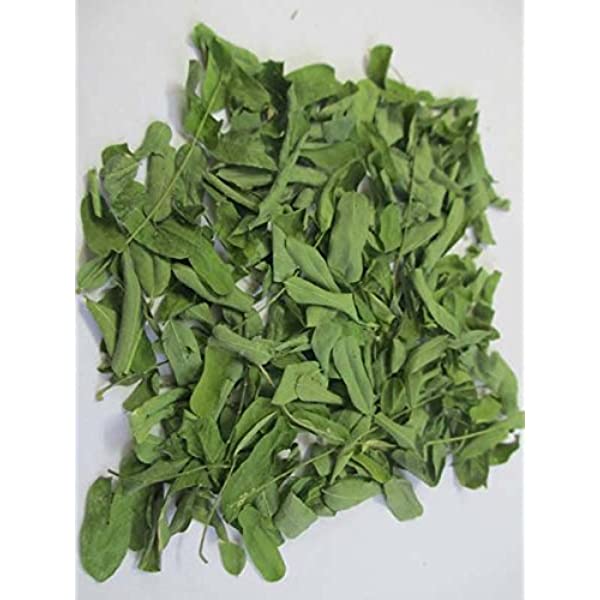
Chanothi Pan Akha (Gunja Leaf) – Abrus precatorius – Riddhish Herbals – 100g
Chanothi Pan Akha (Gunja Leaf) – Abrus precatorius – Riddhish Herbals – 100g
Couldn't load pickup availability
Chanothi Pan Akha from Riddhish Herbals is the leaf of Chanothi (Abrus precatorius) — the classical Gunja of Ayurveda. This is the leaf (Gunja Patra), the milder part, distinct from the well-known red-and-black Gunja seed. Gunja is a classical Upavisha-class dravya: it is used strictly under the direction of a qualified Ayurvedic physician and is never taken as a raw seed, which requires classical shodhana (purification) first. The leaf is traditionally valued in Keshya (hair-care) preparations. A comprehensive review documented its traditional uses and phytochemistry. Each pack is genuine, bill-provided material from a doctor-guided store operating since 2015.
About Chanothi Pan Akha (Gunja Leaf)
Chanothi is the Gujarati name for Gunja, Abrus precatorius — the climbing plant famous for its striking red-and-black seeds once used as goldsmiths' weights (the Ratti). This product is the leaf (Pan / Patra), a milder part of the plant, offered as a clean single-herb raw material.
An important clarity: this is the Gunja leaf, not the seed. Gunja is classically an Upavisha-class dravya — a herb the tradition uses only with expert knowledge, purification and physician guidance. Riddhish Herbals supplies it under our doctor-guided selection standard with a bill on every order, strictly for physician-directed use.
Traditional Ayurvedic Importance
Classical texts (Bhavaprakasha Nighantu) describe Gunja among the Upavisha (sub-potent) dravyas — herbs of real strength that a trained Vaidya works with carefully. The seed in particular is never used raw and must undergo classical shodhana; the leaf is the gentler part.
The leaf is best known in the classical Keshya (hair-care) tradition, worked into medicated tailas (oils) for the scalp and hair. Because the whole plant is potent, every classical use is matched to the person by a qualified physician — which is exactly how it is offered here.
Key Features
- Single-herb Gunja leaf: 100% Abrus precatorius leaf (Gunja Patra / Chanothi Pan), nothing blended in.
- The classical Gunja: Chanothi is the classical Gunja of Ayurveda, a Upavisha-class dravya used strictly under expert guidance.
- The leaf, not the seed: this is Gunja Patra (the milder leaf), distinct from the well-known red-and-black Gunja seed, which is a separate part requiring classical shodhana.
- Keshya tradition: the leaf is classically valued in Ayurvedic hair-care (Keshya) preparations and taila.
- Physician-only herb: selected and directed by a qualified Vaidya — never for self-use.
- Genuine, doctor-guided sourcing: bill provided with every pack; a store trusted since 2015.
Research on the Constituents
◆ A comprehensive review documented the traditional uses, phytochemistry and pharmacology of Abrus precatorius L. — (Qian H et al., 2022 — Journal of Ethnopharmacology). PubMed PMID: 35714881
Results were observed under study conditions. Individual results may vary. This is shared for general educational interest and is not a medical claim. Consult your Ayurvedic physician before use.
Ingredients (single-material, label-verified)
| Ingredient | Botanical (part) | Plant Part | Proportion |
|---|---|---|---|
| Chanothi Pan / Gunja Patra | Abrus precatorius L. (Fabaceae) | Leaf (Patra) | 100% single material |
Single-material genuine Gunja leaf (Abrus precatorius leaf). This is the leaf, not the seed. No fillers, colours or preservatives added. A classical Upavisha-class herb for physician-directed use. Confirm details against the physical pack label.
How to Use
Strictly as directed by a qualified Ayurvedic physician. Gunja is a Upavisha-class herb: no fixed dose is printed here by design, and it is never self-administered. It is traditionally used in medicated hair-care tailas and, for any internal use, only in properly shodhita (purified) classical form under a physician's direction.
Who Can Use It
Only for adults using it under the direct guidance of a qualified Ayurvedic physician, who will confirm the correct form and method. It is not for self-use. It is not recommended in pregnancy or lactation, and not for children, except on the specific direction of a qualified physician. Anyone on medication or managing a health condition must consult their physician first.
Safety Information
Gunja (Chanothi) is a classical Upavisha-class Ayurvedic herb used only under the direction of a qualified Ayurvedic physician. The seed is never used raw and requires classical shodhana; this leaf material is likewise for expert-guided use, not self-dosing. Keep strictly out of reach of children. Do not consume without a physician's guidance. Results may vary from person to person.
Storage
Store in a cool, dry place in an airtight container, away from moisture and direct sunlight, and strictly out of the reach of children. Keep the pack tightly closed after each use.
Frequently Asked Questions
What is Chanothi Pan Akha?
It is the leaf of Chanothi (Abrus precatorius), the classical Gunja of Ayurveda — a single-herb raw material for physician-directed use. This is the leaf (Gunja Patra), not the seed.
Is this the Gunja seed or the leaf?
It is the leaf (Gunja Patra), the milder part of the plant. It is not the well-known red-and-black Gunja seed, which is a separate part that must undergo classical shodhana and is never used raw.
Why must it be used only under a physician?
Gunja is a classical Upavisha-class dravya — a herb of real strength. A qualified Ayurvedic physician decides the correct form, method and whether it suits you. It is never a self-use herb.
What are the alternate names of Chanothi?
Chanothi is Gunja, Raktika or Kakananti (Sanskrit), Gunja, Ghungchi or Ratti (Hindi), Gundumani (Tamil), Guruginja (Telugu) and Gulaganji (Kannada); in English rosary pea, Indian liquorice or crab's eye. Botanically Abrus precatorius.
How is the leaf traditionally used?
The leaf is classically valued in Keshya (hair-care) preparations and medicated tailas (oils), used externally under a physician's guidance. Any internal use is only in shodhita classical form as directed.
Is this AYUSH- or GMP-made?
This is a raw single-herb leaf material in Riddhish Herbals' own pack. Any AYUSH or GMP mark would appear on the physical pack — we state such marks only where verified on the pack.
Can pregnant women or children use it?
No, not without a physician's specific direction. It is not recommended in pregnancy or lactation, and must be kept strictly out of reach of children.
Has Abrus precatorius been studied scientifically?
Yes — a comprehensive review documented its traditional uses, phytochemistry and pharmacology (Qian H et al., 2022, Journal of Ethnopharmacology). This is shared for general educational interest, not as a medical claim.
How should I store Chanothi Pan Akha?
Keep it in a cool, dry, airtight container away from moisture and sunlight, and strictly out of the reach of children.
Regional Names & Spelling Variants
| Language | Name |
|---|---|
| Local / common | Chanothi / Gunja (ચણોઠી / गुंजा) |
| Sanskrit | Gunja, Raktika, Kakananti, Chirmi (गुञ्जा) |
| Hindi | Gunja, Ghungchi, Ratti (गुंजा / घुंघची / रत्ती) |
| Gujarati | Chanothi (ચણોઠી) |
| Marathi | Gunj / Gunja (romanised) |
| Bengali | Kunch / Kunch-gach (romanised) |
| Tamil | Gundumani / Kunri (romanised) |
| Telugu | Guruginja / Guriginja (romanised) |
| Kannada | Gulaganji (romanised) |
| Malayalam | Kunni / Kunnikkuru (romanised) |
| English + Botanical | Rosary Pea / Indian Liquorice / Crab's Eye — Abrus precatorius L. (Fabaceae) — leaf (this product; seeds are a separate part) |
| Search variants | chanothi, chanothi pan, gunja, gunja patra, ghungchi, ratti, abrus precatorius leaf, rosary pea, gundumani |
| Common misspellings | chanoti, chunothi, gunja patta, abrus precatorious, ghunchi, chanothi pan akha |
Related at Riddhish Herbals
Aritha Akha (Reetha / Soapnut) · Bakuchi Churna (Babchi, skin) · Ayurvedic Raw Herbs & Materials · Doctor-Guided Product Selection