
Skip to product information
1 of 1

Riddhish Herbals

Gunja Beej | Abrus precatorius – Traditional Ayurvedic Raw Material & Cultural Seed | by Riddhish Herbals

Gunja Beej | Abrus precatorius – Traditional Ayurvedic Raw Material & Cultural Seed | by Riddhish Herbals

Regular price Rs. 200.00
Regular price Rs. 200.00 Sale price Rs. 200.00
Sale Sold out

🔹 BULLET POINTS

💪 Traditional Ayurvedic Raw Material: Gunja Beej is mentioned in classical Ayurveda for its specific, expert-guided applications after proper purification (Shodhana).
🔥 Metabolism-Oriented Traditional Use: Described in texts for its role in formulations that support balance and disciplined wellness routines.
🌱 Plant-Based & Natural Origin: Derived from carefully selected Abrus precatorius seeds, valued for traditional and cultural relevance.
Multi‑Purpose Heritage Seed: Known historically for Ayurvedic, spiritual, ornamental and traditional measurement (Ratti) uses.
🧘 Holistic Lifestyle Relevance: Traditionally integrated into mindful wellness practices under professional supervision.
🌿 Symbolic & Cultural Importance: Widely used in pooja rituals, malas, crafts and heritage jewellery making.
⚠️ Expert‑Guided Usage Only: Naturally potent in nature and meant strictly for knowledgeable handling and professional advice.


🔹 USAGE & INDICATION

• Traditionally referenced in Ayurveda after classical purification (Shodhana) only.
• Used under the supervision of a qualified Ayurvedic practitioner.
• Considered in specific traditional formulations as per individual constitution (Prakriti).
• Also suitable for ornamental, cultural and spiritual applications.
• Not intended for casual or unsupervised internal use.


🔹 DESCRIPTION

In Ayurveda, every natural substance is understood not only by its physical properties but also by its potency, processing method and contextual application. Riddhish Herbals Gunja Beej (Abrus precatorius) is a traditionally known Ayurvedic raw material that holds a unique position in India’s herbal, cultural and historical heritage.

Gunja Beej has been described in classical Ayurvedic literature for specialised uses that always emphasise purification (Shodhana) and expert handling. Due to its naturally potent nature, it has traditionally been handled only by knowledgeable practitioners who understand its qualities, dose sensitivity and compatibility. Ayurveda never promotes random or unsupervised usage of such herbs; instead, it highlights discipline, precision and respect for nature’s strength.

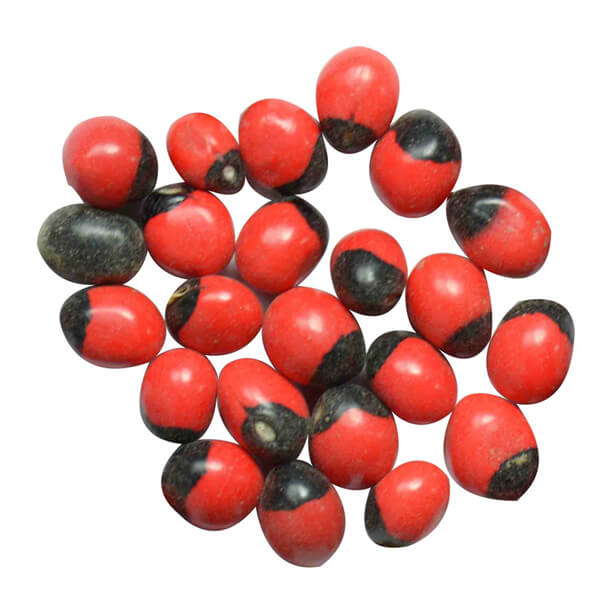
Beyond Ayurveda, Gunja Beej is deeply woven into Indian tradition. The seeds were historically used as Ratti, a standard unit of weight in ancient India, especially in jewellery and gemstone measurement. Their striking red colour with a black tip also makes them popular for malas, spiritual ornaments and decorative crafts, symbolising faith, balance and cultural continuity.

In today’s lifestyle-focused wellness approach, Gunja Beej is primarily chosen by individuals seeking authentic Ayurvedic raw materials for classical preparations under guidance, or for spiritual and ornamental purposes. It aligns with Ayurveda’s preventive philosophy, where awareness, moderation and expert advice form the foundation of wellbeing.

Riddhish Herbals ensures that the product is supplied in its raw, authentic form, maintaining traditional identity and natural integrity. This product is ideal for those who value genuine Ayurvedic herbs, cultural authenticity and mindful usage as part of a disciplined lifestyle rooted in Indian tradition.


🔹 INGREDIENTS

Abrus precatorius (Gunja Beej) – 100% pure seeds


🔹 IMPORTANCE OF EACH INGREDIENT

Abrus precatorius (Gunja Beej): Traditionally described in Ayurveda for specialised applications after purification; also valued for cultural, ornamental and symbolic significance.


🔹 DOSAGE

As directed strictly by a qualified Ayurvedic practitioner.


🔹 HOW TO USE

Use only as advised by an Ayurvedic expert. Not recommended for self-medication. For ornamental or spiritual purposes, handle with care and keep away from children.


🔹 Q&A SECTION (FAQs)

Q1. Is Gunja Beej suitable for daily consumption?
No. Internal use is only considered after classical purification and professional guidance.

Q2. Can this product be used without consulting a practitioner?
It is strongly advised to consult a qualified Ayurvedic practitioner before any internal application.

Q3. Is this product natural?
Yes, it is a plant-based, natural raw seed product.

Q4. Can Gunja Beej be used for spiritual purposes?
Yes, it is commonly used for malas, pooja rituals and decorative crafts.

Q5. Does it contain any additives or preservatives?
No, it contains only pure Gunja Beej seeds.

Q6. Is it suitable for children?
No. It should be kept away from children.

Q7. Can pregnant or lactating women use it?
Not recommended without explicit professional consultation.

Q8. How should it be stored?
Store in a cool, dry place away from moisture and sunlight.

Q9. Why is professional guidance important?
Because Gunja Beej is naturally potent and requires correct processing and dosage understanding.

Q10. Is this product vegetarian?
Yes, it is completely plant-based.


🔹 REGIONAL NAMES

Hindi: गुंजा बीज
Marathi: गुंजा बीज
Gujarati: ગુંજા બીજ
Tamil: குஞ்சா பீஜம்
Telugu: గుంజా బీజం
Kannada: ಗುಂಜಾ ಬೀಜ
Malayalam: ഗുഞ്ചാ ബീജം
Punjabi: ਗੁੰਜਾ ਬੀਜ
Bengali: গুঞ্জা বীজ
Urdu: گنجا بیج

Other Names: Ratti Beej, Jequirity Seed, Rosary Pea


🔹 SCIENTIFIC EVIDENCE & REFERENCES

Modern scientific literature has extensively studied Abrus precatorius for its phytochemical composition and biological activity. Research has explored its naturally occurring compounds and emphasised the importance of processing and controlled application. These studies align with Ayurveda’s long‑standing insistence on purification (Shodhana) and expert supervision before any internal consideration.

Experimental and review studies have focused on understanding its bioactive profile, safety parameters and traditional relevance, reinforcing that benefits and risks depend greatly on preparation method, dose and context of use.

References:

  1. Chopra RN et al., Glossary of Indian Medicinal Plants, CSIR.
  2. Ross IA. 2003. Medicinal Plants of the World. Humana Press.
  3. Review articles on Abrus precatorius available via Google Scholar.

To know about its proven traditional references and uses, please visit Google Scholar:
https://scholar.google.com/scholar?q=Abrus+precatorius+Ayurveda

View full details