
Riddhish Herbals
Rasnasaptak Kwath (7-Herb Kashayam) – Ayurvedic Decoction – Riddhish Herbals – 100g
Rasnasaptak Kwath (7-Herb Kashayam) – Ayurvedic Decoction – Riddhish Herbals – 100g
Couldn't load pickup availability
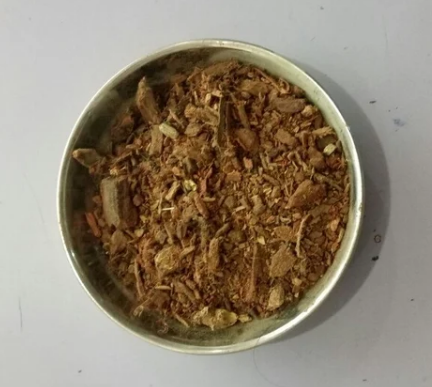
Rasnasaptak Kwath from Riddhish Herbals is a classical seven-herb Ayurvedic decoction raw material — equal parts Rasna (Pluchea lanceolata), Amruta/Guduchi (Tinospora cordifolia), Devadaru (Cedrus deodara), Aragwadha (Cassia fistula), Gokshura (Tribulus terrestris), Punarnava (Boerhavia diffusa) and Eranda (Ricinus communis) — supplied for preparing a traditional decoction (Kwath) at home. This formulation is classically referenced in Chakradatta's Amavata Adhikara (chapter on Amavata) for Vata-Kapha joint balance. Each pack is genuine, bill-provided material from a doctor-guided store operating since 2015.
About Rasnasaptak Kwath
Rasnasaptak Kwath ("Rasna" + "Saptak", meaning "group of seven") is a classical seven-herb Kwath-grade (Yavakut) raw material blend supplied for preparing a traditional Ayurvedic decoction at home — simmering the coarse roots and wood pieces in water as directed by a Vaidya. This listing presents the documented classical Rasnasaptak Kashayam composition, cross-referenced from multiple independent Ayurvedic sources: Rasna, Amruta (Guduchi), Devadaru, Aragwadha, Gokshura (Trikantaka), Punarnava and Eranda, traditionally combined in equal parts.
Ayurvedic pharmacognostic literature notes that more than one botanical has historically been traded under the name "Rasna" — principally Pluchea lanceolata, Vanda roxburghii (syn. Vanda tessellata), and Alpinia galanga — depending on region and trade source. Riddhish Herbals' Rasnasaptak Kwath uses Pluchea lanceolata root, the identity documented for this specific classical formulation and consistent with the Ayurvedic Pharmacopoeia of India's Rasna monograph — matching our Rasna Mool Churna, Rasna Mool Kwath and Rasnaerandadi Kwath listings of the same botanical.
Traditional Ayurvedic Importance
Rasnasaptak Kashayam is classically referenced in Chakradatta's Amavata Adhikara (the chapter addressing Amavata, a classical Vata-Kapha joint condition), and is also recorded within the Kashaya Prakarana of Sahasrayoga. Each of the seven herbs is traditionally described as Vata-balancing: Rasna (Pluchea lanceolata) is Katu-Tikta (pungent, bitter) and Kapha-Vata shamaka; Amruta/Guduchi (Tinospora cordifolia) is a classical Rasayana and Tridoshahara herb; Devadaru (Cedrus deodara) is traditionally referenced for Kapha-Vata balance; Aragwadha (Cassia fistula) is traditionally used in the context of gentle Vata-Kapha balance; Gokshura (Tribulus terrestris) is classically referenced for Vata balance and Mutrala (diuretic) action; Punarnava (Boerhavia diffusa) is a classical Shothahara (anti-oedema) and Vata-balancing herb; and Eranda (Ricinus communis) root is a classical Vata-shamaka dravya particularly referenced for Sandhigata (joint-related) Vata balance.
The Kwath (decoction) form is a classical preparation method — simmering the coarse roots and wood in water and reducing it — traditionally considered to draw out a herb's water-soluble properties more fully than a simple powder infusion. This seven-herb blend is traditionally used within a physician-guided routine, sometimes alongside a Shunthi (dried ginger) addition per some classical references.
Key Features
- Classical seven-herb Kwath: Rasna, Amruta (Guduchi), Devadaru, Aragwadha, Gokshura, Punarnava and Eranda in equal parts — the documented Rasnasaptak Kashayam formula.
- Kwath-grade cut: coarsely cut/crushed roots and wood intended for preparing a traditional decoction (Kwath) at home, rather than a fine powder.
- Classical Vata-Amavata dravya group: all seven herbs are traditionally described in Ayurvedic texts within the context of Vata balance, referenced in the Amavata (Vata-Kapha joint condition) chapter of Chakradatta.
- Traditional Sandhi and Snayu reference: classically referenced for a traditional role in supporting Sandhi (joint) and Snayu (ligament) comfort.
- Genuine, doctor-guided sourcing: bill provided with every pack; a store trusted since 2015.
Research on the Constituents
◆ A published phytochemical and biological review compiled the traditional Rasayana context and chemical/biological research on Pluchea lanceolata (Rasana) — (Srivastava P & Shanker K, 2012 — Fitoterapia, 83(8):1371–1385). PubMed PMID: 22877846
◆ A published phytochemical evaluation compared wild and cultivated Eranda Mula (root of Ricinus communis) samples, a raw material used in classical Ayurvedic Kwath preparations — (Doshi KA, Acharya R, Shukla VJ, Kalyani R & Khanpara K, 2013 — Ayu, 34(2):200–203, Institute for Post Graduate Teaching & Research in Ayurveda, Gujarat Ayurved University, Jamnagar). PubMed PMID: 24250131
Results were observed under study conditions. Individual results may vary. This is shared for general educational interest and is not a medical claim. Consult your Ayurvedic physician before use.
Ingredients
| Sanskrit / Common Name | Botanical | Part | Proportion |
|---|---|---|---|
| Rasna | Pluchea lanceolata (DC.) Oliv. & Hiern | Root (dried, coarse-cut / Yavakut) | 1 part |
| Amruta (Guduchi) | Tinospora cordifolia (Willd.) Miers | Stem (dried, coarse-cut) | 1 part |
| Devadaru | Cedrus deodara (Roxb.) G.Don | Heartwood (coarse-cut) | 1 part |
| Aragwadha | Cassia fistula L. | Root (dried, coarse-cut) | 1 part |
| Gokshura (Trikantaka) | Tribulus terrestris L. | Fruit (dried, coarse-cut) | 1 part |
| Punarnava | Boerhavia diffusa L. | Root (dried, coarse-cut) | 1 part |
| Eranda | Ricinus communis L. | Root (dried, coarse-cut / Yavakut) | 1 part |
How to Use
As directed by your Ayurvedic physician. Classical reference: simmer 10–15 g of the coarse herb mix in approximately 200–400 ml water, reduce to a quarter, strain, and take warm, once or twice daily, or as your Vaidya advises.
Who Can Use It
For use within a qualified Ayurvedic physician's guidance. Not recommended during pregnancy or lactation except on physician advice. If you are on medication or managing any health condition, seek advice before use. Not intended for children without professional guidance.
Safety Information
Rasnasaptak Kwath is a classical Ayurvedic raw material blend, best used within a physician-directed routine. Discontinue and consult your physician if any discomfort occurs. Keep out of reach of children. Results may vary from person to person.
Storage
Store in a cool, dry, airtight container away from direct sunlight and moisture.
Frequently Asked Questions
What is Rasnasaptak Kwath?
It is a classical seven-herb ("Saptak") Ayurvedic decoction raw material — Rasna, Amruta (Guduchi), Devadaru, Aragwadha, Gokshura, Punarnava and Eranda in equal parts — supplied in a coarse, Kwath-grade cut for preparing a traditional decoction at home.
What classical text is Rasnasaptak Kashayam referenced from?
It is classically referenced in Chakradatta's Amavata Adhikara (the chapter addressing Amavata, a Vata-Kapha joint condition), and also recorded within the Kashaya Prakarana of Sahasrayoga.
Is Pluchea lanceolata the only plant called "Rasna"?
No. Ayurvedic trade literature records more than one botanical historically sold as "Rasna" — principally Pluchea lanceolata, Vanda roxburghii and Alpinia galanga. This product uses Pluchea lanceolata root, the identity documented for the Rasnasaptak formulation and consistent with the Ayurvedic Pharmacopoeia of India's Rasna monograph.
What are the alternate names for Rasnasaptak Kwath?
It is also known as Rasnasaptak Kashayam, Rasnasaptakam Kashayam and Rasnasaptaka Kwatha across Ayurvedic literature and trade listings.
Is this AYUSH- or GMP-made?
We do not display an AYUSH Standard Mark or a GMP/ISO/HACCP certification claim for this product unless it is printed on the physical pack.
How do I know this is the genuine pack?
Every Riddhish Herbals order ships with a bill and is sourced directly through authorised channels — never a grey-market or re-packed unit.
Is it available at Riddhish Herbals?
Yes — Rasnasaptak Kwath is available at Riddhish Herbals as a genuine, bill-provided product.
How should Rasnasaptak Kwath be used?
As directed by your Ayurvedic physician — typically simmered in water and taken warm, once or twice daily.
Have the herbs in Rasnasaptak Kwath been studied scientifically?
Yes — a 2012 review compiled phytochemical and biological research on Pluchea lanceolata (Srivastava & Shanker, 2012, Fitoterapia), and a 2013 study evaluated the phytochemistry of Eranda Mula/Ricinus communis root (Doshi et al., 2013, Ayu — Gujarat Ayurved University). This is shared for general educational interest, not as a medical claim.
How should I store Rasnasaptak Kwath?
Keep it in a cool, dry, airtight container away from direct sunlight and moisture.
Related at Riddhish Herbals
Rasna Mool Churna (single-herb powder) · Rasna Mool Kwath (single-herb, Kwath-grade) · Rasnaerandadi Kwath (two-herb Kashayam) · Ayurvedic Raw Herbs & Materials · Doctor-Guided Product Selection
Since 2015 · Genuine Products · Bill Provided · Doctor-Guided Selection · 4000+ Ayurvedic Products · 130+ Trusted Brands · Pan-India Delivery