

Riddhish Herbals
Shatavari Powder | Asparagus racemosus | Vegan & Gluten-Free | Riddhish Herbals | 100gm
Shatavari Powder | Asparagus racemosus | Vegan & Gluten-Free | Riddhish Herbals | 100gm
Couldn't load pickup availability
About Shatavari Powder (Shatamuli Churna)
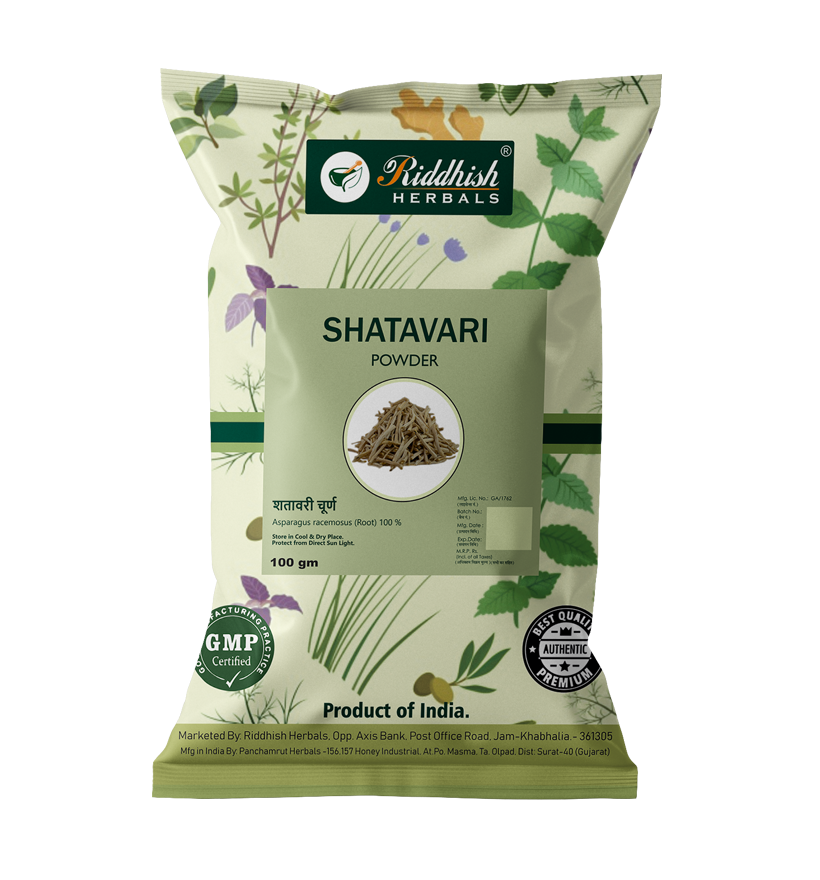
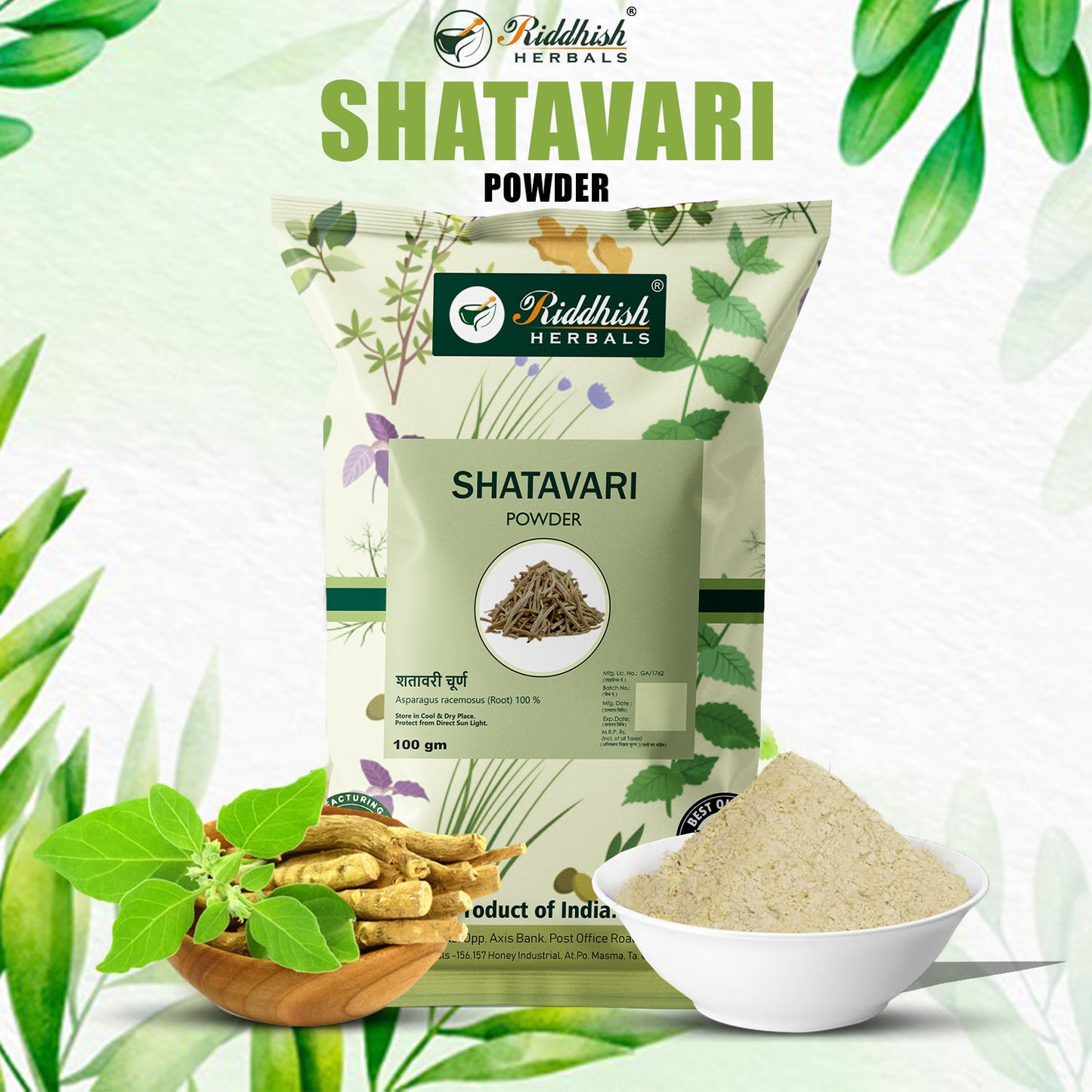
Shatavari Powder is a pure, single-herb Ayurvedic churna made from 100% Asparagus racemosus root — known in Sanskrit as Shatamuli, “one with a hundred roots.” It is among the most celebrated Rasayana herbs in classical Ayurveda and the foremost herb of the Ayurvedic women's wellness tradition. Riddhish Herbals Shatavari Powder is vegan, gluten-free, and free from additives and preservatives — a genuine classical Rasayana churna for daily Ayurvedic wellness. Net weight 100 g.
Prepared from carefully selected Shatavari root and finely milled, this churna dissolves readily into the classical anupans of warm milk, water or honey. It carries Ayurvedic manufacturing licence GA/1762.
Traditional Ayurvedic Importance
Charaka Samhita (Chikitsa Sthana 1.3) places Shatavari at the forefront of Vata-Pitta-balancing Rasayana herbs, describing it as Balya (strength-promoting), Rasayana (rejuvenative), and Stanya-janana (classically associated with the lactation tradition). Ashtanga Hridayam classifies it as Madhura (sweet) and Tikta (bitter) in Rasa, Guru-Snigdha in Guna, and Sheeta (cooling) in Virya — a profile that explains its classical alignment with Pitta-Vata conditions and its place in nourishing, restorative Rasayana traditions.
Sushruta Samhita describes Shatavari among the primary Jivaniya (life-sustaining) herbs, classically associated with overall vitality and nourishment, and notes its Shukrala (reproductive-supportive) property — which is why the herb has been part of both women's and men's Ayurvedic wellness traditions for over two millennia. Bhavaprakasha Nighantu records Shatavari among the Madhura, cooling, balya dravyas. Its modern reputation as an adaptogen aligns closely with these classical Balya and Rasayana descriptions.
Key Features
- Classical Rasayana root: Charaka's foremost Vata-Pitta Rasayana herb — traditionally valued for nourishment, vitality and resilience.
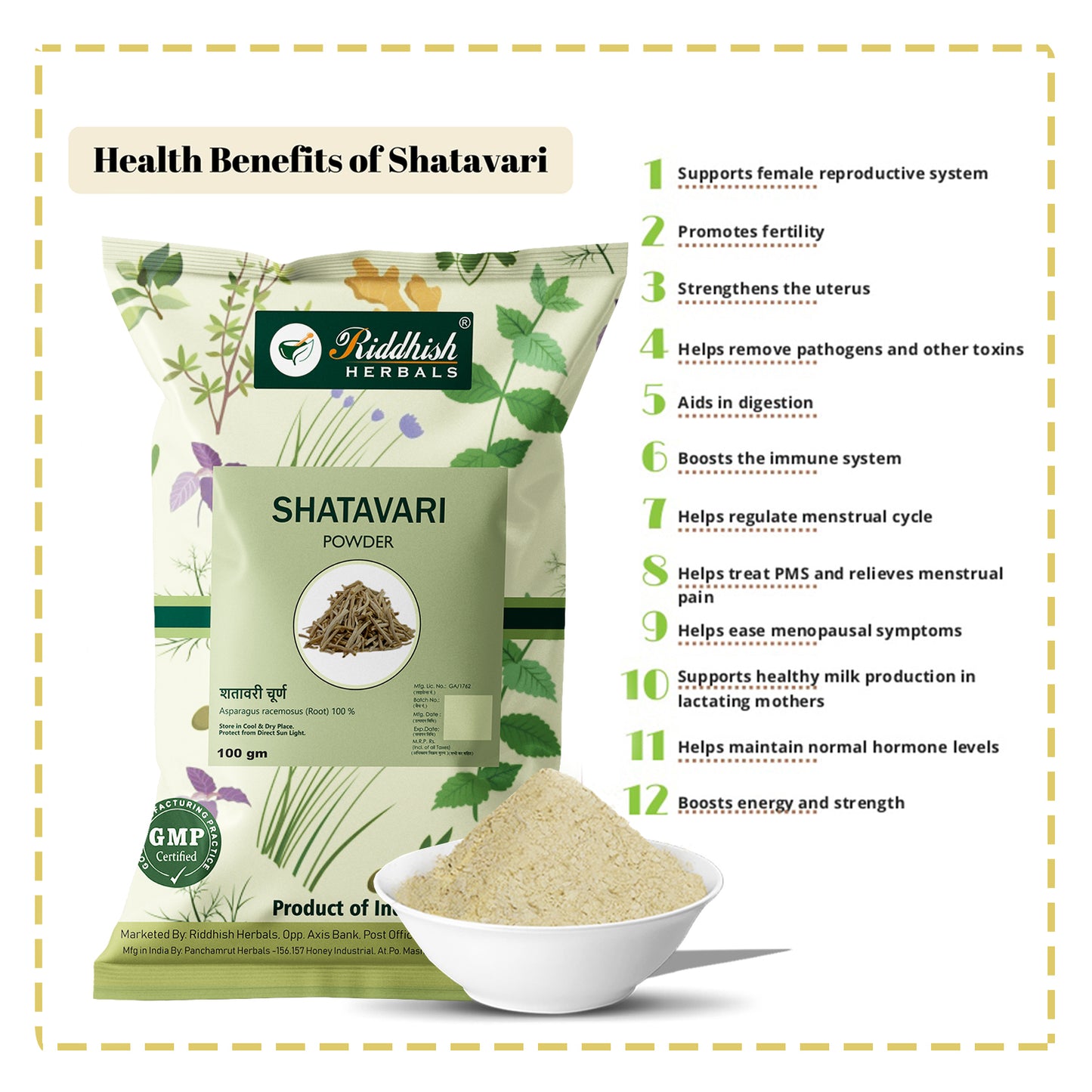
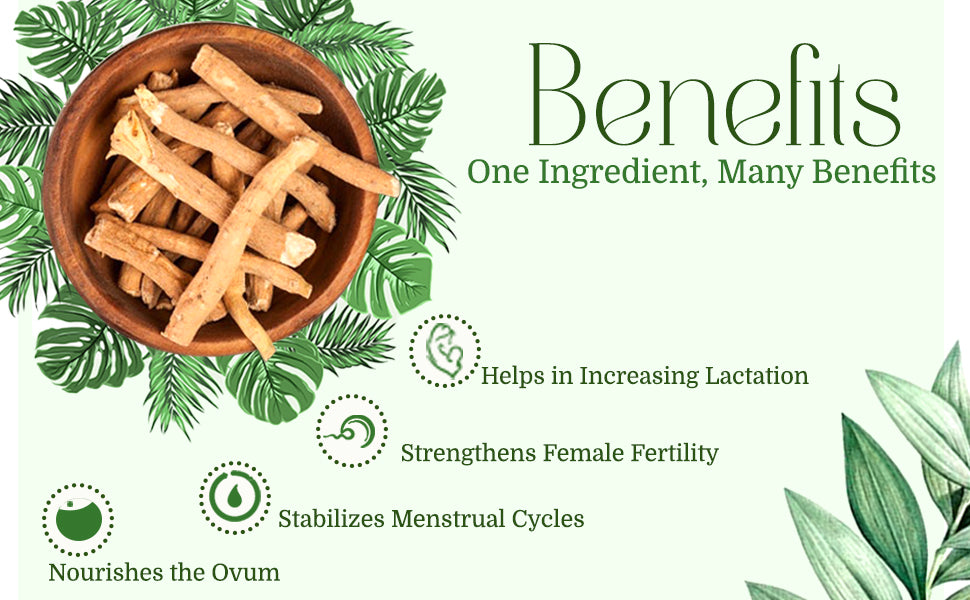
- Foremost women's-wellness herb: central to Ayurvedic women's wellness traditions for over two thousand years, described for its Balya and Stanya-janana properties across the classical texts.
- Cooling, nourishing profile: Sheeta (cooling) Virya with Madhura-Tikta Rasa — classically suited to Pitta-Vata constitutions seeking gentle daily support.
- 100% pure root churna: single-ingredient Asparagus racemosus root — vegan, gluten-free, no additives, no preservatives.
- Versatile classical anupan: taken with warm milk (the classical anupan), warm water, or honey, as suited to constitution and season.
- Made in a GMP-certified facility: manufactured by Panchamrut Herbals under Ayurvedic manufacturing licence GA/1762.
- Riddhish Herbals trust since 2015: genuine products, bill provided, doctor-guided selection, Pan-India delivery from Gujarat.
Ingredients
- Shatavari / Shatamuli — Asparagus racemosus Willd. — dried root — 100%
- No excipients, no fillers, no preservatives. Vegan. Gluten-free.
Research Note
Asparagus racemosus is among the more extensively documented Ayurvedic Rasayana herbs in published phytopharmacological literature. A review by Bopana & Saxena (2007, Journal of Ethnopharmacology) surveyed its traditional uses and the available research data, noting observations consistent with its classical Rasayana and adaptogenic descriptions. Results observed in study conditions. Individual results may vary. Consult your Ayurvedic physician before use. This is not a disease claim.
How to Use
As directed by your Ayurvedic physician. General classical guidance: 3–5 g (about ½ to 1 teaspoon) once or twice daily. Traditional anupan: warm milk (classical and most widely recommended); warm water with honey for Pitta; ghee for Vata. Best taken after meals or before bedtime. Consistent use over weeks and months, alongside a balanced diet, is the traditional Rasayana approach.
Who Can Use It
Classical texts describe Shatavari as a Rasayana suitable for both women and men. As a women's-wellness and hormonal-context herb it is AMBER-classified in our framework — use under the guidance of a qualified Ayurvedic physician, especially if you are pregnant, lactating, taking any medication, or managing any health condition. Keep out of reach of children.
Safety Information
Use under the guidance of a qualified Ayurvedic physician. Consult your physician before use if you are pregnant, lactating, taking any medication, or managing any health condition. Generally well-tolerated in classical amounts. Those with known sensitivity to the Asparagus family should consult a practitioner before use. Results may vary from person to person. Keep out of reach of children.
Storage
Store in a cool, dry place away from direct sunlight and moisture, as printed on the label. Keep tightly sealed after each use.
Frequently Asked Questions
What is Shatavari in Ayurveda?
Shatavari (Asparagus racemosus), also called Shatamuli, is classified in Charaka Samhita among the primary Vata-Pitta Rasayana herbs and in the classical Jivaniya (life-sustaining) group. It has been valued for its Balya (strength), Stanya-janana (lactation-related) and Rasayana (rejuvenative) properties for over two thousand years.
What are the alternate names for Shatavari?
Shatavari (Sanskrit/Hindi), Shatamuli (Sanskrit synonym), Satavari / Shataveri / Shatawari (common spellings), Tannir Vittan (Tamil), Challagadda (Telugu), Shatavali (Malayalam), Majjige Gedde (Kannada). Botanical: Asparagus racemosus. Common search terms: Satavari powder, Shatawari churna, asparagus racemosus root powder.
Powder or granules — which should I choose?
This is the pure single-herb root churna, ideal if you prefer a classical powder and your own choice of anupan. If you would rather have a ready-mixed, sweetened, easy-to-take version, see our Shatavari Granules — a delicious dietary supplement that stirs into milk in seconds.
Can I take Shatavari Powder without a doctor?
Shatavari is AMBER-classified in our framework due to its women's-wellness and hormonal context. We recommend consulting a qualified Ayurvedic physician for personalised dose, anupan and suitability — especially if pregnant, lactating, or managing any health condition.
Is Shatavari suitable for men?
Yes. Classical texts describe Shatavari as beneficial for both men and women. Its Shukrala property in Sushruta Samhita and its Balya classification make it a classical Rasayana herb for all genders. Consult your Vaidya for personalised guidance.
What is the best anupan for Shatavari Powder?
Classical texts universally recommend warm milk as the primary anupan for Shatavari — its Madhura-Snigdha quality is considered to complement Shatavari's profile. Honey in warm water suits Pitta; ghee suits Vata. Consult your Vaidya for personalised anupan.
Has Asparagus racemosus been studied scientifically?
Yes. A review in the Journal of Ethnopharmacology (Bopana & Saxena, 2007) documented research parameters consistent with Shatavari's traditional Ayurvedic profile. Results from study conditions; individual responses vary. This is not a disease claim.
How should Shatavari Powder be stored?
In a cool, dry place away from direct sunlight and moisture, tightly sealed after use. Keep out of reach of children.
Is it available at Riddhish Herbals?
Yes — at our Khambhalia, Gujarat retail store and online at riddhishherbals.com, with Pan-India delivery and bill provided. Since 2015, genuine products, doctor-guided selection.
Related from Riddhish Herbals
Shatavari pairs naturally with other classical Rasayana and Balya herbs, and with its own ready-mix sibling:
- Shatavari Granules 200g — the sweet, ready-to-mix dietary-supplement version of this same herb.
- Safed Musli Powder — Asparagus adscendens root, a classical Balya & Rasayana herb of the same family.
- Ashwagandha Churna — Withania somnifera root, a classical Rasayana & Balya churna.
- Ten On Powder — a 12-herb classical Rasayana blend that includes Shatavari.
- Rasayan Churna (Amrutadi) — Giloy, Gokshura & Amla classical Rasayana blend.
Browse more: Men's & Women's Daily Vitality · Wellness