

Riddhish Herbals
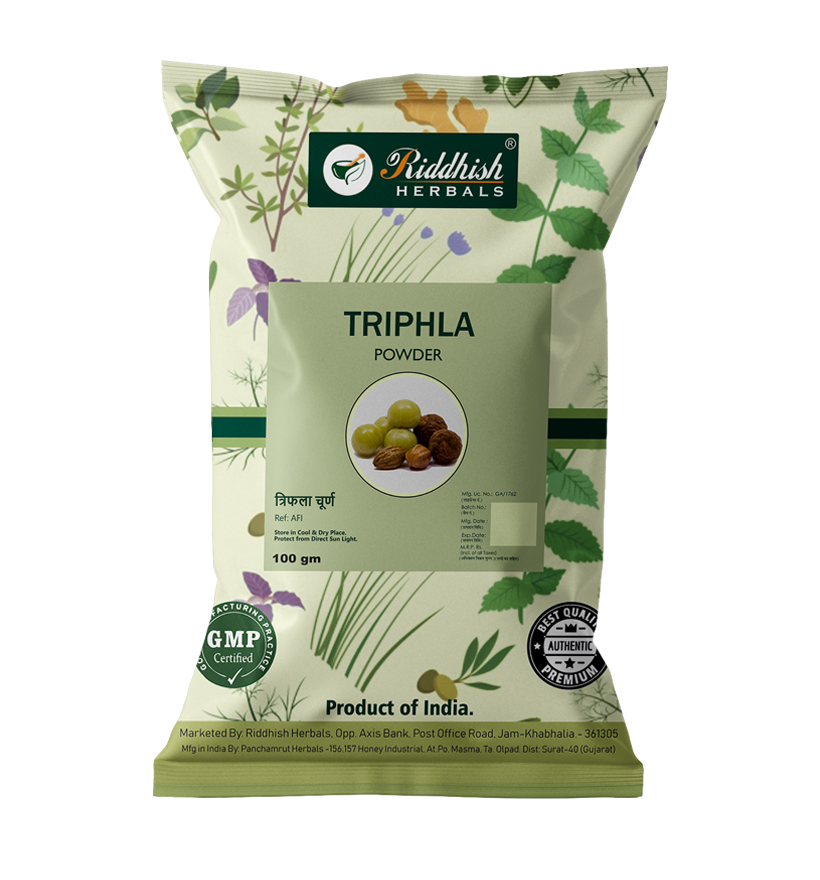
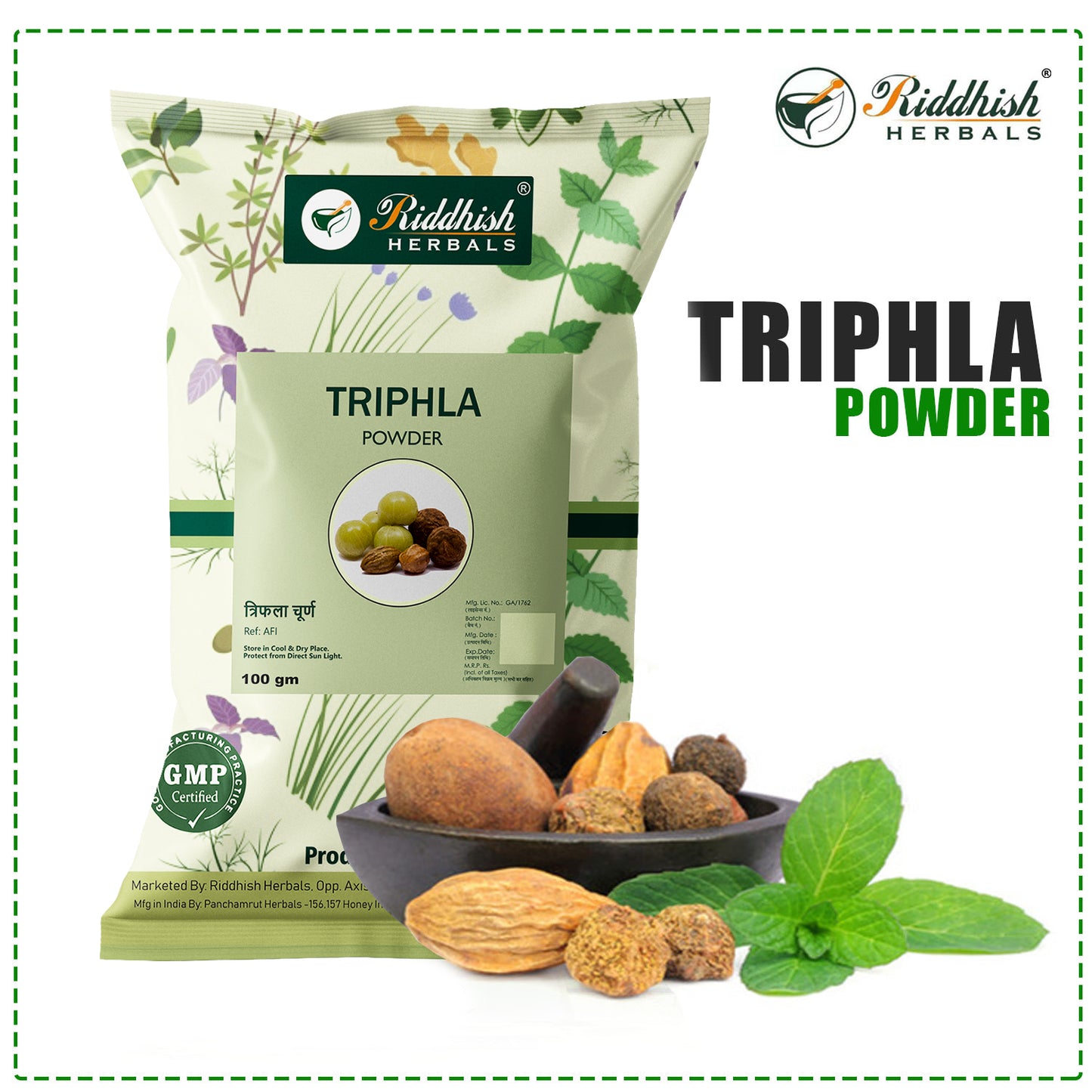
Triphala Churna | Amla Haritaki Baheda | Riddhish Herbals | 100gm
Triphala Churna | Amla Haritaki Baheda | Riddhish Herbals | 100gm
Couldn't load pickup availability
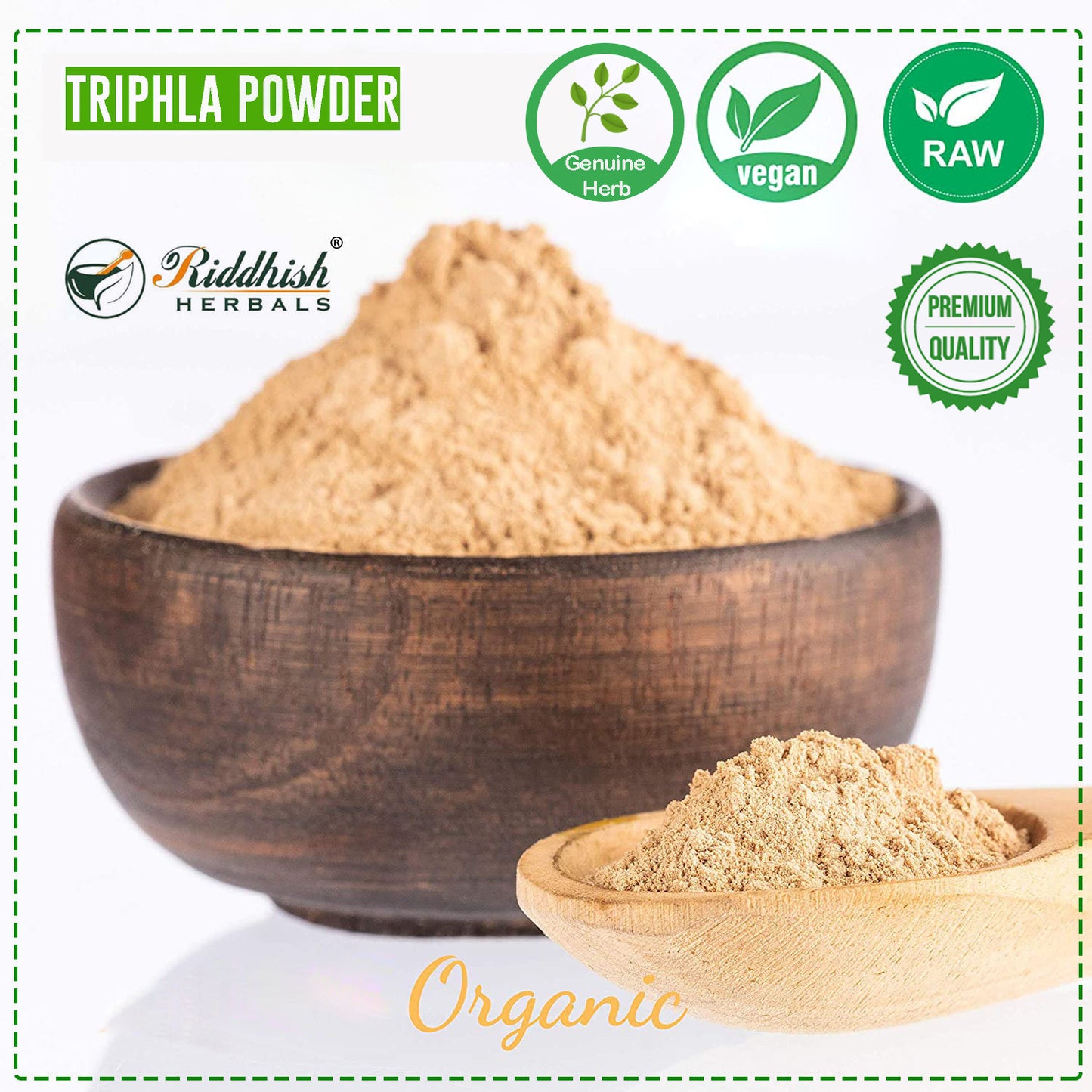
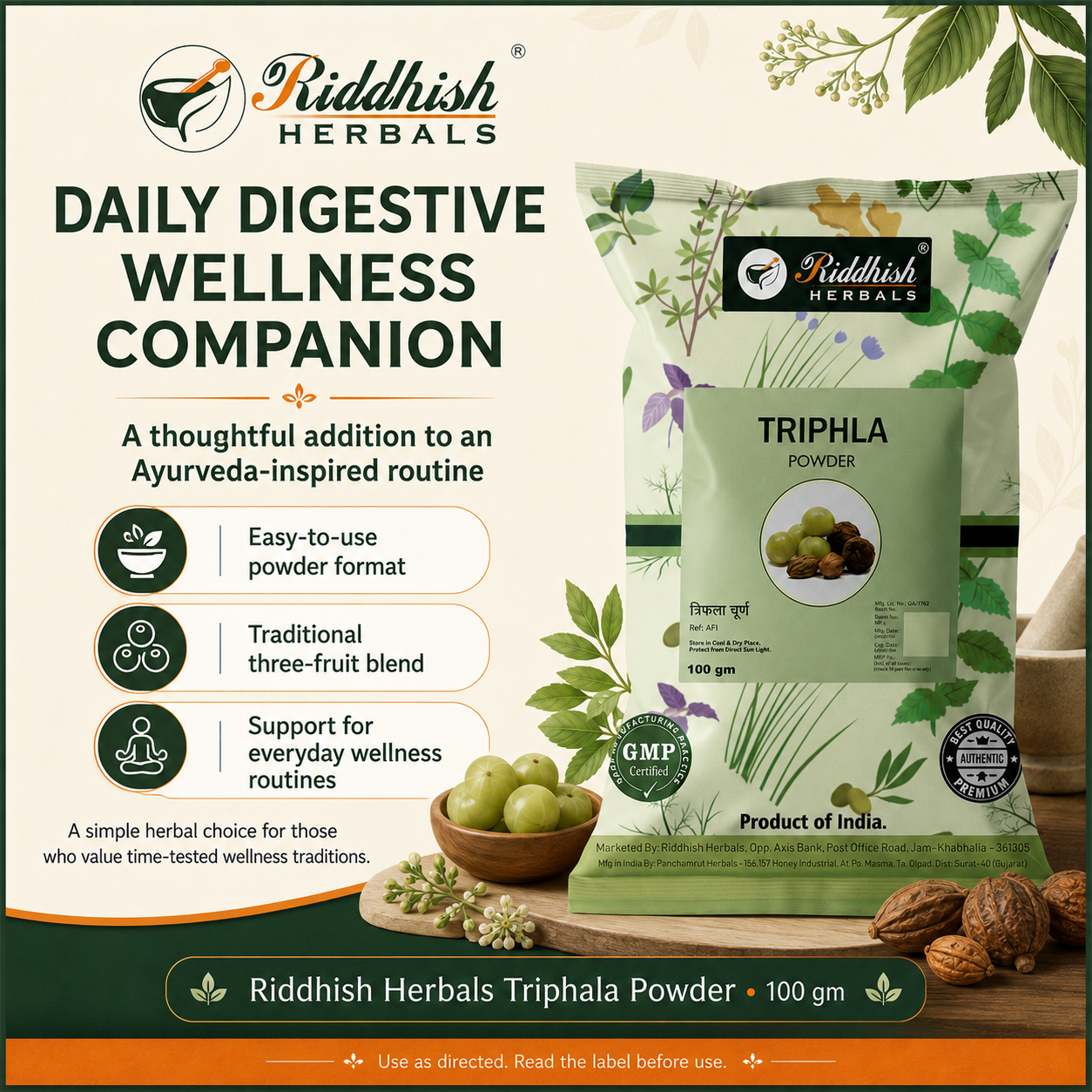
Triphala Churna is a classical three-fruit Ayurvedic formula combining equal parts Haritaki, Bibhitaki, and Amalaki. It is one of the most widely referenced formulas in Ayurveda, traditionally used to support digestion and gentle, natural bowel regularity.
About / Traditional Ayurvedic Importance
Triphala, meaning 'three fruits', is among the most extensively used classical Ayurvedic formulas, combining Haritaki, Bibhitaki, and Amalaki in equal proportion. It is traditionally described as tridoshahara (balancing across vata, pitta, and kapha) and is commonly taken at night with warm water as part of a daily digestive-wellness routine.
Key Features
- Classical three-fruit formula in equal 1:1:1 proportion
- Manufactured by Panchamrut Herbals (Mfg. Lic. GA-1762) in a GMP-, ISO 9001:2015- and HACCP-certified facility
- Traditionally described as tridoshahara (balancing for all three doshas)
- Widely referenced classical shodhana and digestive-wellness formula
- Fine churna format, traditionally taken with warm water
- Commonly used as a gentle overnight digestive routine
- No added colours, flavours, or fillers
- Sold by an established Ayurvedic retailer with bill provided on every order
Composition
Triphala Churna combines Haritaki, Bibhitaki, and Amalaki in equal parts. The declared composition, reproduced from the label, is set out below.
| Ingredient | Botanical | Plant Part | Proportion |
|---|---|---|---|
| Haritaki | Terminalia chebula | Fruit pericarp | 1 part |
| Bibhitaki | Terminalia bellirica | Fruit pericarp | 1 part |
| Amalaki | Emblica officinalis | Dried fruit | 1 part |
Net weight: 100 g. Form: Fine churna (powder), equal-parts three-fruit formula.
How to Use
Use as directed by a qualified Ayurvedic physician, traditionally taken with warm water at night, or as printed on the pack.
Who Can Use This
Intended for adults as part of a general Ayurvedic digestive-wellness routine. Pregnant or lactating women, children, and anyone on regular medication or managing a medical condition should consult a qualified Ayurvedic physician before use.
Safety and Precautions
Consult a qualified Ayurvedic physician before use, especially if pregnant, lactating, taking medication, or managing a medical condition. Keep out of reach of children. Results may vary from person to person.
Storage
Store in a cool, dry place away from direct sunlight. Keep the pack tightly sealed after opening.
Common Names
| Ingredient | Hindi | Sanskrit | English / Botanical |
|---|---|---|---|
| Haritaki | Harad | Haritaki | Chebulic Myrobalan — Terminalia chebula, fruit |
| Bibhitaki | Baheda | Bibhitaki | Beleric Myrobalan — Terminalia bellirica, fruit |
| Amalaki | Amla | Amalaki | Indian Gooseberry — Emblica officinalis, fruit |
Also searched as: Triphla churna, Triphala powder, Amla Haritaki Baheda churna, three fruits Ayurveda powder, triphala for digestion
Frequently Asked Questions
What is Triphala Churna?
It is a classical Ayurvedic formula made from equal parts Haritaki, Bibhitaki, and Amalaki, traditionally used to support digestion and gentle bowel regularity.
What does 'Triphala' mean?
Triphala means 'three fruits' in Sanskrit, referring to its three ingredients: Haritaki, Bibhitaki, and Amalaki.
Is this product GMP certified?
Yes. It is manufactured for Riddhish Herbals by Panchamrut Herbals under Ayurvedic manufacturing licence GA-1762, at a unit in Masma, Olpad, Surat certified to GMP, ISO 9001:2015 and HACCP standards.
How should I take Triphala Churna?
Use as directed by a qualified Ayurvedic physician, traditionally taken with warm water at night, or as printed on the pack.
Can I take Triphala every day?
Triphala is traditionally used as part of a daily routine, but should be taken under the guidance of a qualified Ayurvedic physician.
Is Triphala the same as Trikatu?
No. Triphala (three fruits: Haritaki, Bibhitaki, Amalaki) is a different classical formula from Trikatu (three pungents: Sunth, Pippali, Maricha).
Can pregnant or lactating women use this?
Pregnant or lactating women should consult a qualified Ayurvedic physician before using this product.
How do I know this is the genuine pack?
Riddhish Herbals ships every order with a bill. This churna is made by Panchamrut Herbals under Ayurvedic manufacturing licence GA-1762, in a facility certified to GMP, ISO 9001:2015 and HACCP standards.
How should I store this churna?
Store in a cool, dry place away from direct sunlight, with the pack tightly sealed after opening.
Is it known by any other name?
It is also searched for as Triphla churna, Amla Haritaki Baheda powder, or three-fruits Ayurvedic powder.
Read more on the Riddhish Herbals blog
Related at Riddhish Herbals
Explore our other classical single- and multi-herb churnas, including Guduchi Powder and Shatavari Powder, available at Riddhish Herbals.
About This Listing
Reviewed by Dr. Riddhish Padiya — B.Pharm (Ayurveda), M.Pharm (Pharmacognosy), PhD (Dravyaguna), ITRA Jamnagar.
Sourced and sold by Riddhish Herbals.
Since 2015 · Genuine Products · Bill Provided · Doctor-Guided Selection · 4000+ Ayurvedic Products · 130+ Trusted Brands · Pan-India Delivery
રીધ્ધીશ હર્બલ્સ — ગુજરાતનો વિશ્વાસપાત્ર આયુર્વેદિક સ્ટોર, જ્યાં સાચી સલાહ અને genuine Ayurvedic products એક જ જગ્યાએ મળે છે.