
Riddhish Herbals
Baheda Akha (Bibhitaki) – Whole Triphala Fruit – Riddhish Herbals – 100g
Baheda Akha (Bibhitaki) – Whole Triphala Fruit – Riddhish Herbals – 100g
Couldn't load pickup availability
Baheda Akha from Riddhish Herbals is the whole, sun-dried fruit of Bibhitaki (Terminalia bellirica), the Beleric Myrobalan — one of the three fruits that together make up the classical Ayurvedic Triphala, alongside Haritaki and Amalaki. In the classical nighantus Bibhitaki is described as Kaphaghna and Kasahara and is grouped among the Rasayana (rejuvenative) dravyas, the whole fruit being powdered or decocted for traditional use. A systematic review of Terminalia bellirica in Phytomedicine (Gupta et al., 2020; PMID 32781393) surveys its constituents such as gallic and ellagic acids.
About Baheda (Bibhitaki)
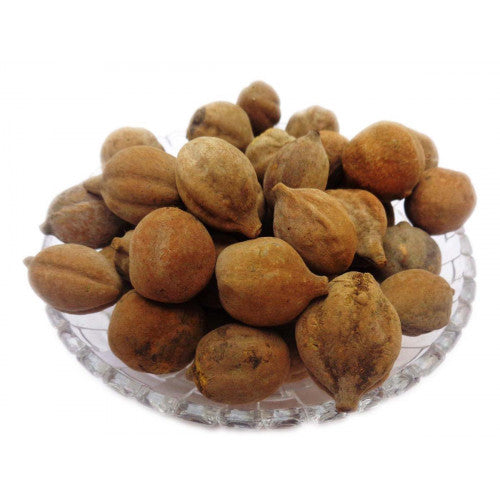
Baheda is the everyday Gujarati and North-Indian name for the fruit that Sanskrit calls Bibhitaki or Aksha. The tree, Terminalia bellirica, grows across the Indian plains, and its rounded, greyish dried fruit has been gathered for Ayurvedic use for centuries.
What we offer here is Baheda Akha — the whole, intact dried fruit (Akha), rather than a ready-ground powder. Kept whole, the fruit stays fresher for longer; you or your Vaidya powder or decoct it as needed. It is best known as the “Bi” of Triphala, working alongside Amalaki (Amla) and Haritaki (Harde).
Traditional Ayurvedic Importance
In the Bhavaprakasha Nighantu (Haritakyadi Varga), Bibhitaki is classified as Kashaya (astringent) in rasa, with Kapha-Pittahara action. It is described there as Kasahara (easing Kasa, cough), Bhedana (gently mobilising), and is counted among the Rasayana dravyas.
Classical literature also records Bibhitaki as Chakshushya (supportive of the eyes) and Keshya (supportive of the hair), which is why Baheda features in many traditional hair and eye preparations. As part of Triphala it contributes the Kapha-balancing note to that famous trio.
- One of Triphala’s three fruits — Bibhitaki joins Haritaki and Amalaki in the classical Triphala trio.
- Whole dried fruit (Akha) — supplied intact, to be powdered or decocted as your Vaidya advises.
- Classically Kaphaghna & Kasahara — described in the nighantus for balancing Kapha and easing Kasa (cough).
- Chakshushya & Keshya context — traditionally valued for the eyes and the hair in classical texts.
- Rasayana dravya — grouped among the rejuvenative herbs of classical Ayurveda.
- Genuine & bill-provided — sourced raw herb from Riddhish Herbals, serving Gujarat since 2015.
Research on the Constituents
◆ A systematic and comprehensive review of Terminalia bellirica (Bahera) in Phytomedicine surveyed the fruit’s traditional uses and phytoconstituents, including gallic acid, ellagic acid and tannins — (Gupta et al., 2020 — Phytomedicine; PMID 32781393). View on PubMed.
Results were observed under study conditions. Individual results may vary. This is shared for general educational interest and is not a medical claim. Consult your Ayurvedic physician before use.
Composition (single herb)
| Ingredient | Botanical | Part Used | Quantity |
|---|---|---|---|
| Baheda / Bibhitaki (Aksha) | Terminalia bellirica (Gaertn.) Roxb. | Whole dried fruit (Phala) | 100 g — single-herb pack |
Sold as a raw single-herb material (whole dried fruit). No quantities, ratios or excipients are added or implied beyond the herb itself. Please confirm the physical form (whole vs coarse-cut) against the pack you receive.
How to Use
As directed by your Ayurvedic physician. Traditionally the dried fruit is coarsely powdered or made into a Kwath (decoction); the classical anupana (vehicle) is warm water, and honey is sometimes used depending on the intended purpose. Because this is a raw material, your Vaidya matches the quantity and the form to your Prakriti and Agni.
Who Can Use It
Traditionally used by adults as part of an Ayurvedic routine, most often within Triphala. Pregnant or lactating women, and anyone on regular medication or managing a health condition, should use it only under the guidance of a qualified Ayurvedic physician. For children, use only as directed by a qualified Ayurvedic physician.
Safety Information
Baheda is a classical food-grade fruit, but like all Rasayana dravyas it is best used in the right quantity for your constitution. Begin under professional guidance, especially if you are pregnant, lactating, or on medication. Results may vary from person to person. This description is shared for general educational interest and is not a medical claim.
Storage
Store the whole dried fruit in a cool, dry place in an airtight container, away from direct sunlight and moisture. Keep out of reach of children.
Frequently Asked Questions
Is Baheda Akha AYUSH- or GMP-certified?
Baheda Akha is supplied by Riddhish Herbals as a genuine raw Ayurvedic material with a bill provided. As a loose single herb it is sold as sourced material; any specific certification or mark should be confirmed against the physical pack you receive.
Can I use Baheda without consulting a doctor?
Baheda is widely used as part of Triphala, but for the right quantity and form for your constitution it is best to consult a qualified Ayurvedic physician, particularly if you are pregnant, lactating, or on medication.
What exactly is Bibhitaki / Baheda?
It is the dried fruit of Terminalia bellirica, the Beleric Myrobalan. In Sanskrit it is called Bibhitaki or Aksha; in Hindi and Gujarati it is Baheda or Bahera.
How is Baheda related to Triphala?
Triphala means “three fruits” — Haritaki (Harde), Bibhitaki (Baheda) and Amalaki (Amla). Baheda is the Kapha-balancing member of that classical trio.
Is this the whole fruit or a powder?
This is Baheda Akha — the whole, intact dried fruit. You can coarsely powder it or make a decoction (Kwath) at home, or ask your Vaidya for the preparation best suited to you.
What are the other names for Baheda?
Sanskrit: Bibhitaki / Aksha; Hindi: Bahera / Baheda; Tamil: Thandrikkai; Malayalam: Thanni; Kannada: Tarekayi; English: Beleric Myrobalan. A fuller table appears below.
How is Riddhish Herbals’ Baheda different?
We supply Baheda as a genuine, cleanly sourced raw herb with a bill and doctor-guided selection, from a store that has served Gujarat since 2015 — not a repacked mystery lot.
Is Baheda available at Riddhish Herbals stores?
Yes. Baheda Akha is stocked both online and across our Gujarat retail counters, with pan-India delivery.
What is the traditional anupana for Baheda?
Warm water is the everyday anupana (vehicle); honey is sometimes used depending on the purpose. Your Ayurvedic physician will advise what suits you.
Has Terminalia bellirica been studied scientifically?
Yes — a systematic review in Phytomedicine (Gupta et al., 2020; PMID 32781393) surveyed its traditional uses and constituents such as gallic and ellagic acids. Such research is shared for educational interest only; results may vary and it is not a medical claim.
Regional Names & Spelling Variants
| Language | Name |
|---|---|
| Local / common (Gujarat market) | Baheda / બહેડાં |
| Sanskrit | विभीतकी (Vibhitaki) / अक्ष (Aksha) |
| Hindi | बहेड़ा (Bahera / Baheda) |
| Gujarati | બહેડાં (Baheda) |
| Marathi | Behada (romanised) |
| Bengali | Bahera (romanised) |
| Tamil | தான்றிக்காய் (Thandrikkai) |
| Telugu | Tandra / Tanikaya (romanised) |
| Kannada | ತಾರೆಕಾಯಿ (Tarekayi) |
| Malayalam | താന്നി (Thanni) |
| English + Botanical | Beleric Myrobalan / Bastard Myrobalan — Terminalia bellirica (Gaertn.) Roxb. — dried fruit |
| Search variants (romanised) | Baheda, Bahera, Bibhitaki, Vibhitaki, Behada, Beleric Myrobalan |
| Common misspellings | Bahera, Baheraa, Bibhitki, Bhibitaki |
Related at Riddhish Herbals
Amla Powder (Amalaki Churna) — the Amla of Triphala · Rasayan Churna (Amrutadi Churna) · Dashmool Kwath (Dry) · All Ayurvedic Raw Herbs & Materials