

Riddhish Herbals
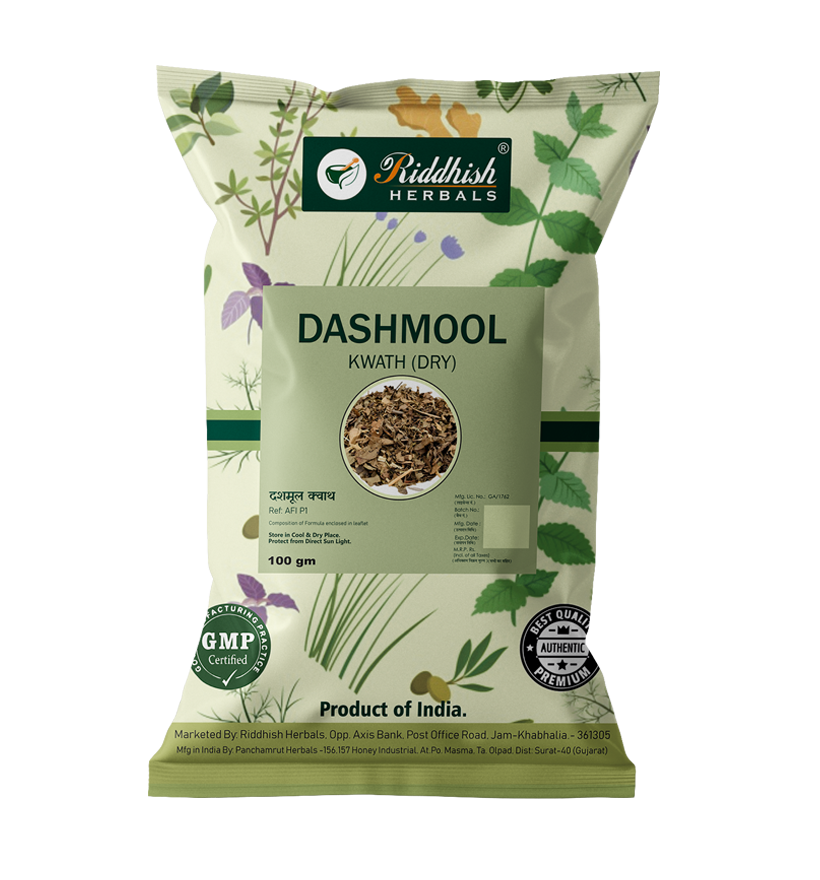
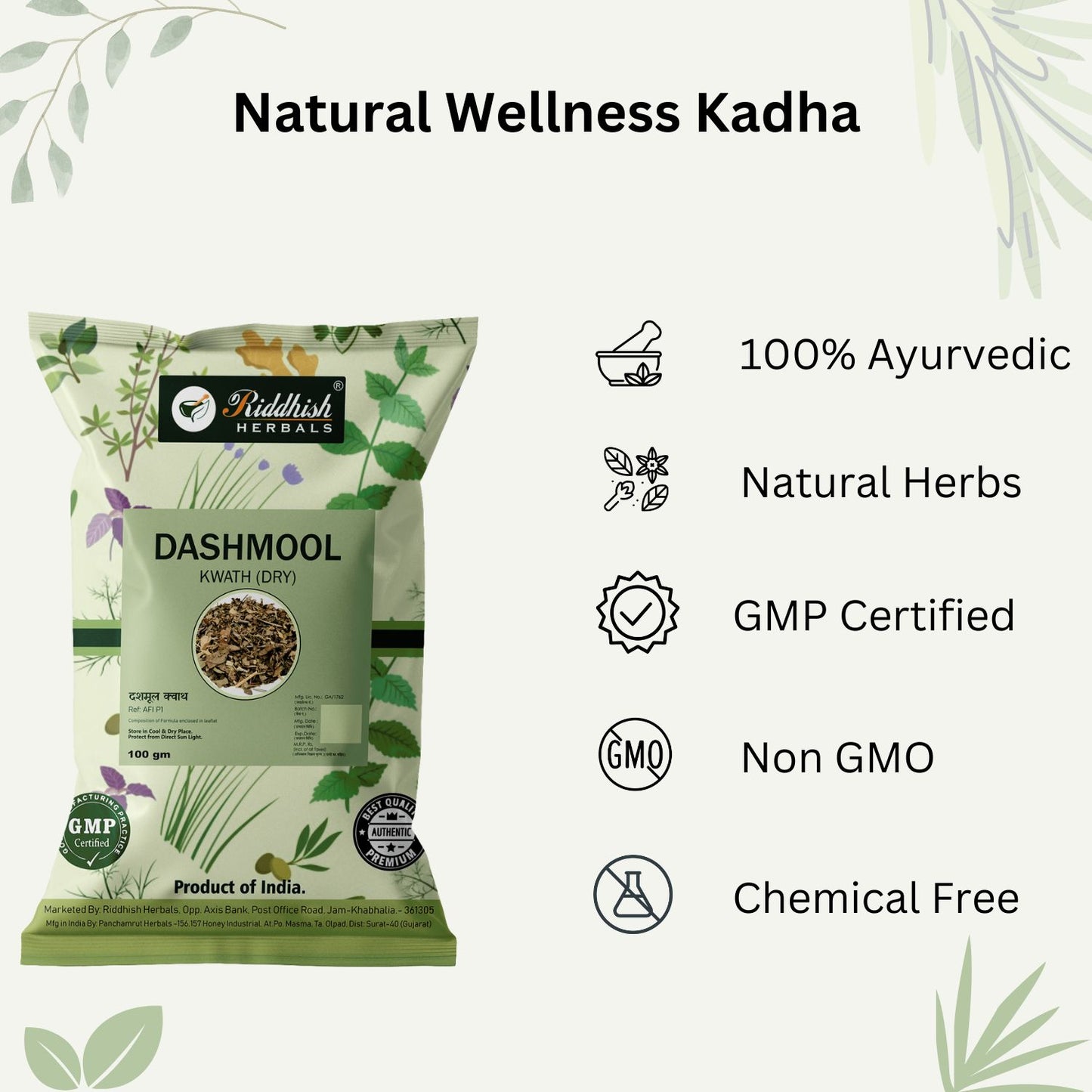
Dashmool Kwath (Dry) | Dashamoola Decoction | Riddhish Herbals | 100gm
Dashmool Kwath (Dry) | Dashamoola Decoction | Riddhish Herbals | 100gm
Couldn't load pickup availability
Dashmool Kwath (Dry) is the classical Ayurvedic ten-root decoction known in Sanskrit as Dashamoola — literally "ten roots" — offered as a dry, coarse kwath you boil into a fresh decoction at home, prepared to the Ayurvedic Formulary of India (Part 1) standard.
It is one of the most widely referenced compound formulations in Ayurveda, manufactured under a valid Ayurvedic manufacturing licence (Mfg. Lic. No. GA/1762). The blend brings together five members from larger trees (Brihat Panchamoola) and five from smaller shrubs (Laghu Panchamoola) — a grouping the classical authors designed to work together on Vata.
About Dashmool Kwath (Dry)
This is the dry kwath form: a coarse blend of the ten classical Dashamoola herbs, also called Dashmool Ukalo in Gujarati. You boil it down and take it as a warm decoction under the guidance of an Ayurvedic physician. Riddhish Herbals has supplied genuine Ayurvedic products across India since 2015.
Traditional Ayurvedic Importance
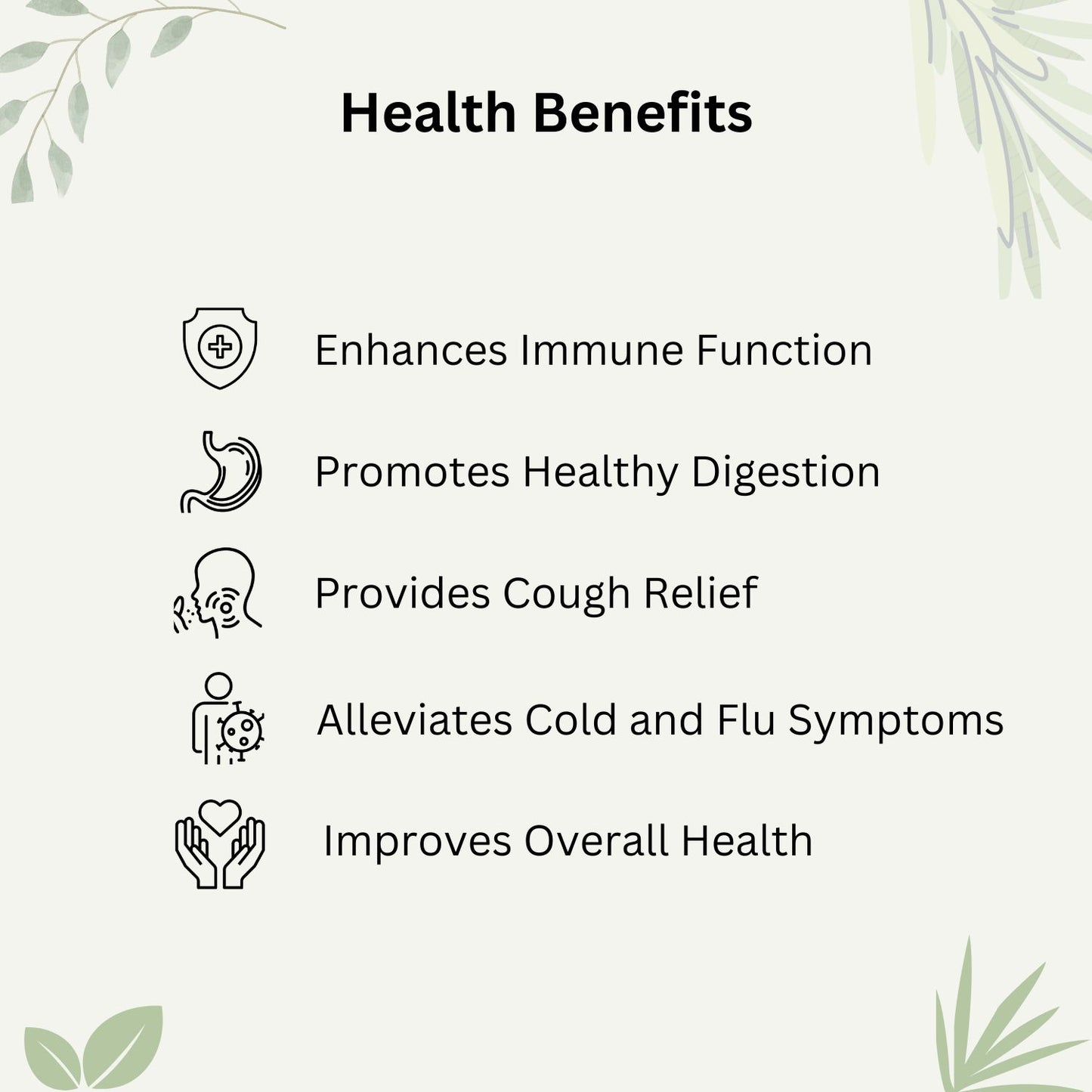
Across the classical texts (Charaka, Sushruta and Sharangdhara), Dashamoola is described as Vata-Kapha shamaka — pacifying to Vata and Kapha — and is traditionally regarded as a principal formula in the context of Shotha, the classical Ayurvedic concept of swelling. It is also classically valued in Vata disorders (Vatavyadhi) and in traditional respiratory (Shwasa-Kasa) and post-partum (Sutika) care.
Within the group, each root carries its own classical reputation. Bilva (Aegle marmelos) is valued in classical digestive and Vata contexts; Gokshura (Tribulus terrestris) is traditionally associated with the urinary channel; Kantakari (Solanum xanthocarpum) and Shalaparni (Desmodium gangeticum) are described in respiratory and Vata-balancing contexts. Together they form a balanced whole rather than a sum of single herbs.
Key Features
- Classical ten-root formula: the authentic Dashamoola group, documented across the major Samhitas.
- Prepared to AFI standard: the ten members in equal proportion as listed in the Ayurvedic Formulary of India, Part 1.
- Vata-Kapha balancing: classically described as pacifying to Vata and Kapha.
- Shotha tradition: traditionally regarded as a key formula in the classical concept of swelling.
- Authentic panchamoola pairing: five greater (Brihat) and five lesser (Laghu) members together.
- Fresh decoction: a dry kwath you prepare at home for a traditional kashayam, also called Dashmool Ukalo in Gujarati.
- Manufacturing on record: manufactured under Mfg. Lic. No. GA/1762, with no synthetic additives.
Composition
Prepared to the Ayurvedic Formulary of India (Part 1) standard — the ten classical Dashamoola members in equal proportion, one part each (about 10 g of each per 100 g). The five greater members are taken as root or stem bark; the five lesser members as whole plant.
| Group | Members | Part used |
|---|---|---|
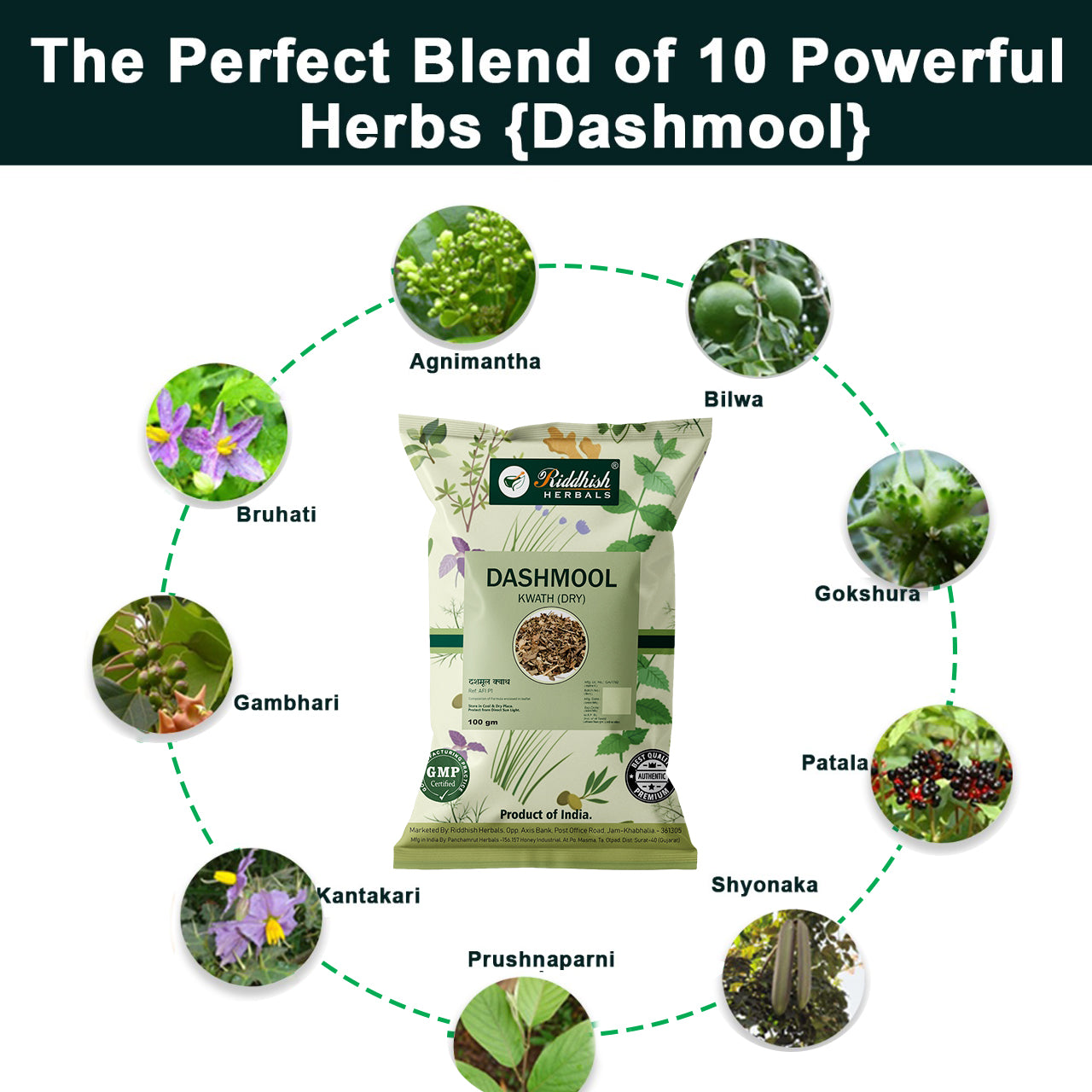
| Brihat (greater) Panchamoola | Bilva (Aegle marmelos), Agnimantha (Premna integrifolia), Shyonaka (Oroxylum indicum), Gambhari / Kashmari (Gmelina arborea), Patala (Stereospermum suaveolens) | Root / stem bark |
| Laghu (lesser) Panchamoola | Shalaparni (Desmodium gangeticum), Prishnaparni (Uraria picta), Brihati (Solanum indicum), Kantakari (Solanum xanthocarpum), Gokshura (Tribulus terrestris) | Whole plant |
This pack contains the ten Dashamoola members only, in equal proportion. No synthetic additives. Label-verified composition.
Research & Scientific References
Dashamoola has been examined in published research. A peer-reviewed experimental study evaluated the analgesic, anti-inflammatory and anti-platelet activity of Dashamoola in laboratory models, reporting activity in the parameters measured. (Parekar, Bolegave, Marathe & Rege, 2015 — Journal of Ayurveda and Integrative Medicine; PMID 25878458) A separate animal-model study compared a Dashamoola preparation with a standard reference agent and observed analgesic activity in the writhing-test parameters measured. (Singh et al., 2012 — Journal of Clinical and Diagnostic Research)
Findings are observed under experimental conditions and do not constitute medical claims. Individual results may vary. Use under the guidance of a qualified Ayurvedic physician.
How to Use & Anupan
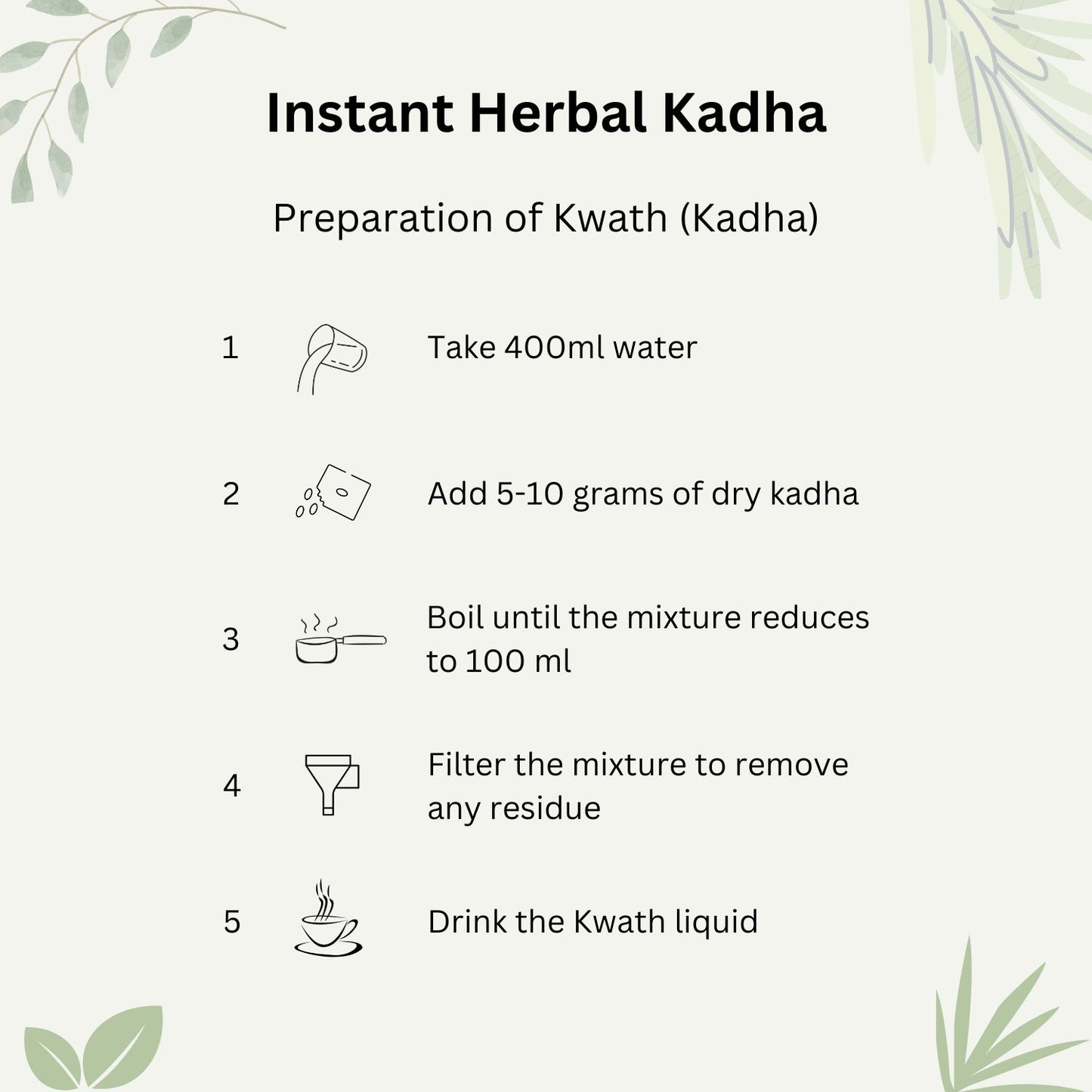
As directed by your Ayurvedic physician. Traditionally, about 5–10 g of the dry kwath is boiled in roughly 400 ml water and reduced to about 100 ml, then strained and taken warm — commonly on an empty stomach. The usual traditional anupan (vehicle) is warm water; a physician may advise honey or another suitable anupan depending on the individual.
Who Can Use It
Generally suited to adults seeking traditional Vata-balancing support, under guidance. Not recommended during pregnancy unless specifically advised by a physician. Consult a qualified Ayurvedic physician if lactating, on medication, or managing any health condition.
Safety Information
Use strictly under the guidance of a qualified Ayurvedic physician. Avoid during pregnancy unless advised. Keep out of reach of children. Results may vary from person to person. This product is not a substitute for professional medical advice or care.
Storage
Store in a cool, dry place away from direct sunlight, in a tightly closed airtight container.
Frequently Asked Questions
Who manufactures this product?
Riddhish Herbals' own-brand Dashmool Kwath is manufactured by Panchamrut Herbals, Surat, under Mfg. Lic. No. GA/1762, and a genuine bill is provided with every order.
Can I take Dashmool Kwath without consulting a doctor?
It is a classical ten-herb decoction, so it is best prepared and used under the guidance of a qualified Ayurvedic physician.
What is Dashmool Kwath made of?
The ten classical Dashamoola members in equal proportion — five greater (Bilva, Agnimantha, Shyonaka, Gambhari, Patala) as root or stem bark, and five lesser (Shalaparni, Prishnaparni, Brihati, Kantakari, Gokshura) as whole plant.
What does "kwath" mean?
A kwath (kashayam) is a herbal decoction. This dry kwath is the herb blend you boil in water to make a fresh decoction — known in Gujarati as an ukalo.
What is the recommended anupan?
The usual traditional vehicle is warm water. An Ayurvedic physician may advise honey or another suitable anupan based on your constitution.
How is the decoction prepared?
Traditionally, 5–10 g is boiled in about 400 ml water, reduced to roughly 100 ml, strained, and taken warm as advised.
Has Dashamoola been studied scientifically?
Yes. A peer-reviewed study (Parekar et al., 2015, J-AIM; PMID 25878458) examined its anti-inflammatory and analgesic activity in laboratory models, and a further animal-model study (Singh et al., 2012) examined its analgesic activity. Such findings are observed under study conditions and individual results may vary.
Is it available at Riddhish Herbals?
Yes, with genuine sourcing, a bill provided, and pan-India delivery.
Also searched as: dashmool kwath, dashamoola kwath, dashmoola kadha, dashmool kadha, dashmool ukalo, dashmool kashayam, ten-root kwath, dashmool kwath powder.
Related at Riddhish Herbals
Dashmool Kashayam Tablets 60 Tab — Panchamrut Herbals (the ten roots in tablet form, label-verified at 50 mg each) · Maha Rasnadi Kwath (Dry) · Gokshur Powder · Ayurvedic Medicines
About Riddhish Herbals
Since 2015 · Genuine Products · Bill Provided · Doctor-Guided Selection · 4000+ Ayurvedic Products · 130+ Trusted Brands · Pan-India Delivery