

Riddhish Herbals
Maha Rasnadi Kwath (Dry) 100gm | Classical Vata Kashayam | Riddhish
Maha Rasnadi Kwath (Dry) 100gm | Classical Vata Kashayam | Riddhish
Couldn't load pickup availability
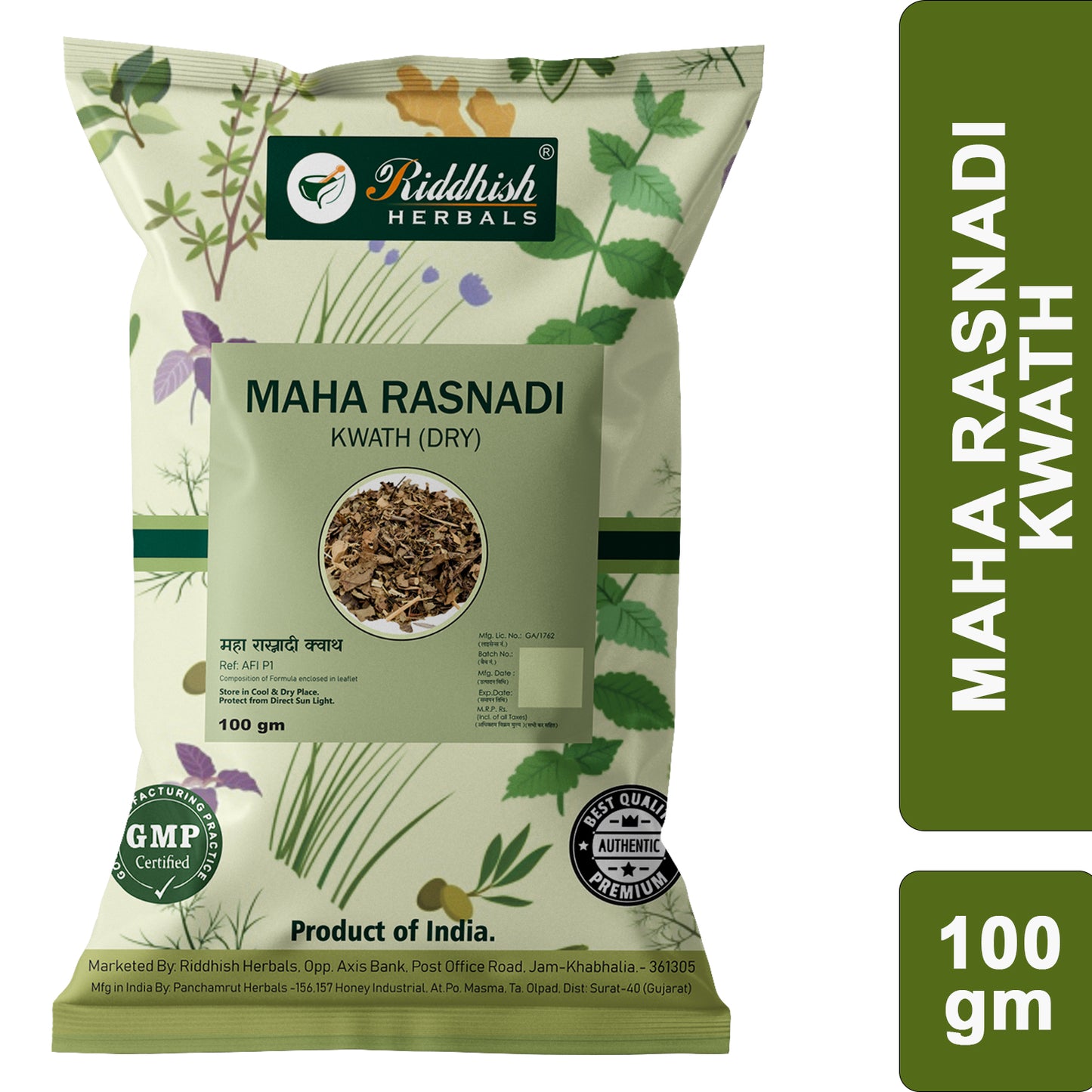
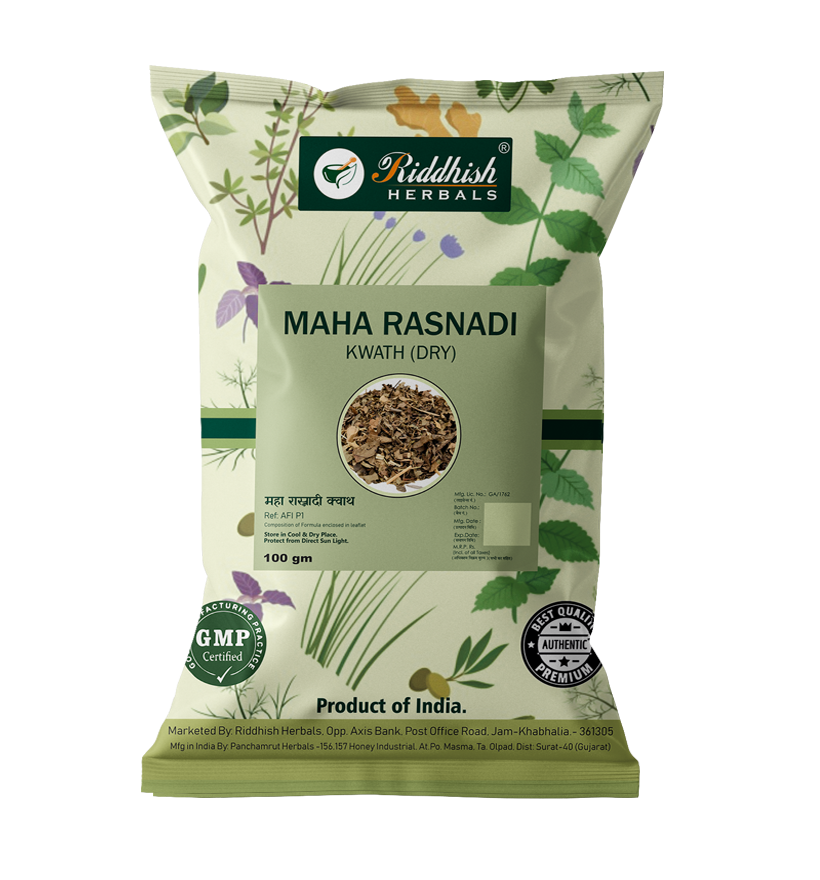
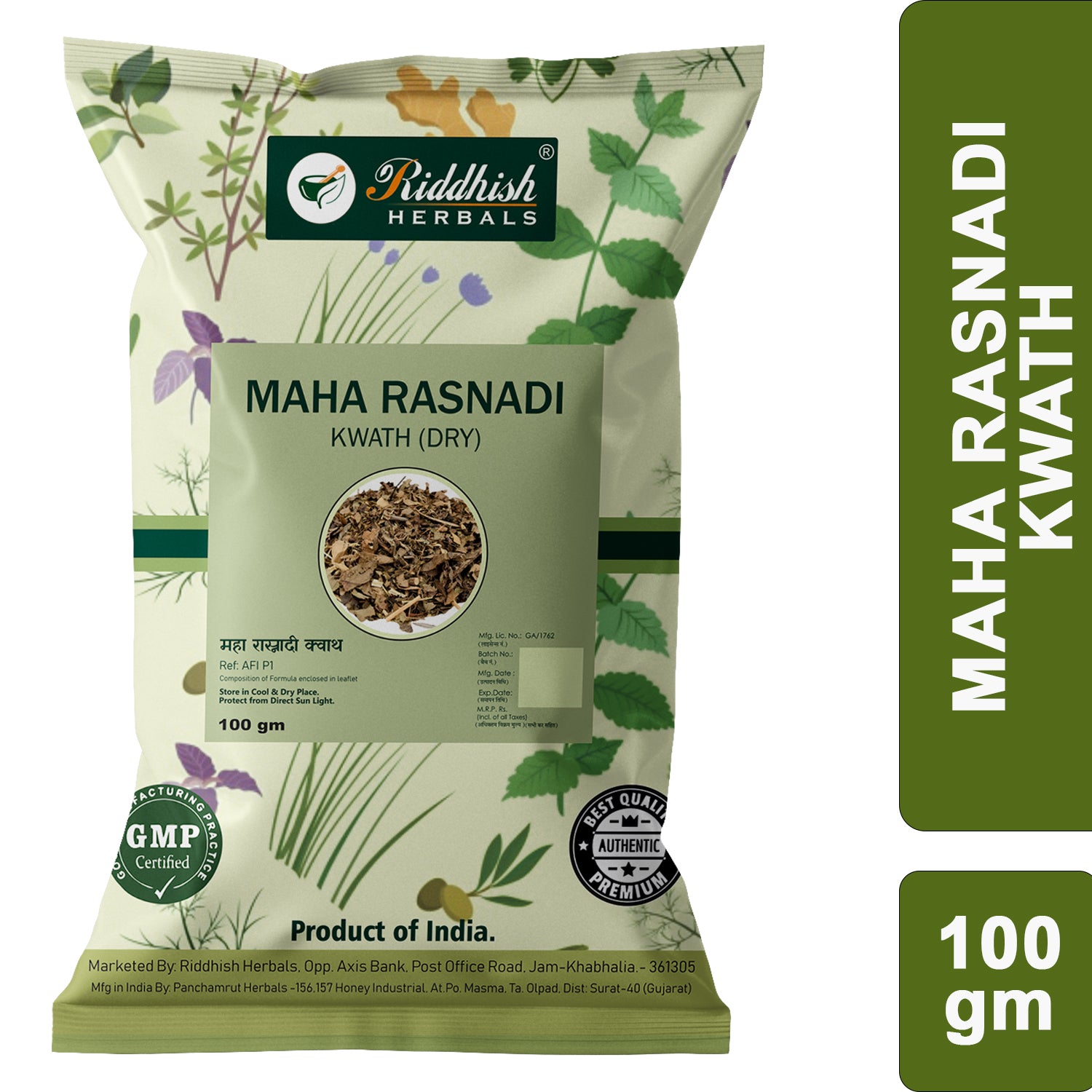
Maha Rasnadi Kwath (Dry) is a classical Ayurvedic decoction (kashayam) built around Rasna (Pluchea lanceolata), the herb whose name opens the formula — "the great Rasna and others." Offered as a dry kwath: a coarse herbal blend (yavakuta) you boil into a fresh decoction at home, prepared to the Ayurvedic Formulary of India, Part I.
The label reference is AFI P1, under the formulation Rasnadi Kvatha Churna (Maha); the Maharasnadi tradition is described in the classical compendium Sahasrayogam. The formula is centred on the Vata-balancing and musculoskeletal tradition of Ayurveda, prepared fresh and taken under physician guidance.
About Maha Rasnadi Kwath (Dry)
This is the dry-decoction form — a coarse blend you boil down and take warm. Rasna leads the formula in the classical 50:1 proportion, surrounded by twenty-five supporting herbs. Riddhish Herbals has supplied genuine Ayurvedic products across India since 2015.
Traditional Ayurvedic Importance
Classical authors place Maha Rasnadi Kwath within Vatavyadhi — the Ayurvedic grouping of Vata-related disorders — and Amavata, the traditional concept of joint discomfort linked to ama (undigested residue) and aggravated Vata. In this framework it is classically valued for supporting the joints, muscles and the smooth downward movement of apana vayu. Rasna is the principal drug, classically regarded as Vata- and Kapha-pacifying; AFI Part I keeps it at the centre and surrounds it with warming, strengthening and deepana (digestive-kindling) herbs so the decoction works on both Vata and ama as the classical texts intended.
Key Features
- Made to AFI Part I: follows the official Rasnadi Kvatha Churna (Maha) monograph; label reference AFI P1.
- Rasna-led 26-herb formula: built around Pluchea lanceolata in the classical 50:1 proportion.
- Vata-focused tradition: classically described under Vatavyadhi and Amavata.
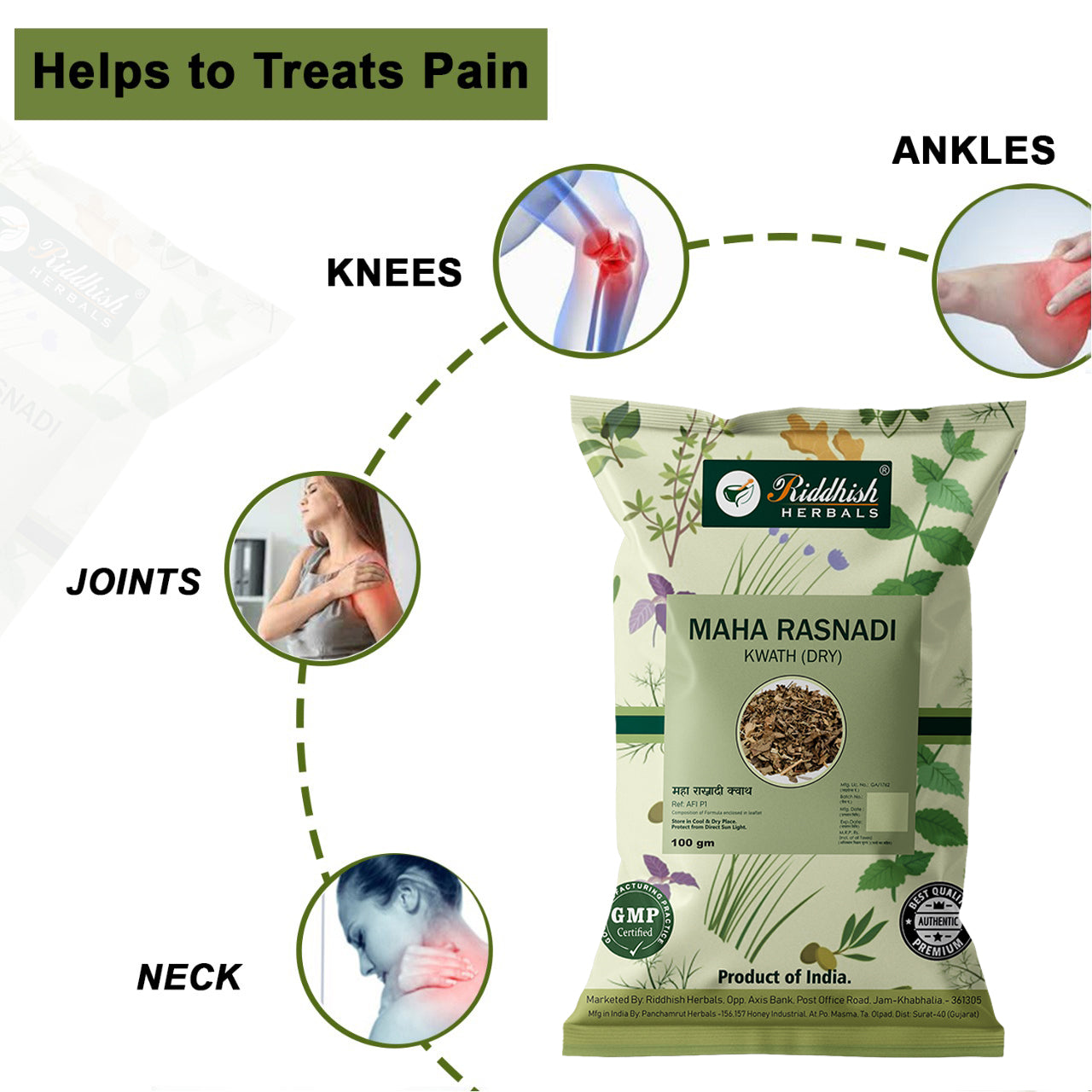
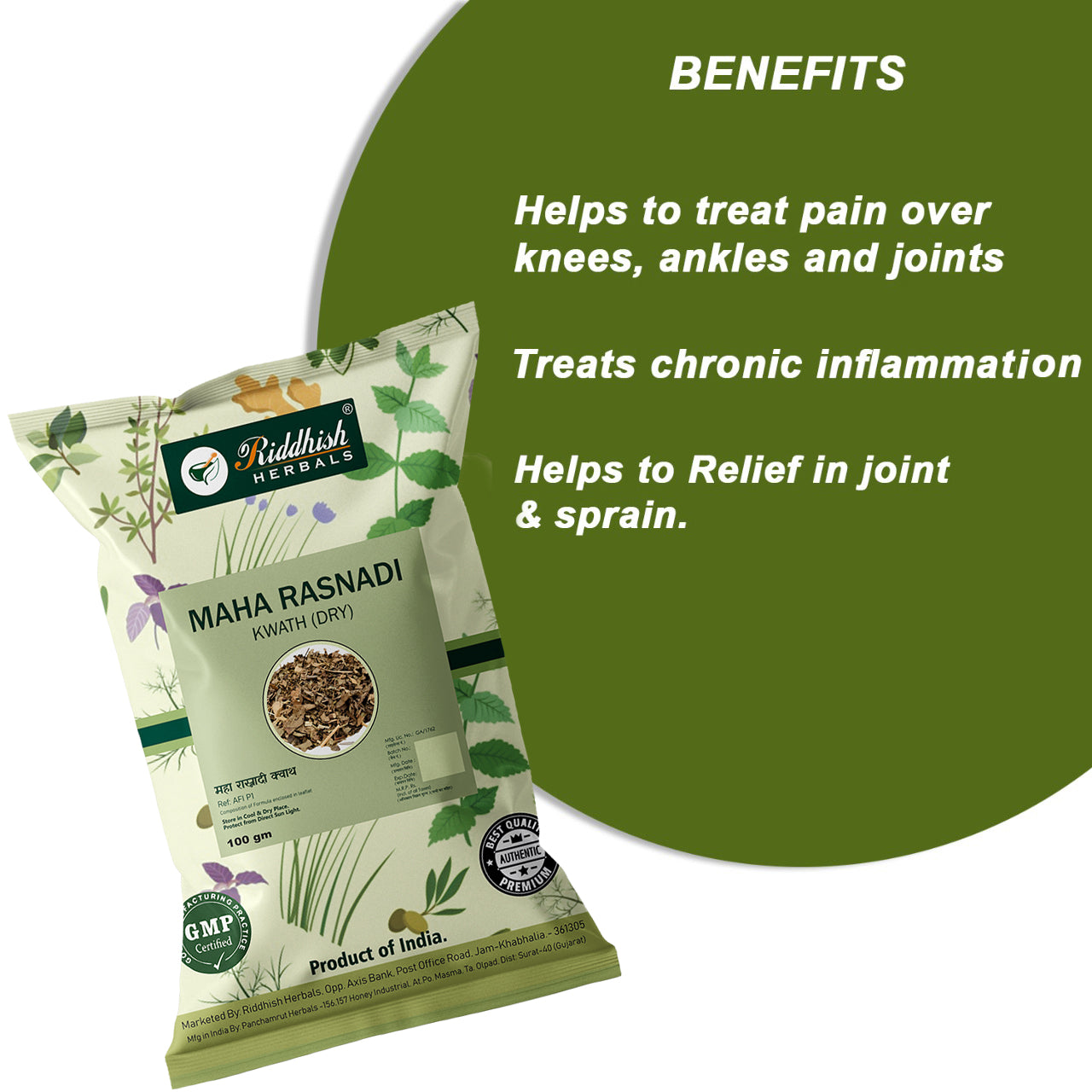
- Traditional joint & mobility support: classically valued for the musculoskeletal system.
- Fresh dry kwath: a coarse blend (yavakuta) you boil at home for a traditional kashayam.
- GMP-, ISO 9001:2015- and HACCP-certified manufacturer: made by Panchamrut Herbals, certified to GMP, ISO 9001:2015 and HACCP standards (Mfg. Lic. No. GA/1762).
- Riddhish Herbals assurance: genuine products, bill provided, doctor-guided selection, pan-India delivery.
Composition (per AFI Part I)
Coarse decoction blend. Classical proportion: Rasna 50 parts; each of the other twenty-five herbs 1 part (total 75 parts). Botanical names and plant parts as per AFI Part I.
| Ingredient | Botanical | Part Used | Proportion |
|---|---|---|---|
| Rasna | Pluchea lanceolata | root/leaf | 50 parts |
| Dhanvayasa | Fagonia cretica | whole plant | 1 part |
| Bala | Sida cordifolia | whole plant | 1 part |
| Eranda Moola | Ricinus communis | root | 1 part |
| Devadaru | Cedrus deodara | heartwood | 1 part |
| Shati | Hedychium spicatum | rhizome | 1 part |
| Vacha | Acorus calamus | rhizome | 1 part |
| Vasa / Vasaka | Adhatoda vasica | root | 1 part |
| Shunthi / Nagara | Zingiber officinale | rhizome | 1 part |
| Haritaki / Pathya | Terminalia chebula | pericarp | 1 part |
| Chavya | Piper chaba | stem | 1 part |
| Musta | Cyperus rotundus | rhizome | 1 part |
| Punarnava | Boerhavia diffusa | root | 1 part |
| Guduchi | Tinospora cordifolia | stem | 1 part |
| Vriddhadaru | Argyreia nervosa | root | 1 part |
| Shatapushpa / Shatahva | Anethum sowa | fruit | 1 part |
| Gokshura | Tribulus terrestris | fruit | 1 part |
| Ashwagandha | Withania somnifera | root | 1 part |
| Ativisha / Prativisha | Aconitum heterophyllum | root | 1 part |
| Aragvadha / Kritamala | Cassia fistula | fruit pulp | 1 part |
| Shatavari | Asparagus racemosus | tuberous root | 1 part |
| Pippali / Krishna | Piper longum | fruit | 1 part |
| Sahachara | Barleria prionitis | whole plant | 1 part |
| Dhanyaka | Coriandrum sativum | fruit | 1 part |
| Kantakari | Solanum surattense | whole plant | 1 part |
| Brihati | Solanum indicum | whole plant | 1 part |
About the packet: this is the base dry kwath only. As per AFI Part I, prakshepa dravya (added powders such as Shunthi, Pippali and Ajamodadi churna, and Eranda taila) are mixed in at the time of preparation or administration — they are not pre-blended into this packet.
Net weight 100 g. Label-verified composition.
Research & Scientific References
The lead herb Rasna has been reviewed in the peer-reviewed literature. A review of Pluchea lanceolata documented its triterpenoids, sterols and flavonoids and surveyed its traditionally recognised anti-inflammatory and analgesic character within the Rasayana tradition. (Srivastava & Shanker, 2012 — Fitoterapia; PMID 22877846)
Findings are observed under research conditions and do not constitute medical claims. Individual results may vary. Use under the guidance of a qualified Ayurvedic physician.
How to Use & Anupan
As directed by your Ayurvedic physician. Traditionally, a measured portion of the dry kwath (commonly around 5–10 g of the coarse powder) is boiled in water and reduced to prepare a fresh decoction, then strained and taken — usually warm, before food. Your physician may advise specific prakshepa additions and anupana.
Who Can Use It
Generally suited to adults seeking traditional Vata-balancing support for joints and mobility, under guidance. Not recommended during pregnancy. Consult a qualified Ayurvedic physician if lactating, on any medication, or managing a health condition. Keep out of reach of children.
Safety Information
Use strictly under the guidance of a qualified Ayurvedic physician. Avoid during pregnancy unless advised. Keep out of reach of children. Results may vary from person to person.
Storage
Store in a cool, dry place, protected from direct sunlight. After opening, keep the contents in a tightly closed airtight container away from moisture.
Frequently Asked Questions
Which classical reference does this follow?
The pack is made to the Ayurvedic Formulary of India (AFI), Part I — printed on the label as "Ref: AFI P1" — under the formulation Rasnadi Kvatha Churna (Maha). The Maharasnadi tradition is described in the classical Sahasrayogam.
Who manufactures Maha Rasnadi Kwath (Dry)?
It is manufactured by Panchamrut Herbals and marketed by Riddhish Herbals, under Mfg. Lic. No. GA/1762.
Is this product GMP certified?
Panchamrut Herbals, the manufacturer of this product, holds GMP, ISO 9001:2015 and HACCP certification. Good manufacturing practice (GMP) relates to how the product is made; these are not claims about any medical outcome.
Can I take Maha Rasnadi Kwath without consulting a doctor?
It is a classical 26-herb decoction, so it is best prepared and used under the guidance of a qualified Ayurvedic physician.
What does "dry kwath" mean?
A kwath (kashayam) is a herbal decoction. This dry kwath is the coarse herb blend (yavakuta) you boil in water to make a fresh decoction at home.
Does the packet contain the prakshepa powders?
No. The packet contains only the base kwath herbs. Prakshepa dravya such as Shunthi, Pippali and Ajamodadi churna and Eranda taila are added separately at the time of preparation, as per AFI Part I and your physician's advice.
What is the recommended anupan?
The freshly prepared decoction is traditionally taken with warm water before food, as advised by your physician.
Is Maha Rasnadi Kwath known by other names?
Yes — it is also searched for as maharasnadi kwath, maharasnadi kashayam, maharasnadi kadha, rasnadi kwath, and rasnadi kvatha churna. All refer to the same AFI Part I formulation.
Has Rasna been studied scientifically?
Yes. A peer-reviewed review (Srivastava & Shanker, 2012, Fitoterapia; PMID 22877846) documents its constituents and traditionally recognised anti-inflammatory character. Such findings are observed under research conditions and individual results may vary.
Also searched as: maha rasnadi kwath, maharasnadi kwath, maharasnadi kashayam, maharasnadi kadha, rasnadi kwath, rasnadi kvatha churna, maharasnadi quath.
Related at Riddhish Herbals
Bharangyadi Kwath (Dry) · Dashmool Kwath (Dry) · Ayurvedic Medicines
About Riddhish Herbals
Since 2015 · Genuine Products · Bill Provided · Doctor-Guided Selection · 4000+ Ayurvedic Products · 130+ Trusted Brands · Pan-India Delivery
રીધ્ધીશ હર્બલ્સ — ગુજરાતનો વિશ્વાસપાત્ર આયુર્વેદિક સ્ટોર, જ્યાં સાચી સલાહ અને genuine Ayurvedic products એક જ જગ્યાએ મળે છે.