
Riddhish Herbals
Bahufali Churna (Chaksu) – Cassia absus Seed Powder – Riddhish Herbals – 100g
Bahufali Churna (Chaksu) – Cassia absus Seed Powder – Riddhish Herbals – 100g
Couldn't load pickup availability
Bahufali Churna from Riddhish Herbals is a single-herb powder of Chaksu seeds (Cassia absus), a classical Ayurvedic dravya whose Sanskrit name Chakshushya reflects its long-standing association with the eyes. Chaksu is Tikta–Kashaya (bitter–astringent) in rasa with Sheeta virya (cooling potency), and is described in the Dhanvantari Nighantu and Raja Nighantu as Kapha–Pittahara. A review of Cassia absus in the Journal of Pharmacy and Pharmacology (Ahmad et al., 2018; PMID 28872683) surveys its seed alkaloids, chaksine and isochaksine.
About Bahufali (Chaksu)
Bahufali is the classical Sanskrit-rooted name for the small, hard seeds of Cassia absus — better known in the trade as Chaksu. The name Bahufali means “bearing many fruits/seeds,” describing the plant’s many-seeded pods. Across North India the seed is simply called Chaksu.
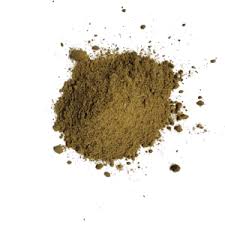
This churna is a pure, single-herb seed powder. Nothing is blended in — it is Chaksu Beej ground to a fine, traditional consistency. Riddhish Herbals has supplied genuine Ayurvedic raw materials like this from Gujarat since 2015.
Traditional Ayurvedic Importance
Chaksu is recorded in the Dhanvantari Nighantu (Chandanadi Varga) and the Raja Nighantu (Parpatadi Varga). It is classified as Tikta (bitter) and Kashaya (astringent) in rasa, Laghu and Ruksha in guna, with Sheeta virya (cooling potency) and Katu vipaka. Note that Chaksu does not appear in the Charaka Samhita — its classical home is the nighantus, not the Bruhat Trayi.
Its best-known classical attribute is captured in its very name, Chakshushya — the group of dravyas traditionally associated with the eyes. Being Sheeta and Kapha–Pittahara, Chaksu is traditionally valued in Pitta-predominant routines and for Raktaprasadana (blood-clarifying) context as described in classical literature.
- Single-herb Chaksu seed churna — 100% Cassia absus seed, no fillers or binders.
- Classically Chakshushya — the seed most associated with the eyes in the nighantus.
- Sheeta virya (cooling) — Tikta–Kashaya rasa, traditionally Kapha–Pittahara.
- Nighantu-referenced — Dhanvantari Nighantu & Raja Nighantu (not Charaka).
- Finely ground — classical churna consistency for easy anupana.
- Genuine & bill-provided — sourced raw seed from Riddhish Herbals, since 2015.
Research on the Constituents
◆ A review of Cassia absus in the Journal of Pharmacy and Pharmacology surveyed the seed’s phytochemistry — including the alkaloids chaksine and isochaksine — and its documented traditional uses — (Ahmad et al., 2018 — J Pharmacy and Pharmacology; PMID 28872683). View on PubMed.
Results were observed under study conditions. Individual results may vary. This is shared for general educational interest and is not a medical claim. Consult your Ayurvedic physician before use.
Composition (single herb)
| Ingredient | Botanical | Part Used | Quantity |
|---|---|---|---|
| Chaksu Beej (Bahufali) | Cassia absus L. | Seed (Beej) | 100 g — 100% single herb |
Sold as a single-herb seed churna. No excipients, binders or additional herbs are included. Please confirm the printed net weight and any batch details against the physical pack.
How to Use
As directed by your Ayurvedic physician. The seed churna is traditionally taken with water or honey as the anupana (vehicle), chosen to suit your Prakriti. Because dose and vehicle are matched to the individual, your Vaidya is the right person to set them.
Who Can Use It
Traditionally used by adults, and often favoured in Pitta-predominant constitutions. Pregnant or lactating women, and anyone on regular medication or managing a health condition, should use it only under the guidance of a qualified Ayurvedic physician. For children, use only as directed by a qualified Ayurvedic physician.
Safety Information
Chaksu is a classical seed dravya, best used in the right quantity for your constitution and under professional guidance, especially during pregnancy or lactation, or alongside other medication. Discontinue and consult your physician if any discomfort occurs. Results may vary from person to person. This description is shared for general educational interest and is not a medical claim.
Storage
Store the churna in a cool, dry place in a tightly closed, airtight container, away from direct sunlight and moisture. Keep out of reach of children.
Frequently Asked Questions
Is Bahufali Churna AYUSH- or GMP-certified?
Bahufali Churna is supplied by Riddhish Herbals as a genuine single-herb raw material with a bill provided. We do not claim GMP or ISO certification for this loose churna; quality is maintained through careful sourcing. Confirm any specific mark against the physical pack.
Can I take Bahufali Churna without consulting a doctor?
It is best not to. Even a single herb like Chaksu should be matched to your Prakriti, dose and duration by a qualified Ayurvedic physician, particularly if you are pregnant, lactating, or on medication.
What exactly is Chaksu / Bahufali?
It is the seed of Cassia absus. Sanskrit calls it Chakshushya and Bahufali; in the North Indian trade it is Chaksu. The plant belongs to the Cassia (senna) family.
Why is Chaksu called Chakshushya?
Chakshushya is the classical Ayurvedic group of dravyas traditionally associated with the eyes. Chaksu carries this name in the nighantus, which is why it appears in many traditional eye-care formulations.
Which classical texts mention Chaksu?
Chaksu is described in the Dhanvantari Nighantu (Chandanadi Varga) and the Raja Nighantu (Parpatadi Varga). It is not found in the Charaka Samhita — a point often mis-stated online.
What are the other names for Bahufali / Chaksu?
Sanskrit: Chakshushya, Aranya Kulatthika, Vanya Kuluttha; Hindi: Chaksu / Chakanu; Gujarati: Chimed / Bahufali; Marathi: Chinola; Telugu: Chanubala Vittulu; English: Jasmeejaz. A fuller table appears below.
How is Riddhish Herbals’ Bahufali Churna different?
We supply it as a pure, single-herb Chaksu seed churna with a genuine bill and doctor-guided selection, from a store serving Gujarat since 2015 — not a diluted or mixed lot.
Is Bahufali Churna available at Riddhish Herbals stores?
Yes. It is stocked online and across our Gujarat counters, with pan-India delivery.
What is the traditional anupana for Chaksu?
Water or honey is commonly used as the anupana; your physician will choose the vehicle that suits your constitution and purpose.
Has Cassia absus been studied scientifically?
Yes — a review in the Journal of Pharmacy and Pharmacology (Ahmad et al., 2018; PMID 28872683) surveyed its seed alkaloids (chaksine, isochaksine) and traditional uses. Such research is shared for educational interest only; results may vary and it is not a medical claim.
Regional Names & Spelling Variants
| Language | Name |
|---|---|
| Local / common (trade) | Chaksu / ચકસૂ · Bahufali |
| Sanskrit | चक्षुष्या (Chakshushya) / अरण्यकुलत्थिका (Aranya Kulatthika) / वन्यकुलत्थ (Vanya Kuluttha) |
| Hindi | Chaksu / Chakanu (romanised) |
| Gujarati | Chimed / Bahufali (romanised) |
| Marathi | Chinola (romanised) |
| Bengali | Bahera-jibar — not verified; romanised as available |
| Tamil | Karum / Kattukkanam (romanised) |
| Telugu | Chanubala Vittulu (romanised) |
| Kannada | not verified — romanised only |
| Malayalam | not verified — romanised only |
| English + Botanical | Jasmeejaz / Four-leaved Senna — Cassia absus L. — seed |
| Search variants (romanised) | Chaksu, Chaksu seeds, Bahufali, Bahuphali, Chakshushya, Cassia absus |
| Common misspellings | Chaksoo, Chasku, Bahufale, Bahuphalee, Cassia absur |
Related at Riddhish Herbals
Baheda Akha (Bibhitaki) — classical Chakshushya sibling · Amla Powder (Amalaki Churna) · Rasayan Churna (Amrutadi Churna) · All Ayurvedic Raw Herbs & Materials