
Riddhish Herbals
Dadam Chhal Churna (Pomegranate Peel) – Punica granatum – Riddhish Herbals – 100g
Dadam Chhal Churna (Pomegranate Peel) – Punica granatum – Riddhish Herbals – 100g
Couldn't load pickup availability
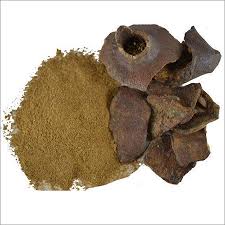
Dadam Chhal Churna from Riddhish Herbals is the sun-dried peel (Chhal / Twak) of Dadam — pomegranate, Punica granatum. In Ayurveda the rind is the classical Dadima Twak, valued as a Kashaya (astringent) and Grahi (gut-toning) dravya, traditionally used to support the Grahani (gut) and comfortable digestion. Pomegranate peel is a naturally tannin- and polyphenol-rich material. A review documented its chemistry. Each pack is genuine, bill-provided material from a doctor-guided store operating since 2015.
About Dadam Chhal Churna (Pomegranate Peel)
Dadam — the pomegranate, Punica granatum — is one of the most loved fruits of the subcontinent, and Ayurveda values not only its arils but its rind. This churna is the sun-dried peel (Chhal / Twak), finely milled, an astringent gut-comfort dravya in the classical tradition.
Riddhish Herbals supplies it as a clean single-material peel powder under our doctor-guided selection standard, with a bill on every order. The peel is naturally rich in tannins, which give it its characteristic astringency.
Traditional Ayurvedic Importance
Classical texts (Bhavaprakasha Nighantu, under Dadima) describe the pomegranate rind as Kashaya (astringent) and Grahi — gut-toning and binding — with a Deepana (Agni-supporting) quality. It is one of the classical Grahi dravyas turned to for firm, comfortable bowel function.
Its predominantly Kashaya rasa makes it traditionally Pitta-Kapha settling. In classical practice the peel is used as a churna or a decoction (kwath), with the amount and anupana chosen by a Vaidya to suit each person.
Key Features
- Pure pomegranate peel powder: single-material sun-dried Dadam Chhal (Punica granatum rind), nothing blended in.
- The classical Dadima Chhal: the fruit rind (Twak) of Dadima, valued in the classical texts.
- Kashaya & Grahi: classically astringent and gut-toning — the defining quality of the peel.
- Naturally tannin-rich: pomegranate peel is a well-known natural source of tannins and polyphenols.
- Traditional gut-comfort dravya: long used in Ayurvedic routines for the Grahani (gut).
- Genuine, doctor-guided sourcing: bill provided with every pack; a store trusted since 2015.
Research on the Constituents
◆ A review documented the chemistry and food features of pomegranate peel and its extracts, including its polyphenol and tannin content — (Akhtar S et al., 2015 — Food Chemistry). PubMed PMID: 25529700
Results were observed under study conditions. Individual results may vary. This is shared for general educational interest and is not a medical claim. Consult your Ayurvedic physician before use.
Ingredients (single-material, label-verified)
| Ingredient | Botanical (part) | Plant Part | Proportion |
|---|---|---|---|
| Dadam Chhal (pomegranate peel) | Punica granatum L. (Lythraceae) | Fruit rind / peel (Twak) | 100% single material |
Single-material genuine pomegranate peel (Punica granatum rind) powder. No fillers, colours or preservatives added. A naturally tannin-rich astringent food-herb. Confirm details against the physical pack label.
How to Use
As directed by your Ayurvedic physician. A common traditional reference is about 3–5 g of the powder with warm water, twice daily, or prepared as a kwath (decoction). Being astringent, it is taken with adequate water; the quantity and anupan are matched to you by a Vaidya.
Who Can Use It
Suitable for most adults as a gentle astringent gut-comfort powder within a physician-guided routine. Because it is drying and binding, those prone to hard or infrequent stools use it modestly and with plenty of water. Consult a qualified Ayurvedic physician before use if you are pregnant, lactating, on medication, or managing a health condition.
Safety Information
Dadam Chhal is a gentle, food-class astringent peel powder. Because its Kashaya (astringent) nature is drying and binding, take it with adequate water and use it modestly if you are prone to hard or infrequent stools. If you are pregnant, lactating, on medication, or managing any condition, consult your physician before use. Keep out of reach of children. Results may vary from person to person.
Storage
Store in a cool, dry place in an airtight container away from moisture and direct sunlight. Keep the pack tightly closed after each use.
Frequently Asked Questions
What is Dadam Chhal Churna?
It is the sun-dried peel (Chhal / Twak) of Dadam (pomegranate, Punica granatum), milled to a powder — a classical Kashaya (astringent) and Grahi (gut-toning) dravya used for gut comfort.
What are the alternate names of Dadam?
Dadam is Dadima or Dadimba (Sanskrit), Anar (Hindi), Dalimb (Marathi), Madhulai (Tamil), Danimma (Telugu), Dalimbe (Kannada) and Mathalam (Malayalam); this product is the peel. Botanically Punica granatum.
Why is the peel used and not the fruit?
The sweet arils are eaten as fruit; the rind (Chhal) is the astringent, tannin-rich part that Ayurveda values as a Grahi (gut-toning) dravya. This churna is the peel.
How is it traditionally used?
Classically about 3–5 g of the powder is taken with warm water twice daily, or made into a kwath (decoction), as advised by your Ayurvedic physician.
What are its classical properties?
The Bhavaprakasha Nighantu (Dadima) describes the rind as Kashaya (astringent), Grahi (gut-toning) and Deepana (Agni-supporting), predominantly Pitta-Kapha settling.
Is this AYUSH- or GMP-made?
This is a raw single-herb peel powder in Riddhish Herbals' own pack. Any AYUSH or GMP mark would appear on the physical pack — we state such marks only where verified on the pack.
Who should use it with care?
Because it is astringent and binding, those prone to hard or infrequent stools should use it modestly and with plenty of water. Pregnant or lactating women should use it only on a physician's advice.
Has pomegranate peel been studied scientifically?
Yes — a review documented its chemistry and food features, including its polyphenols and tannins (Akhtar S et al., 2015, Food Chemistry). This is shared for general educational interest, not as a medical claim.
How should I store Dadam Chhal Churna?
Keep it in a cool, dry, airtight container away from moisture and sunlight, and use a clean, dry spoon.
Regional Names & Spelling Variants
| Language | Name |
|---|---|
| Local / common | Dadam ni Chhal / Anar Chhilka (દાડમની છાલ / अनार का छिलका) |
| Sanskrit | Dadima, Dadimba (दाडिम) |
| Hindi | Anar (chhilka) (अनार) |
| Gujarati | Dadam (ni chhal) (દાડમ) |
| Marathi | Dalimb (saal) (romanised) |
| Bengali | Dalim (khosha) (romanised) |
| Tamil | Madhulai (thol) (romanised) |
| Telugu | Danimma (tokka) (romanised) |
| Kannada | Dalimbe (sippe) (romanised) |
| Malayalam | Mathalam (thodu) (romanised) |
| English + Botanical | Pomegranate peel / rind — Punica granatum L. (Lythraceae) — fruit rind (Twak) |
| Search variants | dadam chhal, dadam ni chhal, anar chhilka, anar peel, pomegranate peel, punica granatum, dadima twak, dadam chhal churna |
| Common misspellings | dadam chaal, dadam chal churna, anar chilka, pomogranate peel, punica granatam |
Related at Riddhish Herbals
Baheda Akha (Bibhitaki, Grahi) · Bilagarbha Churna (Bael fruit) · Ayurvedic Raw Herbs & Materials · Doctor-Guided Product Selection