
Riddhish Herbals
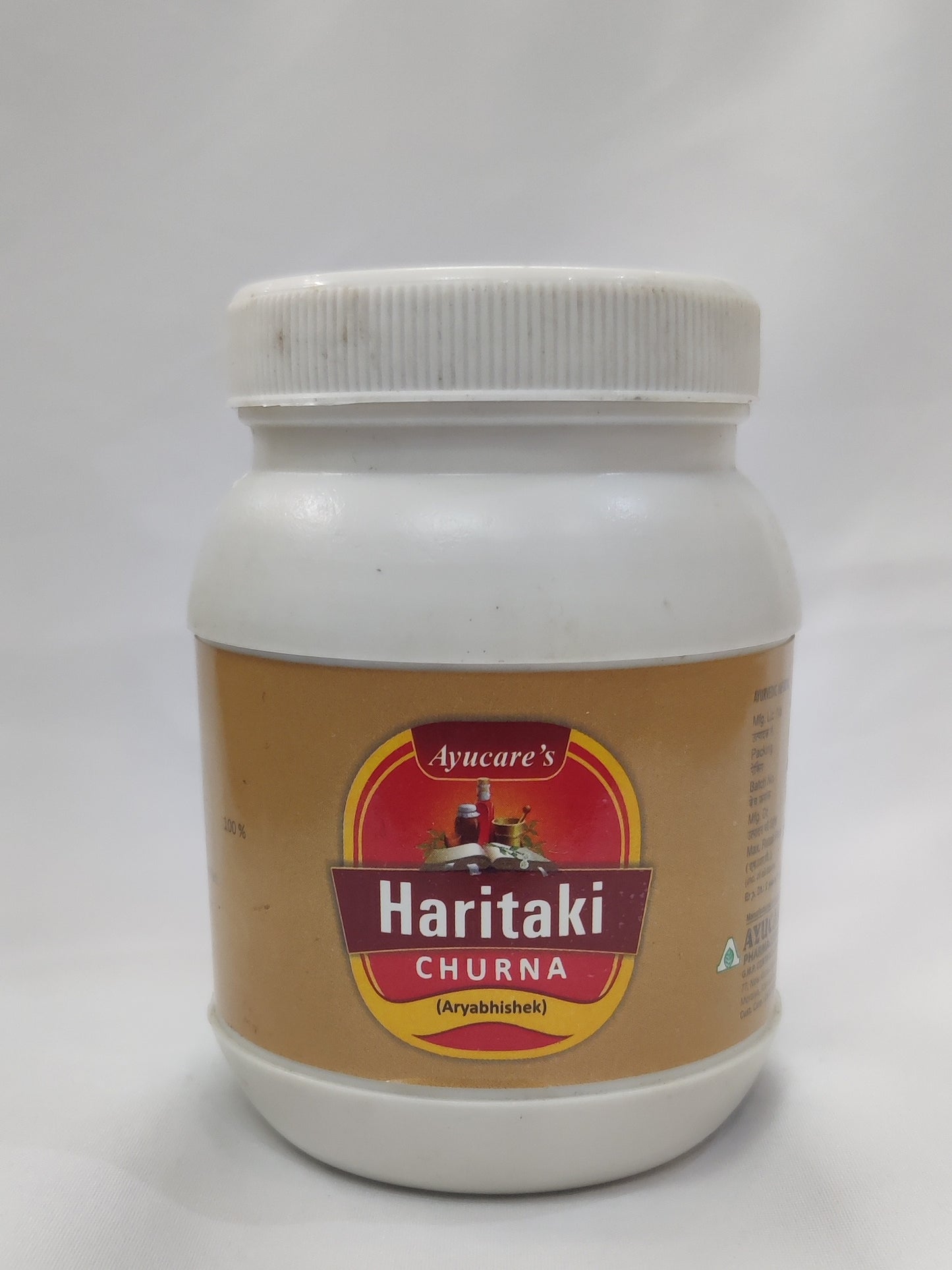
Haritaki Churna (Harde) | Terminalia chebula | Ayucare | 100g
Haritaki Churna (Harde) | Terminalia chebula | Ayucare | 100g
Couldn't load pickup availability
Haritaki Churna (Harde) is a single-herb Ayurvedic powder made from the dried fruit (pericarp) of Terminalia chebula. This 100g pack is marketed by Ayucare, and Riddhish Herbals is an authorised seller for Ayucare.
About Haritaki — Traditional Ayurvedic Importance
Haritaki, also called Abhaya and Pathya in classical texts, is one of the most widely referenced single herbs in Ayurveda and is one of the three fruits that make up Triphala. It is traditionally described as deepana-pachana (digestive-kindling) and anulomana (supporting the regular, downward movement of vata) in nature, and is regarded as a rasayana herb supporting general digestive and bowel wellness when used as part of a balanced routine.
Key Features
- Single-herb churna — 100% Haritaki (Terminalia chebula) fruit powder
- Made from the fruit pericarp, the classically specified part
- Marketed by Ayucare; Riddhish Herbals is an authorised seller for Ayucare
- Traditionally regarded as a rasayana herb supporting digestive and bowel wellness
- One of the three constituents of the classical Triphala combination
- Finely ground for easy use as directed by your physician
- Packed at 100g net weight
- Sold with a bill on every Riddhish Herbals order
Composition
| Ingredient | Botanical | Part | Quantity |
|---|---|---|---|
| Haritaki (Harde) | Terminalia chebula | Fruit (pericarp) | single herb |
Net weight 100g. Single-herb churna, Form: fine powder.
Label-Approved Use & Safety
Use strictly as directed by a qualified Ayurvedic physician — dosage varies by age, constitution, and purpose of use, and this pack does not print a self-directed dosage. Consult your physician before use, especially if you are pregnant, lactating, taking any medication, or managing any medical condition. Keep out of reach of children. Store in a cool, dry place away from direct sunlight, in a tightly closed container. Results may vary from person to person.
Common Names
| Language | Name |
|---|---|
| Hindi | Harad, Harde |
| Sanskrit | Haritaki, Abhaya, Pathya |
| English / Botanical / Part | Chebulic Myrobalan; Terminalia chebula; Fruit (pericarp) |
Also searched as: Harad powder, Harde powder, Kadukai, Karakkaya, Haritaki churna, Ayucare Haritaki.
Frequently Asked Questions
What brand is this Haritaki Churna?
This pack is marketed by Ayucare. Riddhish Herbals is an authorised seller for Ayucare.
What is Haritaki Churna made from?
A single herb — the dried fruit pericarp of Terminalia chebula, ground to a fine powder.
How should Haritaki Churna be taken?
Use strictly under the guidance of a qualified Ayurvedic physician, who can advise the right quantity and timing for you.
What is Haritaki traditionally used for in Ayurveda?
Haritaki is classically described as a rasayana herb supporting digestive and bowel wellness, and is one of the three fruits in the classical Triphala combination.
Is this a single-herb or a blended formula?
This is a single-herb churna — Haritaki only, with no other herbs blended in.
Can pregnant or lactating women take this?
Please consult a qualified Ayurvedic physician before use if you are pregnant, lactating, taking medication, or managing any medical condition.
How should I store this churna?
Store in a cool, dry place away from direct sunlight, in a tightly closed container.
What is the net quantity of this pack?
This pack contains 100g of Haritaki (Harde) churna.
What part of the Haritaki fruit is used?
The fruit pericarp — the classically specified part for Haritaki churna.
How do I know this is the genuine pack?
Every Riddhish Herbals order ships with a bill, and Riddhish Herbals is an authorised seller for the Ayucare brand.
Related Products
Riddhish Herbals also stocks its own-brand Haritaki Churna and other single-herb churnas such as Pippali and Tulasi — explore our raw Ayurvedic herbs range.
About Riddhish Herbals
This pack is marketed by Ayucare. Riddhish Herbals is an authorised seller for Ayucare.
Reviewed by Dr. Riddhish Padiya — B.Pharm (Ayurveda), M.Pharm (Pharmacognosy), PhD (Dravyaguna), ITRA Jamnagar.
Since 2015 · Genuine Products · Bill Provided · Doctor-Guided Selection · 4000+ Ayurvedic Products · 130+ Trusted Brands · Pan-India Delivery.
રીધ્ધીશ હર્બલ્સ — ગુજરાતનો વિશ્વાસપાત્ર આયુર્વેદિક સ્ટોર, જ્યાં સાચી સલાહ અને genuine Ayurvedic products એક જ જગ્યાએ મળે છે.