

Riddhish Herbals
Kalonji Seeds (Black Seed / Krishna Jiraka) – Nigella sativa – Riddhish Herbals – 100g
Kalonji Seeds (Black Seed / Krishna Jiraka) – Nigella sativa – Riddhish Herbals – 100g
Couldn't load pickup availability
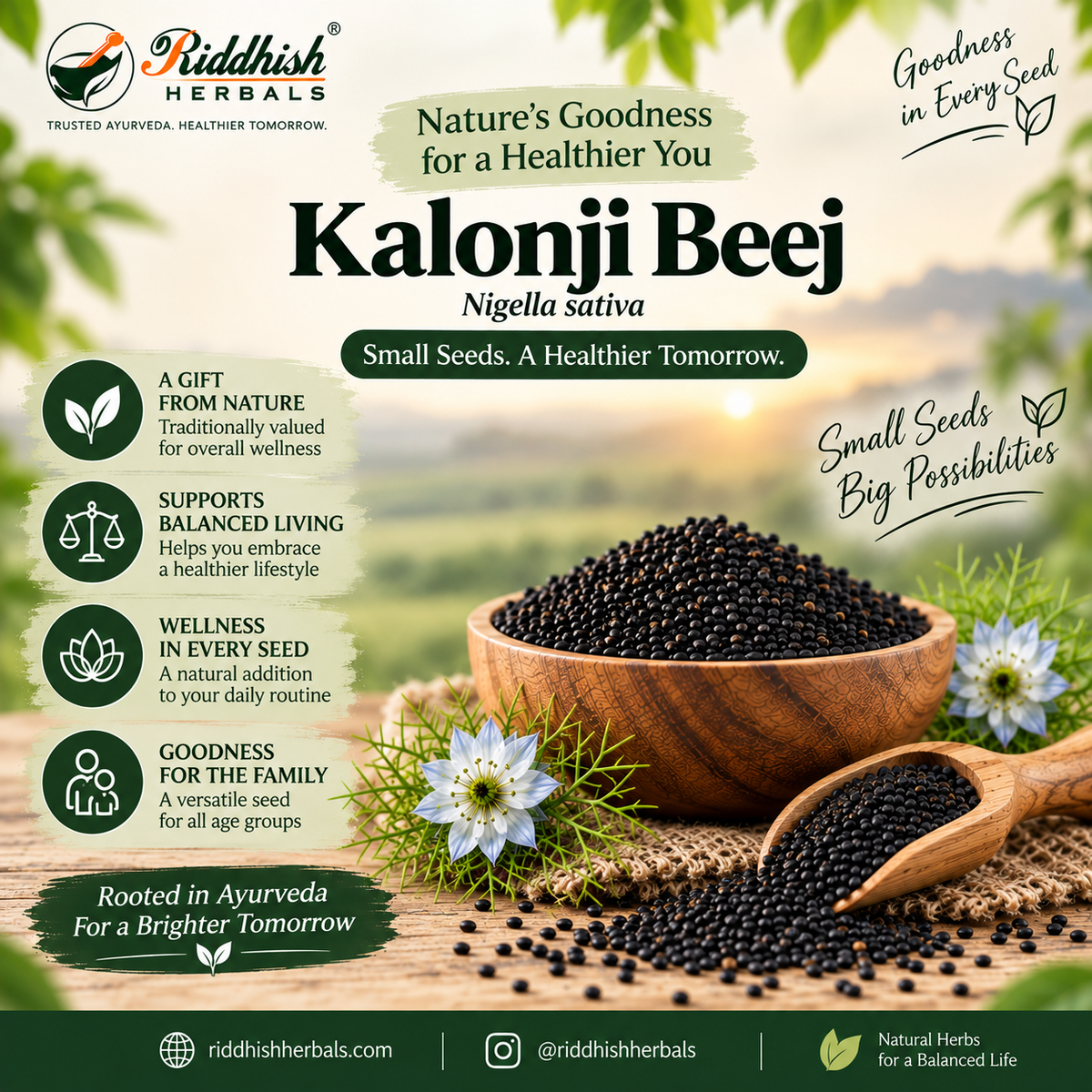
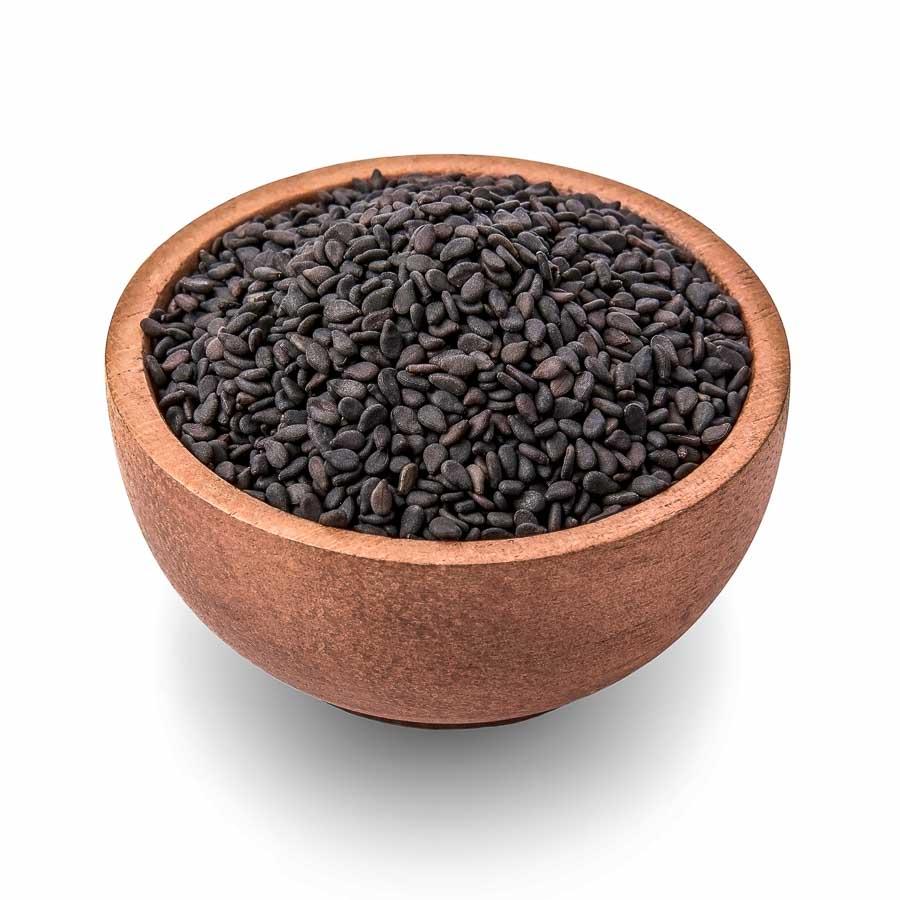
Kalonji Seeds from Riddhish Herbals are whole black seeds of Nigella sativa — Kalonji (Krishna Jiraka, Kalajaji), a classical Ayurvedic warming aromatic seed also known in English as black seed or black cumin (though botanically distinct from true cumin). Classically it is Tikta-Katu (bitter-pungent) in Rasa, Laghu and Tikshna in Guna and Ushna in Virya, and is described as Deepana (digestion-kindling), Pachana (digestive), Krimighna and Anulomana. The seeds are naturally rich in thymoquinone. Each pack is genuine, bill-provided material from a doctor-guided store operating since 2015.
About Kalonji Seeds (Nigella sativa)
Kalonji — Krishna Jiraka, black seed, Nigella sativa — is a small annual whose tiny black seeds have been part of Indian culinary and classical wellness traditions for centuries. Called Kalajaji or Upakunchika in classical Sanskrit texts and Mangrail in Hindi, the seeds carry a warm, bitter-pungent profile.
Riddhish Herbals offers Kalonji in its whole, unprocessed form — 100g of pure Nigella sativa seeds, without fillers, additives or blending. The seeds are added to naan, dals, pickles and tadka, taken with warm water or honey, or used as advised by an Ayurvedic physician.
Traditional Ayurvedic Importance
Classical texts describe Kalonji (Kalajaji / Upakunchika) as Tikta and Katu in Rasa, Laghu and Tikshna in Guna, Ushna in Virya and Katu in Vipaka, with a Deepana (digestion-kindling), Pachana (digestive), Krimighna and Anulomana character. It is classically grouped among the digestive, Agni-kindling seeds and is well suited to Kapha and Vata routines.
Kalonji is also recognised across the Unani and Siddha traditions, and its seeds are naturally rich in thymoquinone, the principal constituent studied in modern research. Taken as a normal culinary or physician-guided amount, it suits most people.
Key Features
- Pure whole Kalonji seeds (Krishna Jiraka): 100% whole Nigella sativa seeds — no blending, no additives.
- Classical Deepana & Pachana: traditionally valued as a digestion-kindling, digestive warming seed.
- Krimighna & Anulomana: classically counted among the Krimighna dravyas, supporting the natural downward flow of Vata.
- Naturally contains thymoquinone: Kalonji seeds are naturally rich in thymoquinone, their principal studied constituent.
- Kitchen & classical use: sprinkled on naan, added to dals, pickles and tadka, or taken as advised.
- Genuine, doctor-guided sourcing: bill provided with every pack; a store trusted since 2015.
Research on the Constituents
◆ Researchers comparatively analysed the essential-oil composition of Iranian and Indian Kalonji seeds, Nigella sativa, and identified thymoquinone among the constituents — (Ghahramanloo KH et al., 2017 — Drug Design, Development and Therapy). PubMed PMID: 28814830
Results were observed under study conditions. Individual results may vary. This is shared for general educational interest and is not a medical claim. Consult your Ayurvedic physician before use.
Ingredients (single-material)
| Ingredient | Botanical (part) | Plant Part | Proportion |
|---|---|---|---|
| Kalonji / Krishna Jiraka | Nigella sativa L. (Ranunculaceae) | Whole dried seed | 100% single material |
Single-material pure Kalonji seeds (Nigella sativa, Krishna Jiraka). No fillers, colours, flavours or preservatives added. Whole black seeds. Confirm details against the physical pack label.
How to Use
As directed by your Ayurvedic physician. A common traditional reference is 1–3g (about ¼–½ teaspoon) of whole seeds once or twice daily, with warm water, honey or warm milk as the anupan; the seeds may also be lightly dry-roasted or added directly to food. The exact amount and anupan are matched to you by a Vaidya.
Who Can Use It
Suitable for general daily use by adults, particularly Kapha and Vata routines, in normal food or physician-guided amounts. In pregnancy, lactation, or if you are on medication or managing any health condition, seek advice before using concentrated or medicinal quantities. Keep out of reach of children.
Safety Information
Kalonji is a food-grade raw seed used safely in normal culinary amounts. Use concentrated or medicinal amounts only on a physician’s advice, particularly in pregnancy, lactation, or if you are on medication or managing any condition. Keep out of reach of young children. Results may vary from person to person.
Storage
Store in a cool, dry place in an airtight container away from direct sunlight, moisture and strong-smelling spices. Keep the container tightly closed after each use; whole seeds keep their quality and aroma best when stored dry.
Learn More About Kalonji
- कलौंजी क्या है? हिंदी नाम, पहचान और आयुर्वेद में उपयोग (Hindi)
- कलौंजी कैसे खाएं? रसोई में उपयोग के आसान तरीके (Hindi)
- कलौंजी vs काली जीरी — दो अलग पौधे, पहचान का आसान तरीका (Hindi)
- Kalonji in Different Languages — Tamil, Malayalam, Telugu, Bengali & more
- What Is Kalonji? Nigella sativa in Ayurveda — Complete Guide
Frequently Asked Questions
What is Kalonji?
Kalonji is the whole black seed of Nigella sativa, known in Sanskrit as Kalajaji, Upakunchika or Krishna Jiraka, and in English as black seed or black cumin (Nigella). It is a classical Ayurvedic Deepana-Pachana warming seed.
Is Kalonji the same as cumin or black cumin?
No. Kalonji (Nigella sativa) is botanically distinct from true cumin / Jeeru (Cuminum cyminum) and from black cumin / Shahjeera (Bunium bulbocastanum or Carum bulbocastanum). They are different plants with different flavours and uses — do not substitute one for another.
Is Kalonji the same as Kari Jiri or Kali Jiri?
No. Kari Jiri / Kali Jiri (Centratherum anthelminticum, Asteraceae) is a different plant. Its seeds are elongated, ribbed and intensely bitter and it is not a kitchen spice, while Kalonji seeds are small, angular, aromatic and used in cooking. Do not substitute one for the other.
What are the alternate names of Kalonji?
Kalajaji, Upakunchika or Krishna Jiraka (Sanskrit), Kalonji or Mangrail (Hindi), Kalonji (Gujarati), Kalo Jeere (Bengali), Habbatus Sauda (Arabic/Unani). In English: black seed, black cumin or Nigella seed; botanically Nigella sativa.
What are its classical properties?
Classical texts describe Kalajaji as Tikta-Katu in Rasa, Laghu-Tikshna in Guna, Ushna in Virya and Katu in Vipaka, and as Deepana, Pachana, Krimighna and Anulomana.
How do I use Kalonji seeds?
Sprinkle them on naan, add them to dals, pickles or tadka, or take about ¼–½ teaspoon with warm water or honey, as advised. For medicinal use, follow your Ayurvedic physician’s guidance.
Is this AYUSH- or GMP-made?
This is a raw single seed in Riddhish Herbals’ own pack. Any AYUSH or GMP mark would appear on the physical pack — we state such marks only where verified on the pack.
Can I use Kalonji in cooking?
Yes — this is one of its oldest uses. Kalonji is used across Indian, Middle-Eastern and North-African cooking, on naan, in dals, pickles and tadka, giving a gentle daily intake of the seeds.
Has Nigella sativa been studied scientifically?
Yes — researchers have comparatively analysed the essential-oil composition of Iranian and Indian Kalonji seeds, Nigella sativa, and identified thymoquinone among the constituents (Ghahramanloo KH et al., 2017, Drug Design, Development and Therapy). This is shared for general educational interest, not as a medical claim.
How should I store Kalonji seeds?
Keep them in a cool, dry, airtight container away from sunlight, moisture and strong-smelling spices, tightly closed after each use.
Regional Names & Spelling Variants
| Language | Name |
|---|---|
| Local / common | Kalonji / Kalaunji (કલોંજી) |
| Sanskrit | Kalajaji, Upakunchika, Krishna Jiraka (कलाजाजी) |
| Hindi | Kalonji, Mangrail (कलौंजी) |
| Gujarati | Kalonji (કલોંજી) |
| Marathi | Kalonji, Kalaunji (कलोंजी) |
| Bengali | Kalo Jeere (কালো জিরে) |
| Tamil | Karunjeeragam (romanised) |
| Telugu | Nalla Jeelakarra (romanised) |
| Kannada | Krishna Jeerige (romanised) |
| Malayalam | Karinjeerakam (romanised) |
| English + Botanical | Black Seed / Black Cumin (Nigella) — Nigella sativa L. (Ranunculaceae) — dried seed |
| Urdu / Arabic (Unani) | Habbatus Sauda, Shonaiz (romanised) |
| Not the same as | Kari Jiri / Kali Jiri (Centratherum anthelminticum), Jeeru (Cuminum cyminum), Shahjeera (Bunium bulbocastanum) |
| Search variants | kalonji seeds, kalonji, kalaunji, black seed, black cumin, nigella sativa, krishna jiraka, mangrail, habbatus sauda, kalonji 100gm |
| Common misspellings | kalongi, kalonjee, kaloonji, kalunji, nigella sativa seeds, kalonji beej, kalojeera |
Related at Riddhish Herbals
Kala Mari Churna (Black Pepper — warming spice) · Jeeru Churna (Cumin — digestive spice) · Hing Churna (Asafoetida — digestive spice) · Kari Jiri Akhi (Kali Jiri — a different plant, not Kalonji) · Ayurvedic Raw Herbs & Materials · Doctor-Guided Product Selection