

Riddhish Herbals
Majuphal (Kantalo Mayu) – Oak Gall Whole – Riddhish Herbals – 100g
Majuphal (Kantalo Mayu) – Oak Gall Whole – Riddhish Herbals – 100g
Couldn't load pickup availability
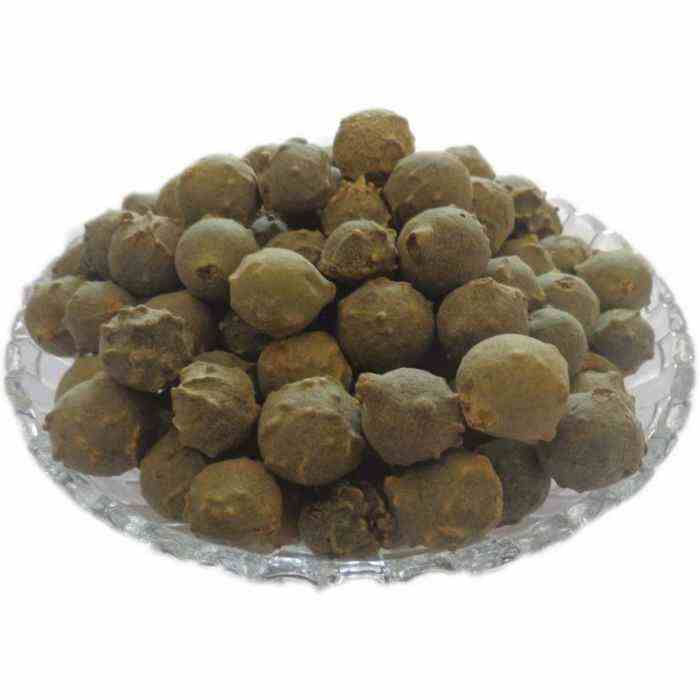
Kantalo Mayu Akha (Majuphal) from Riddhish Herbals is the whole dried oak gall of Quercus infectoria Olivier (Fagaceae) — a classical Kashaya (astringent) dravya prized in Ayurvedic pharmacy for its very high natural tannin content. In classical Ayurveda Majuphal is Kashaya (astringent) in Rasa and Sheeta (cooling) in Virya, and is described as Kapha-Pittahara, Grahi and Dantya. It is used in physician-guided classical routines, chiefly for oral-care and gut-toning preparations. Each pack is genuine, bill-provided material from a doctor-guided store operating since 2015.
About Kantalo Mayu Akha (Majuphal — Whole Oak Gall)
Majuphal — known in Gujarat as Kantalo Mayu, and internationally as Oak Gall or Manjakani — is the dried gall formed on young twigs of Quercus infectoria Olivier by a gall wasp. Classical Ayurvedic pharmacy has long valued it as one of the most concentrated natural Kashaya (astringent) materials available.
Riddhish Herbals supplies it as single-material whole Majuphal galls (Akha) with a bill on every order. It is chosen within classical Dantya (dental-supportive) and Grahi (gut-toning) routines guided by a Vaidya, who matches the preparation and quantity to the individual. (See also our Kantalo Mayu Churna — the same gall as a fine powder.)
Traditional Ayurvedic Importance
Classical Ayurvedic texts describe Majuphal as Kashaya (astringent) in Rasa, Sheeta (cooling) in Virya, with a Kapha-Pittahara, Grahi and Dantya character. It is also classically grouped among Vrana-Ropana dravyas — herbs traditionally associated with wound-care preparations — and is described as Krimighna in some texts.
Majuphal owes its classical importance to an exceptionally high natural tannin content, commonly cited in the 50–70% range, making it one of Ayurvedic pharmacy's most concentrated Kashaya materials. This is why it features across classical oral-care, gut-toning and topical astringent preparations, always within physician-guided use rather than loose self-application.
Key Features
- Whole dried Majuphal gall (Kantalo Mayu): the entire dried oak gall of Quercus infectoria, unbroken.
- Exceptionally rich in natural tannins: among Ayurvedic pharmacy's most concentrated Kashaya (astringent) materials.
- Dantya & Grahi: classically valued for gum/dental-supportive and gut-toning (astringent-binding) use.
- Vrana-Ropana classification: classically grouped among wound-care dravyas in ancient texts.
- Clean single material: no fillers, colours or preservatives added.
- Genuine, doctor-guided sourcing: bill provided with every pack; a store trusted since 2015.
Research on the Constituents
◆ Researchers studied the in–vitro antibacterial activity of Quercus infectoria galls (Majuphal) against key oral pathogens under laboratory conditions, attributing the effect to the galls' very high tannin content — (Basri DF et al., 2012 — Evidence-Based Complementary and Alternative Medicine). PubMed PMID: 22203875
Results were observed under study conditions. Individual results may vary. This is shared for general educational interest and is not a medical claim. Consult your Ayurvedic physician before use.
Ingredients (single-material)
| Ingredient | Botanical (part) | Plant Part | Proportion |
|---|---|---|---|
| Majuphal / Kantalo Mayu (whole gall) | Quercus infectoria Olivier (Fagaceae) | Whole dried gall (insect-induced growth on young oak twigs) | 100% single material |
Single-material Majuphal (Kantalo Mayu) — the whole dried oak gall of Quercus infectoria, unbroken. Exceptionally rich in natural tannins (commonly cited in the 50–70% range), among Ayurveda's most concentrated Kashaya (astringent) materials. No fillers, colours or preservatives added, with the grade exactly as declared on the physical pack label.
How to Use
As directed by a qualified Ayurvedic physician. Majuphal is traditionally used externally as a Kashaya (astringent) gargle or oral rinse for Dantya (gum-and-dental-supportive) care, and — in small physician-set quantities — within classical Grahi (gut-toning) preparations. The whole gall (Akha) is typically crushed or simmered fresh at the time of use; for a ready powder, see our Kantalo Mayu Churna.
Who Can Use It
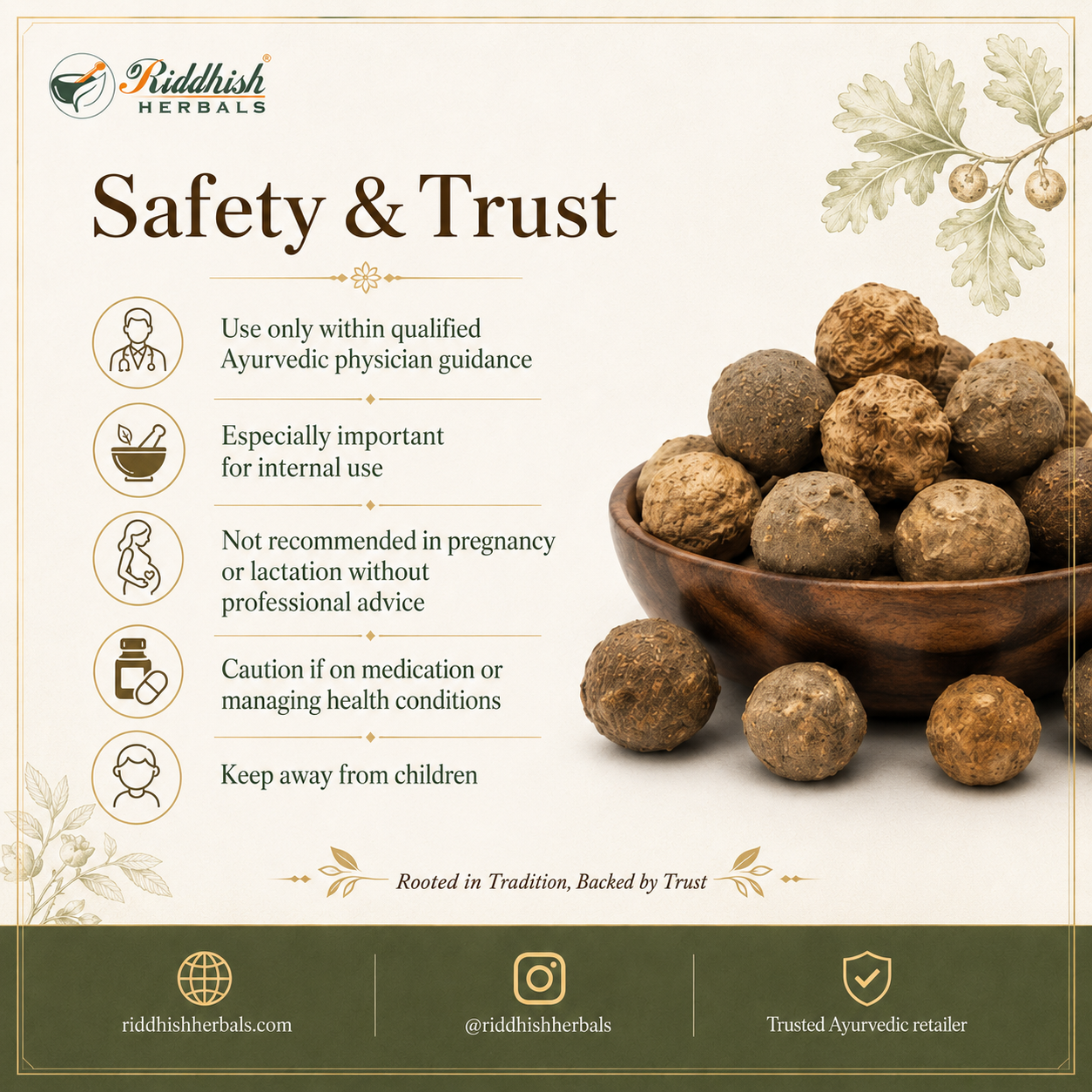
Suitable for adults within physician-guided classical routines, chiefly for external oral-care and topical astringent use. In pregnancy, lactation, or if you are on medication or managing any health condition, seek advice before use — especially before any internal use, given its very high tannin content. Keep out of reach of children.
Safety Information
Majuphal (Kantalo Mayu, Quercus infectoria) is exceptionally high in natural tannins and is a potent classical Kashaya (astringent) material. Use it within a qualified Ayurvedic physician's guidance, particularly for internal use, in pregnancy, lactation, or if you are on any medication or managing a health condition. Keep out of reach of children. Results may vary from person to person.
Storage
Store in a cool, dry place in an airtight container away from moisture, heat and direct sunlight. Keep the pack tightly closed after each use.
Frequently Asked Questions
What is Kantalo Mayu Akha?
It is the whole dried oak gall of Quercus infectoria, known classically as Majuphal — one of Ayurvedic pharmacy's most concentrated Kashaya (astringent) materials.
Is Majuphal the same as Manjakani?
Yes — Manjakani is the name commonly used in Malaysia and Indonesia for the same oak gall, Quercus infectoria. In India it is generally known as Majuphal, and as Kantalo Mayu in Gujarat.
What is the difference between Kantalo Mayu Akha and Kantalo Mayu Churna?
Both are the same Majuphal gall. Akha is the whole, unbroken dried gall; Churna is the same gall finely ground into a ready-to-use powder.
What are its classical properties?
Classical texts describe Majuphal as Kashaya (astringent) in Rasa and Sheeta (cooling) in Virya, with a Kapha-Pittahara, Grahi and Dantya character.
Which part of the plant is this?
Majuphal is not a root, leaf or fruit — it is a gall, an abnormal growth induced on young oak twigs by a gall wasp. This pack is the whole dried gall.
Is this AYUSH- or GMP-made?
This is a raw single herb material in Riddhish Herbals' own pack. Any AYUSH or GMP mark would appear on the physical pack — we state such marks only where verified on the pack.
Has Quercus infectoria been studied scientifically?
Yes — researchers have studied the in-vitro antibacterial activity of Quercus infectoria galls against oral pathogens under laboratory conditions (Basri DF et al., 2012, Evidence-Based Complementary and Alternative Medicine). This is shared for general educational interest, not as a medical claim.
How is Majuphal traditionally used?
Traditionally as a Kashaya gargle or oral rinse for Dantya care, and in small physician-set quantities within classical Grahi preparations. Your Ayurvedic physician sets the exact preparation and quantity.
How should I store Kantalo Mayu Akha?
Keep it in a cool, dry, airtight container away from moisture, heat and sunlight, and close the pack tightly after use.
Regional Names & Spelling Variants
| Language | Name |
|---|---|
| Local / common | Kantalo Mayu (કંટાળો માયૂ) |
| Sanskrit | Majjaphala, Mayuka, Chidraphala (माजूफल-वर्गीय, romanised) |
| Hindi | Majuphal, Maju Phal (माजूफल) |
| Gujarati | Kantalo Mayu, Majuphal (કંટાળો માયૂ) |
| Marathi | Mayaphal (romanised) |
| Bengali | Majuphal (romanised) |
| Tamil | Machi Kai, Machkai (romanised) |
| Telugu | Machi Kay (romanised) |
| Kannada | Machikai (romanised) |
| Malayalam | Majkani (romanised) |
| English + Botanical | Oak Gall / Aleppo Oak Gall / Gall Nut — Quercus infectoria Olivier (Fagaceae) — whole dried gall |
| Search variants | majuphal, maju phal, kantalo mayu, kantalo mayu akha, oak gall, oak gall nut, aleppo oak gall, quercus infectoria, manjakani, mazu, gall nut whole |
| Common misspellings | majuphal akha, majufal, majuphul, kantalo mayo, quercus infectoria olivier, oak gaal, majuphaal |
Related at Riddhish Herbals
Kantalo Mayu Churna (same gall — fine powder) · Kantakari Churna (Dashamoola — classical single herb) · Kanchnar Churna (Kachnar bark — classical single herb) · Ayurvedic Raw Herbs & Materials · Doctor-Guided Product Selection