Riddhish Herbals
Manjishthadi Kashayam Tablet 60 | Classical Skin & Complexion Wellness | Riddhish Herbals
Manjishthadi Kashayam Tablet 60 | Classical Skin & Complexion Wellness | Riddhish Herbals
Couldn't load pickup availability
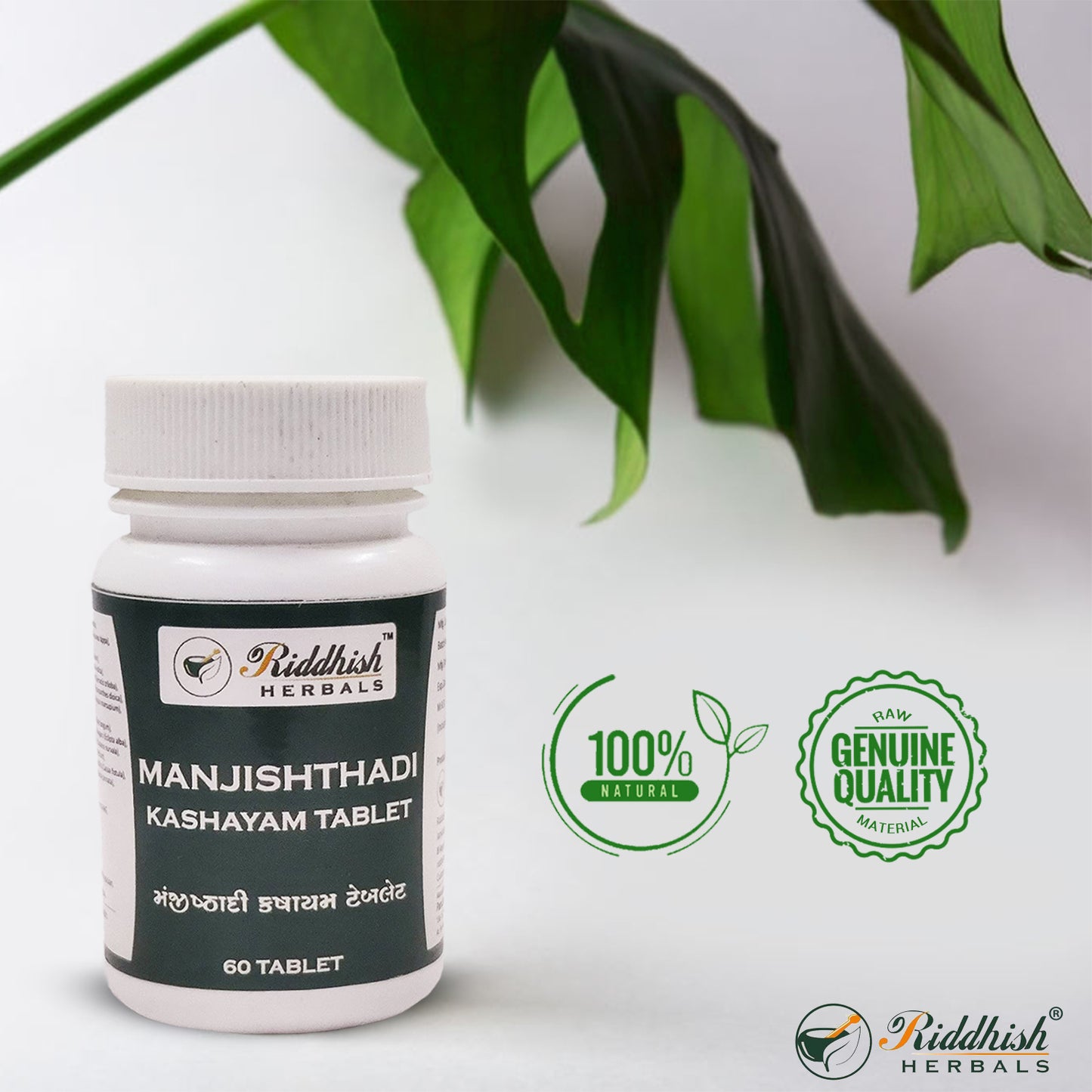
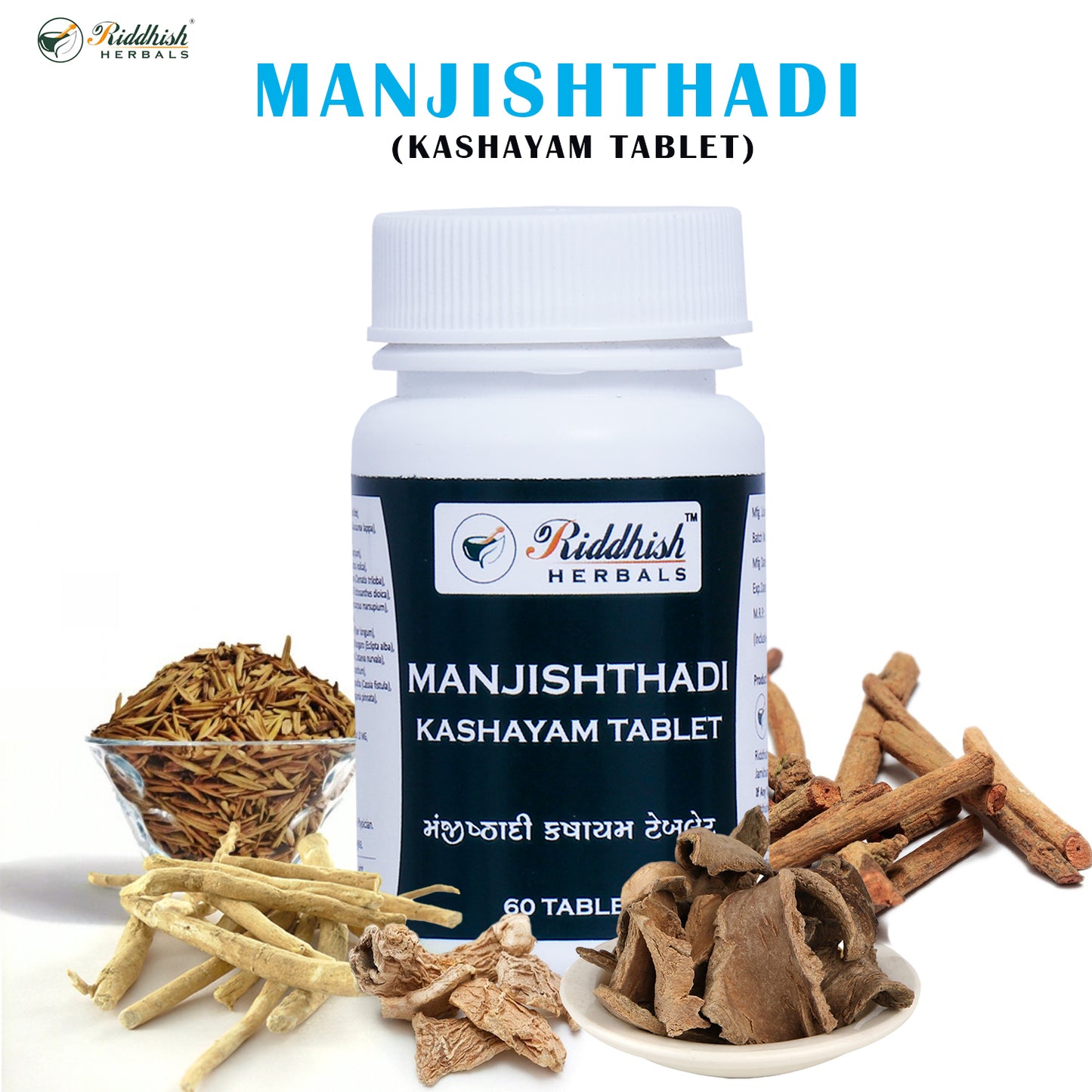
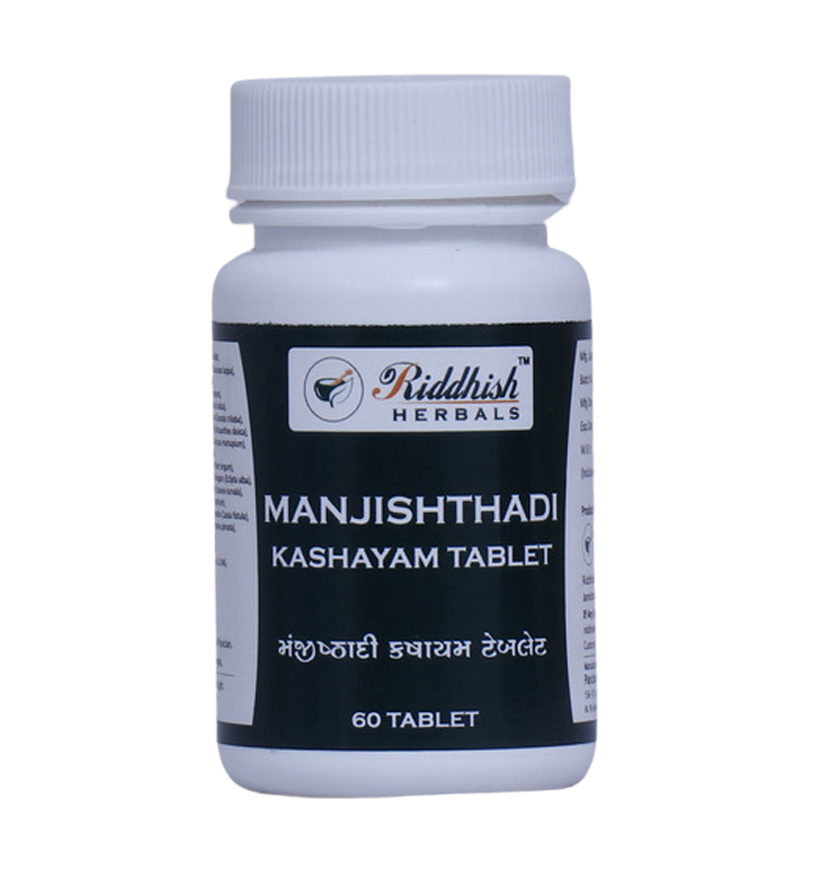
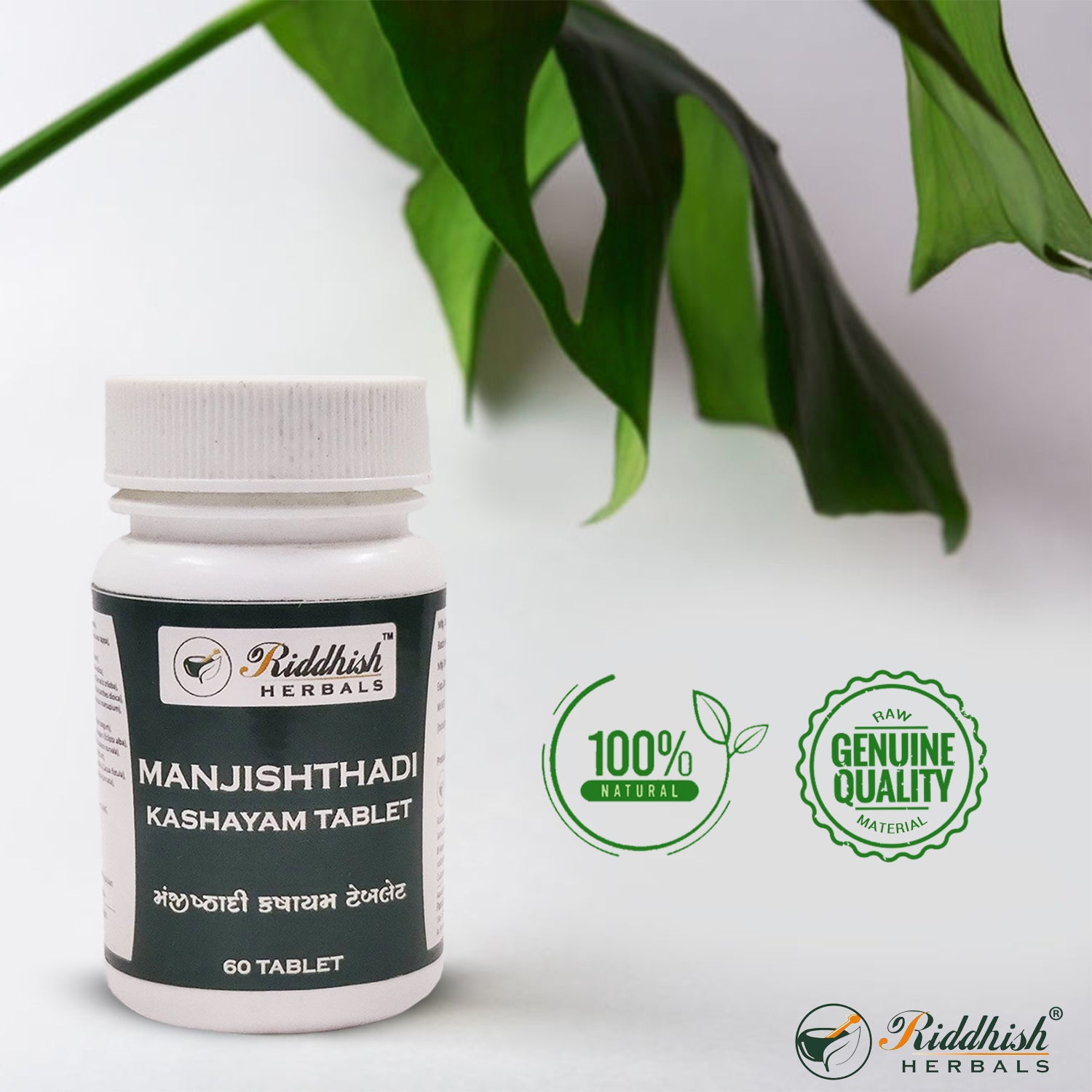
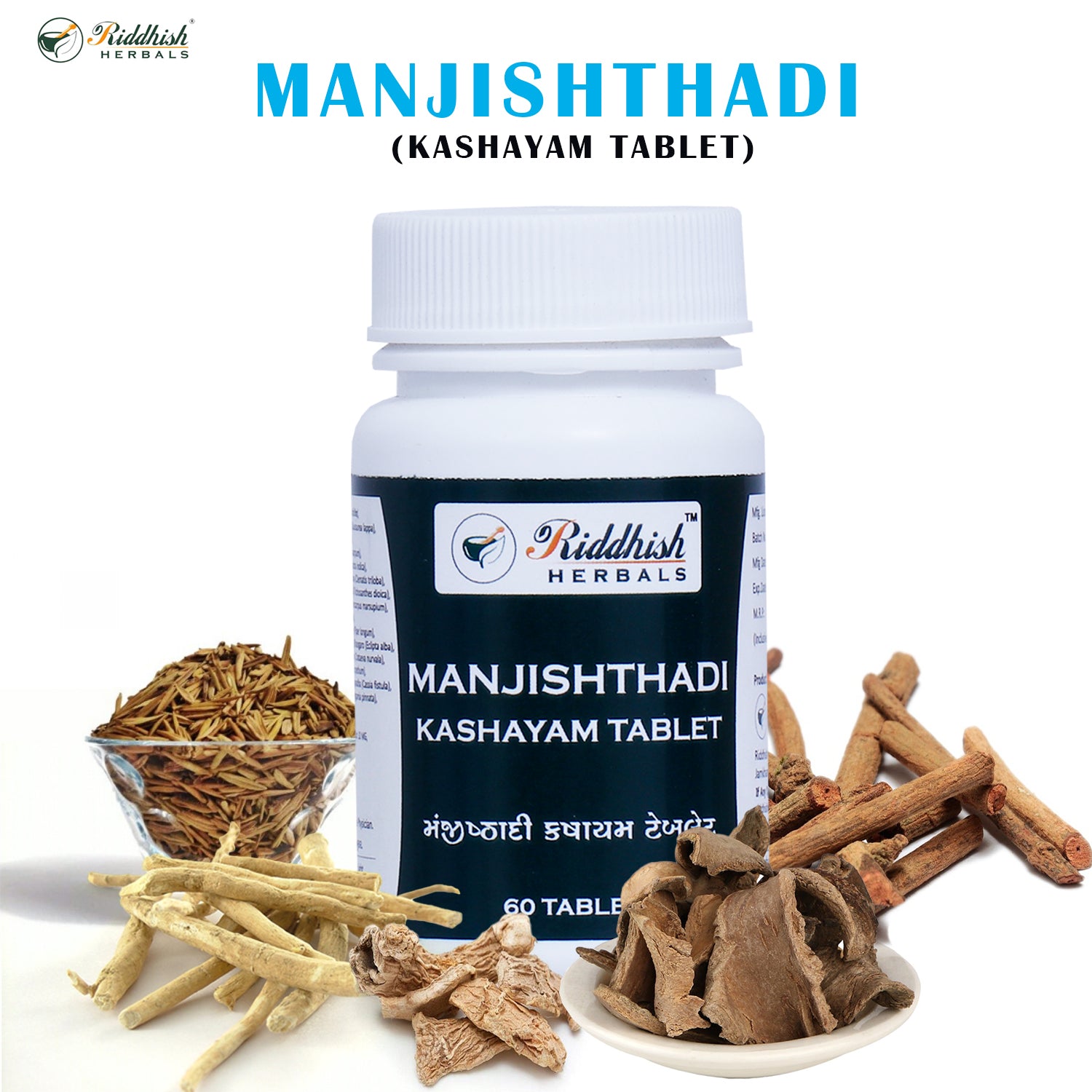
Manjishthadi Kashayam Tablet is one of the classical blood-supporting formulations of Ayurveda, named after its principal herb, Manjishtha (Rubia cordifolia). Offered here as a convenient tablet form of the traditional kashayam (decoction) — an Ayurvedic Classical Product referenced to the Ayurvedic Formulary of India (AFI), Part I, bringing together more than forty classical herbs in a single preparation. 60 tablets.
Learn more about the lead herb in our Manjistha (Rubia cordifolia) ingredient guide.
Classical formulation — medical supervision only. This is a multi-herb classical kashayam that includes Ativisha (Aconitum heterophyllum). It must be used strictly under the supervision of a qualified Ayurvedic physician, who will determine suitability, dose and duration. Not for self-medication.
About Manjishthadi Kashayam Tablet
Riddhish Herbals lists it with the full, label-verified classical composition so practitioners and informed customers can see exactly what each tablet contains. Marketed by Riddhish Herbals (Gujarat, since 2015); manufactured by Panchamrut Herbals (Mfg. Lic. GA/1762).
Traditional Ayurvedic Importance
In classical literature this formulation is described in the context of Vatarakta Chikitsa (the treatment of vatarakta). The classical verse commends Manjishthadi for the eighteen types of kushtha (skin disorders), vatarakta, shleepada, medodosha and netraroga. Manjishtha itself is one of the most respected rakta-prasadana (blood-supporting) and varnya (complexion-favouring) dravyas described across the Charaka Samhita and the Bhavaprakasha Nighantu. Supporting herbs such as Sariva (Hemidesmus indicus), Nimba (Azadirachta indica) and Haridra (Curcuma longa) are traditionally valued for Pitta balance and skin wellness, while the Triphala group within the formula reflects its classical, time-tested composition.
These classical terms are presented as part of the traditional textual record, not as therapeutic promises.
Key Features
- Classical AFI formulation: referenced to the Ayurvedic Formulary of India, Part I, as printed on the label.
- Rakta-shodhaka tradition: built around Manjishtha, a renowned blood-supporting herb in classical texts.
- Multi-herb synergy: more than forty classical herbs in a single tablet.
- Convenient tablet form: the traditional kashayam, made easy to carry and take.
- GMP-, ISO 9001:2015- and HACCP-certified manufacturer: made by Panchamrut Herbals, certified to GMP, ISO 9001:2015 and HACCP standards (Mfg. Lic. GA/1762).
- Trusted Gujarat store: Riddhish Herbals, serving since 2015, genuine products and a bill on every order.
- Physician-guided use: a classical formulation intended for use under Ayurvedic supervision.
Composition (per tablet — label verified)
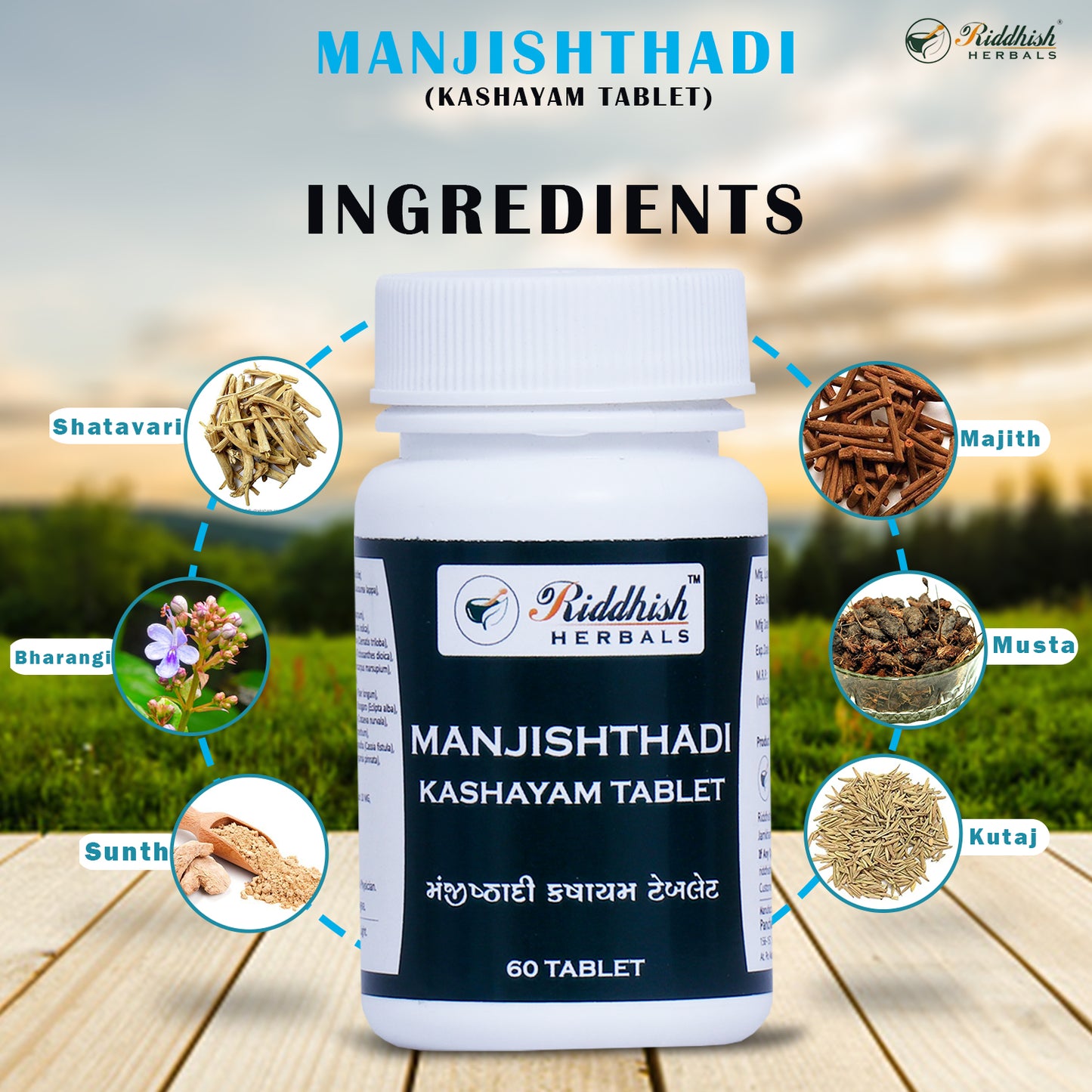
Each tablet contains the following, 10 mg each, with water and excipients Q.S.:
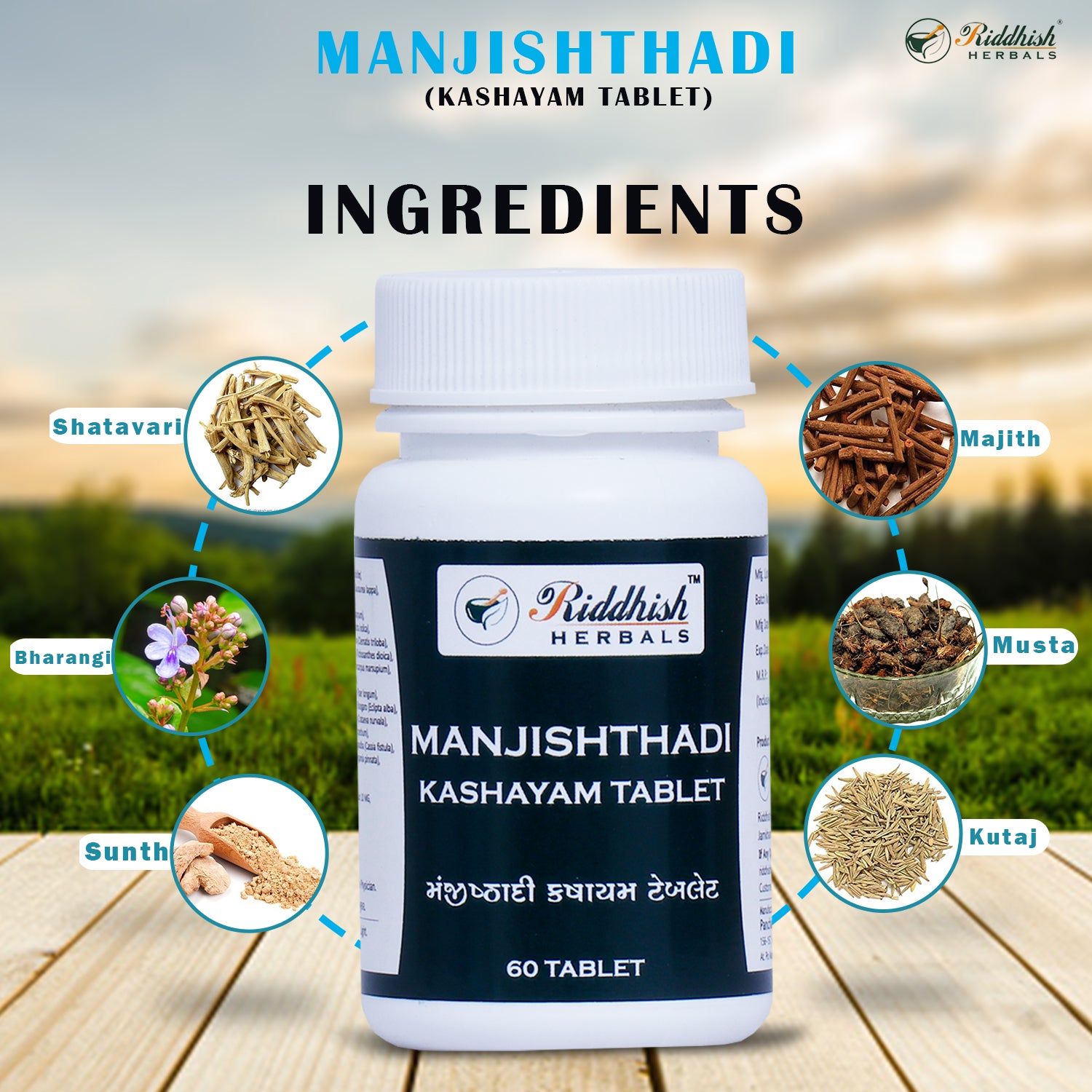
- Manjishtha (Rubia cordifolia)
- Musta (Cyperus rotundus)
- Guduchi (Tinospora cordifolia)
- Kushtha (Saussurea lappa)
- Kutaja (Holarrhena antidysenterica)
- Shunthi (Zingiber officinale)
- Bharangi (Clerodendrum serratum)
- Kantakari (Solanum xanthocarpum)
- Vacha (Acorus calamus)
- Haridra (Curcuma longa)
- Nimba (Azadirachta indica)
- Daruharidra (Berberis asiatica)
- Haritaki (Terminalia chebula)
- Murva (Clematis triloba)
- Bibhitaki (Terminalia bellirica)
- Amalaki (Emblica officinalis)
- Patola (Trichosanthes dioica)
- Katuki (Picrorhiza kurroa)
- Vidanga (Embelia ribes)
- Vijaysar (Pterocarpus marsupium)
- Chitraka (Plumbago zeylanica)
- Shatavari (Asparagus racemosus)
- Trayamana (Delphinium zalil)
- Khadira (Acacia catechu)
- Pippali (Piper longum)
- Indrayava (Holarrhena antidysenterica, seed)
- Vasa (Adhatoda vasica)
- Bhringaraja (Eclipta alba)
- Devadaru (Cedrus deodara)
- Patha (Cissampelos pareira)
- Varuna (Crataeva nurvala)
- Rakta Chandana (Pterocarpus santalinus)
- Trivrit (Ipomoea turpethum)
- Kiratatikta (Swertia chirayita)
- Bakuchi (Psoralea corylifolia)
- Aragvadha (Cassia fistula)
- Sakhotaka (Streblus asper)
- Mahanimba (Melia azedarach)
- Karanja (Pongamia pinnata)
- Ativisha (Aconitum heterophyllum)
- Ushira (Vetiveria zizanioides)
- Indravaruni (Citrullus colocynthis)
- Dhamasa (Fagonia arabica)
- Sariva (Hemidesmus indicus)
- Parpata (Fumaria parviflora)
60 tablets. An Ayurvedic Classical Product, AFI Part I. Label-verified composition.
Research & Scientific References
Manjishtha (Rubia cordifolia), the lead herb of this formula, is classically described as a Rakta-prasadaka / Rakta-shodhaka and Varnya dravya in the Charaka Samhita. A peer-reviewed comprehensive review has documented its traditional uses, phytochemistry and antioxidant activity. (Wen M, Chen Q, Chen W, 2022 — Frontiers in Pharmacology, 13:965390)
Findings of this kind reflect traditional interest in the herb and were observed under study conditions; individual results may vary.
How to Use & Anupan
The label dosage is two tablets twice a day, or as directed by a physician. Anupana (vehicle) and duration are best decided by your Ayurvedic physician for your constitution.
Who Can Use It
Intended for adults using it under qualified Ayurvedic guidance. As a classical multi-herb formulation that includes Ativisha, it is not suitable for self-medication. It should not be taken during pregnancy or lactation, by children, or by anyone managing a medical condition or taking other medication, except on the explicit advice of a qualified Ayurvedic physician.
Safety Information
Use strictly under the guidance of a qualified Ayurvedic physician. Consult your physician before use, especially if you are pregnant, lactating, taking any medication, or managing any medical condition. Keep out of reach of children. Results may vary from person to person. This product is to be taken under medical supervision only.
Storage
Store in a cool, dry place. Protect from direct sunlight. Keep the container tightly closed.
Frequently Asked Questions
Is this AYUSH or GMP certified?
Panchamrut Herbals, the manufacturer of this product, holds GMP, ISO 9001:2015 and HACCP certification. Good manufacturing practice (GMP) relates to how the product is made; these are not claims about any medical outcome.
Can I take this without consulting a doctor?
No. This is a classical formulation that the label marks for use under medical supervision only. Please use it under a qualified Ayurvedic physician.
What is Manjishtha?
Manjishtha (Rubia cordifolia), also called Majith or Indian Madder, is a classical Ayurvedic herb traditionally valued as a rakta-prasadana (blood-supporting) and varnya (complexion-favouring) dravya. See our Manjistha ingredient guide for a full profile.
What are the alternate names?
Also written as Manjishtadi / Manjisthadi Kashayam or Kwatham. Manjishtha is also known as Majith, Manjith and Indian Madder.
How do I know this is the genuine pack?
Every Riddhish Herbals order ships with a bill and is sourced directly through authorised channels — never a grey-market or re-packed unit.
Is it available at Riddhish Herbals?
Yes — at riddhishherbals.com with pan-India delivery, and at our Gujarat retail stores.
What is the recommended anupana?
As advised by your Ayurvedic physician, based on your constitution.
Has Manjishtha been studied scientifically?
Yes — a peer-reviewed comprehensive review has documented the traditional uses, phytochemistry and antioxidant activity of Rubia cordifolia (Wen M. et al., 2022 — Frontiers in Pharmacology). Such literature describes the herb, and individual results may vary.
Related from Riddhish Herbals: Bruhad Manjisthadi Kwath (Dry) · Manjistha ingredient guide · Ayurvedic Medicines
About Riddhish Herbals
Since 2015 · Genuine Products · Bill Provided · Doctor-Guided Selection · 4000+ Ayurvedic Products · 130+ Trusted Brands · Pan-India Delivery
રીધ્ધીશ હર્બલ્સ — ગુજરાતનો વિશ્વાસપાત્ર આયુર્વેદિક સ્ટોર, જ્યાં સાચી સલાહ અને genuine Ayurvedic products એક જ જગ્યાએ મળે છે.