
Riddhish Herbals
Shalparni Yavkut (Sarivan / Vidarigandha) – Desmodium gangeticum Coarse Decoction Powder – Riddhish Herbals – 100g
Shalparni Yavkut (Sarivan / Vidarigandha) – Desmodium gangeticum Coarse Decoction Powder – Riddhish Herbals – 100g
Couldn't load pickup availability
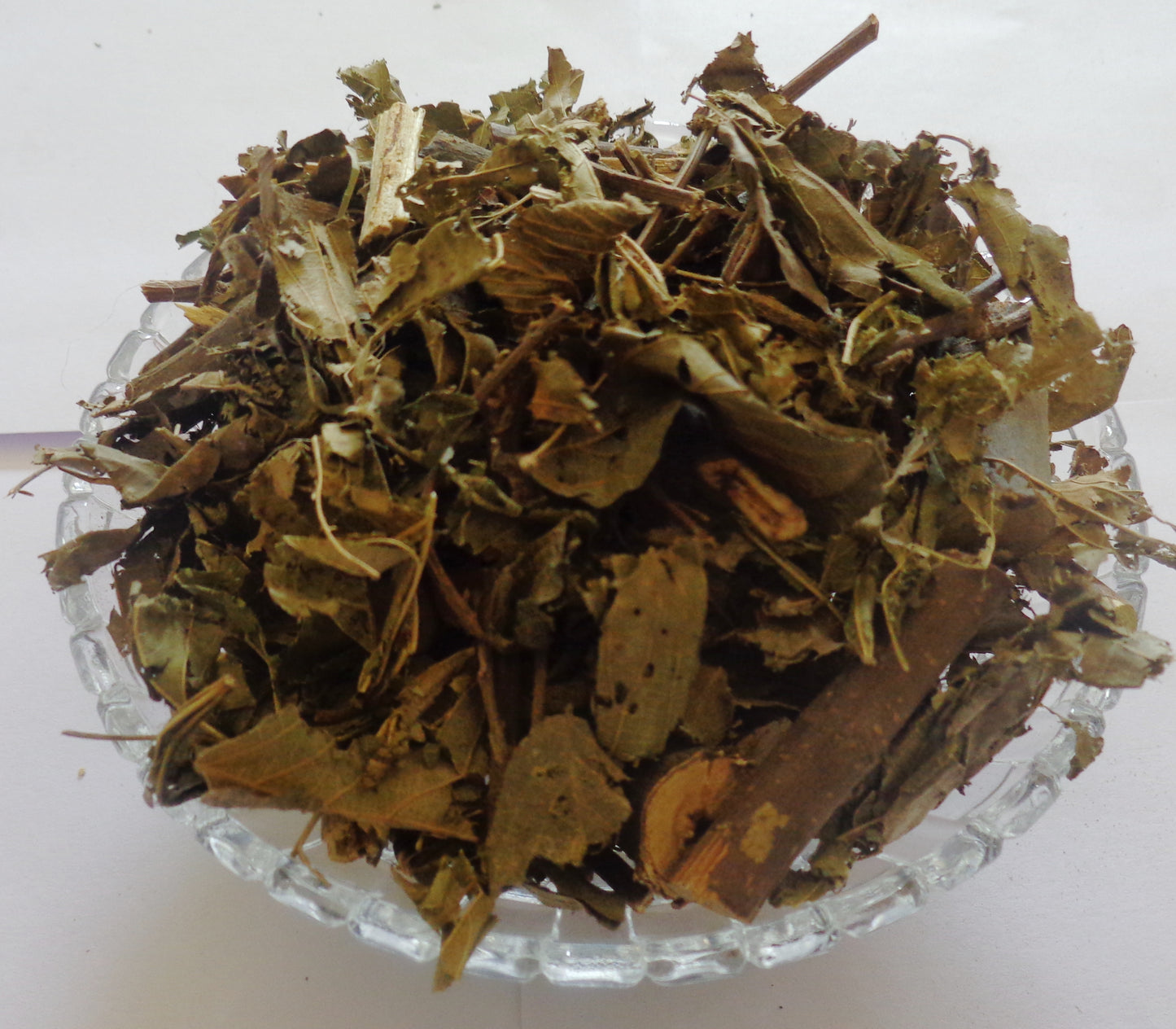
Shalparni Yavkut from Riddhish Herbals is a single-herb coarse Ayurvedic decoction powder (Yavkut) milled from Shalparni (Desmodium gangeticum (L.) DC.), classically named Vidarigandha and grouped among the Dashamoola (ten roots) in the Charaka Samhita and Sushruta Samhita. Each pack is genuine, bill-provided material from a doctor-guided store operating since 2015.
About Shalparni Yavkut
Shalparni (Desmodium gangeticum) is a small perennial undershrub found widely across India, long used in classical Ayurvedic formulations both on its own and as one of the ten roots of the Dashamoola group. This Yavkut (coarse powder) is milled from the whole plant and root, retaining the traditional decoction-grade texture described in Ayurvedic pharmacopoeia rather than a fine churna.
Prepared as a Yavkut, this material is meant to be simmered into a fresh Kwath (decoction) per the traditional method, with the exact strength and duration set by a qualified Ayurvedic physician for the individual.
Traditional Ayurvedic Importance
The Bhavaprakasha Nighantu records Shalparni's Sanskrit synonyms — Vidarigandha, Sthira, Saumya, Triparni, Pivari, Guha and Anshumati — and describes it as Tikta-Madhura (bitter-sweet) in rasa, Guru-Snigdha (heavy, unctuous) in guna, Ushna (hot) in virya, with a tridosha-balancing classical profile. The Charaka Samhita (Sutrasthana) places Shalparni in the Angamardaprashamana (classically described myalgia-relieving), Shothahara, Balya (strength-supporting) and Snehopaga (oleation-supporting) groups, while the Sushruta Samhita places it in the Vidarigandhadi and Laghu Panchamoola groupings.
These are classical textual descriptions attributed to their named source, not modern medical claims of efficacy. Modern phytochemical research has separately reviewed Shalparni's antioxidant pharmacology (see Research & Scientific References below).
Key Features
- Single-herb Yavkut: a coarse decoction-grade powder milled from Shalparni (Desmodium gangeticum) whole plant and root, with no other herbs added.
- Classically named Vidarigandha: among the Sanskrit synonyms recorded in the Bhavaprakasha Nighantu, alongside Sthira, Saumya and Anshumati.
- Part of Dashamoola and Laghu Panchamoola: Shalparni is one of the classical Dashamoola (ten-root) group and the Laghu Panchamoola (Sushruta Samhita), used across many classical formulations.
- Classically referenced Balya group: Charaka Samhita places Shalparni in the Angamardaprashamana, Shothahara, Balya and Snehopaga groupings.
- Genuine, doctor-guided sourcing: bill provided with every pack; a store trusted since 2015.
Research on the Constituents
◆ A published pharmacological study evaluated the antioxidant activity of Shalparni (Desmodium gangeticum) extract across multiple assay methods — DPPH free-radical scavenging, nitric-oxide inhibition, iron chelation and lipid-peroxidation reduction — and found it demonstrated potent antioxidant activity under laboratory conditions — (Govindarajan R, Rastogi S, Vijayakumar M, Shirwaikar A, Singh Rawat AK, Mehrotra S & Pushpangadan P, 2003 — Biological and Pharmaceutical Bulletin, 26(10):1424–1427). PubMed PMID: 14519948
Results were observed under study conditions. Individual results may vary. This is shared for general educational interest and is not a medical claim. Consult your Ayurvedic physician before use.
Ingredients
| Ingredient (Sanskrit / label name) | Botanical | Part | Quantity |
|---|---|---|---|
| Shalparni | Desmodium gangeticum (L.) DC. | Whole plant and root (dried, coarsely milled) | Sole ingredient |
Other ingredients: none. This is a single-herb Yavkut (coarse decoction-grade powder) with no fillers or additional herbs. This is a single-source Shalparni (Desmodium gangeticum) material, as named on the pack.
How to Use
As directed by your Ayurvedic physician. Classical reference: simmer 1–2 teaspoons of the coarse powder in 4 cups of water, reduce to a quarter, strain, and consume warm, or as your Vaidya advises.
Who Can Use It
For use within a qualified Ayurvedic physician's guidance. Pregnant or lactating women should use only on physician advice. If you are on medication or managing any health condition, seek advice before use. Not intended for children without professional guidance.
Safety Information
Shalparni Yavkut is a classical single-herb Ayurvedic decoction powder, used within physician-directed wellness routines. Discontinue and consult your physician if any discomfort occurs. Keep out of reach of children. Results may vary from person to person.
Storage
Store in a cool, dry, airtight container, away from moisture and direct sunlight.
Frequently Asked Questions
What is Shalparni Yavkut?
It is a single-herb coarse decoction powder (Yavkut) milled from the whole plant and root of Shalparni (Desmodium gangeticum), classically named Vidarigandha and grouped among the Dashamoola in classical Ayurvedic texts.
What are the alternate names for Shalparni?
Common regional names include Sarivan (Hindi), Shalavan (Gujarati), Salavan (Marathi), Shalapani (Bengali), Pulladi / Moovilai (Tamil), Pullati / Moovila (Malayalam), and Nariyalavona (Kannada). Sanskrit synonyms include Vidarigandha, Sthira, Saumya, Triparni, Pivari, Guha and Anshumati, per the Bhavaprakasha Nighantu.
Which classical texts describe Shalparni?
The Charaka Samhita places it in the Angamardaprashamana, Shothahara, Balya and Snehopaga groups; the Sushruta Samhita places it in the Vidarigandhadi gana and the Laghu Panchamoola grouping; it is also one of the classical Dashamoola (ten roots).
Is this a single-herb product?
Yes — Shalparni Yavkut is a single-ingredient coarse powder made solely from Shalparni (Desmodium gangeticum), with no other herbs added.
How do I know this is the genuine pack?
Every Riddhish Herbals order ships with a bill and is sourced directly through authorised channels — never a grey-market or re-packed unit.
Is it available at Riddhish Herbals?
Yes — Shalparni Yavkut is available at Riddhish Herbals as a genuine, bill-provided product.
What is the traditional way to prepare it?
Simmer 1–2 teaspoons of the coarse powder in 4 cups of water, reduce to a quarter, and strain. Your Ayurvedic physician sets the exact strength and duration to suit you.
Has Shalparni (Desmodium gangeticum) been studied scientifically?
Yes — a published pharmacological study evaluated Shalparni extract across multiple antioxidant assays and found potent antioxidant activity under laboratory conditions (Govindarajan et al., 2003, Biological and Pharmaceutical Bulletin). This is shared for general educational interest, not as a medical claim.
How should I store Shalparni Yavkut?
Keep it in a cool, dry, airtight container away from moisture and direct sunlight.
Regional Names & Spelling Variants
| Language | Name |
|---|---|
| Local / common name | Sarivan — the vernacular most buyers search for in North India |
| Sanskrit | Vidarigandha, Shalaparni, Sthira, Saumya, Triparni, Pivari, Guha, Anshumati |
| Hindi | Sarivan, Salaparni |
| Gujarati | Shalavan |
| Marathi | Salavan |
| Bengali | Shalapani |
| Tamil | Pulladi, Moovilai |
| Telugu | Gitanaram, Nakkatokaponna |
| Kannada | Nariyalavona, Murele honne |
| Malayalam | Pullati, Moovila |
| English + Botanical + Part | Shal Leaved Desmodium — Desmodium gangeticum (L.) DC. — Whole plant and root, dried and coarsely milled |
| Romanised search variants | Shalparni Yavkut, Sarivan powder, Desmodium gangeticum Yavkut, Vidarigandha Kwath powder |
| Common misspellings | Shalparni Yavkat, Shalparni Yavkud, Salparni Yavkut, Shalparni Javkut |
Related at Riddhish Herbals