
Skip to product information
1 of 1

Riddhish Herbals

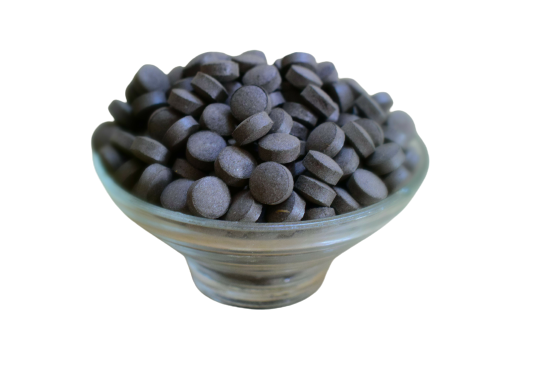
Triphala Guggulu (Triphala Guggul) – Classical Guggulu Yoga – Riddhish Herbals – 100g

Triphala Guggulu (Triphala Guggul) – Classical Guggulu Yoga – Riddhish Herbals – 100g

Regular price Rs. 300.00
Regular price Rs. 300.00 Sale price Rs. 300.00
Sale Sold out

Triphala Guggulu from Riddhish Herbals is a classical Ayurvedic Guggulu formulation made to the Sharangdhara Samhita ratio — Haritaki (Terminalia chebula), Vibhitaki (Terminalia bellirica), Amalaki (Emblica officinalis) and Pippali (Piper longum) at one part each, with Shuddha Guggulu (Commiphora wightii) at five parts — supplied in a 100 g pack. The formula is recorded in Sharangdhara Samhita, Madhyama Khanda 7/82–83, where it is described in the context of Bhagandara, Gulma, Shotha, Arsha, Vatarakta and Kushtha. Because Guggulu is five of the nine parts, a little over half this formulation by weight is purified Guggulu resin. This is classical textual and compositional information, not a medical claim; consult a qualified Ayurvedic physician before use.

About Triphala Guggulu

Triphala Guggulu is one of the oldest and most widely dispensed Guggulu kalpas in Indian Ayurvedic practice. The name is literal: Triphala, the three fruits, combined with Guggulu, the purified oleo-gum resin of Commiphora wightii.

Five dravyas go into it. Haritaki, Vibhitaki and Amalaki make up the Triphala group, Pippali is added as the fourth single part, and Shuddha Guggulu carries five parts on its own. That 1:1:1:1:5 proportion is not our design choice — it is the ratio Sharangdhara Samhita sets down, and it is what makes this a Guggulu yoga rather than a churna. Anyone comparing brands should ask for the ratio first; it is the fastest way to tell a faithful preparation from an approximation.

This pack contains 100 g and is supplied by weight. If you would rather have the same classical formula in a counted tablet form, we also stock Triphala Guggulu as 60 tablets — linked below.

Traditional Ayurvedic Importance

Sharangdhara Samhita, Madhyama Khanda 7/82–83 records Triphala Guggulu with this exact five-dravya composition and describes it in the context of Bhagandara, Gulma, Shotha, Arsha, Vatarakta and Kushtha. Yogaratnakara adds Vidradhi, Nadi Vrana and Gandamala to that classical list, and Gadanigraha corroborates the formula. These Sanskrit terms are reproduced as the texts state them, anchored to their source; they are a record of classical literature and not a promise of any outcome from this product.

Guggulu is described in classical Dravyaguna as Tikta-Katu in Rasa with Ushna Virya, and is grouped among the Lekhana dravyas — the scraping group — which is why the texts place it wherever Ama and Kapha accumulation are being considered. Its Yogavahi character, the ability to carry the properties of the dravyas compounded with it, is the classical reason Guggulu is used as a base for so many yogas rather than taken alone.

Triphala itself is classically Tridoshahara and Rasayana, and is described in the Nighantu literature as Deepana and Pachana — standard, lawful classical action words for appetising and digestive properties, not disease claims. Pippali (Piper longum) is added as the classical Yogavahi and Deepana dravya of the formula.

Shodhana matters here. Raw Guggulu resin is never used as it comes; the classical texts require purification, commonly in Triphala kwath, Godugdha or Gomutra depending on the yoga, before the resin is compounded. The Guggulu in this formulation is Shuddha Guggulu, purified in that classical manner.

Everything in this section is classical textual record. It is not an indication that Triphala Guggulu is intended for any diagnosed condition, and it is not a substitute for professional medical care.

Key Features

  • Built to the Sharangdhara ratio: Haritaki, Vibhitaki, Amalaki and Pippali in equal single parts with Shuddha Guggulu at five parts — the 1:1:1:1:5 proportion recorded in Sharangdhara Samhita, Madhyama Khanda 7/82–83.
  • Guggulu-dominant by design: Shuddha Guggulu is five of the nine classical parts, roughly 55 g in every 100 g. This is a Guggulu yoga in which Triphala is the supporting anupraveshaka, not a Triphala churna with a little resin added.
  • Pippali is part of the classical formula: Pippali (Piper longum) belongs in the authentic Sharangdhara text of this yoga and is included here at its full single part, not dropped as it sometimes is in market preparations.
  • Shuddha Guggulu, not raw resin: the Guggulu is used in its classically purified (Shodhita) form, as the texts direct for any Guggulu kalpa.
  • Sourcing matters and we say so: Commiphora wightii is a heavily traded and declining species, which is exactly why substitution and adulteration are common in the Guggulu trade — a point supported by published research cited on this page.
  • Classical record, stated in Sanskrit: the texts place this yoga in the context of Bhagandara, Gulma, Shotha, Arsha, Vatarakta and Kushtha. We give those terms as the classical texts give them, anchored to their source, rather than translating them into modern medical promises.
  • Genuine, doctor-guided sourcing: bill provided with every pack; a store trusted since 2015, with pan-India delivery.

Research on the Constituents

A peer-reviewed review in the Journal of Alternative and Complementary Medicine surveyed the published research literature on Triphala — the three-fruit combination of Haritaki, Bibhitaki and Amalaki that supplies three of the nine classical parts of this formulation — and collated the laboratory and clinical investigations reported for it up to that point — (Peterson CT, Denniston K & Chopra D, 2017 — Journal of Alternative and Complementary Medicine, 23(8):607–614). It is a review of published research, not evidence that this particular product does anything for any diagnosed condition. PubMed PMID: 28696777

A study in the Journal of Ethnopharmacology examined the global trade in gugul (Commiphora wightii) and reported that commercial demand has run well ahead of surviving wild stocks across the species' Indian range — (Cunningham AB, Brinckmann JA, Kulloli RN & Schippmann U, 2018 — Journal of Ethnopharmacology, 223:22–32). We cite this deliberately: it bears on sourcing, substitution and authenticity of the Guggulu resin, which is the single biggest quality variable in this formulation, and it makes no health claim of any kind. PubMed PMID: 29746995

Results were observed under study conditions. Individual results may vary. This is shared for general educational interest and is not a medical claim. Consult your Ayurvedic physician before use.

Ingredients / Composition (classical Sharangdhara ratio)

Ingredient (Sanskrit / Botanical) Plant Part Classical Parts Approx. per 100 g
Haritaki (Terminalia chebula) Fruit rind (pericarp) 1 11.11 g
Vibhitaki (Terminalia bellirica) Fruit rind (pericarp) 1 11.11 g
Amalaki (Emblica officinalis) Dried fruit 1 11.11 g
Pippali (Piper longum) Dried fruit 1 11.11 g
Shuddha Guggulu (Commiphora wightii syn. C. mukul) Purified oleo-gum resin 5 55.56 g

Total 9 classical parts, in the 1:1:1:1:5 ratio recorded in Sharangdhara Samhita, Madhyama Khanda 7/82–83. The 'Approx. per 100 g' column is derived arithmetically from that classical ratio, not transcribed from a printed pack — no physical label was verified this session, so quantities are flagged for pack-level confirmation and no standardisation percentage or extract ratio is asserted. Guggulu is a little over half the formulation by weight; that is the authentic classical proportion and is disclosed deliberately.

How to Use

As directed by your Ayurvedic physician. The quantity commonly dispensed for adults is about 1–2 g, once or twice daily, usually after food. Anupan (vehicle): lukewarm water is the usual vehicle for this yoga; Triphala kwath, warm milk or honey are also used classically, and which one suits you is a decision for your Vaidya. Duration of use should be set on professional advice rather than continued indefinitely, as is standard practice for any Guggulu kalpa.

Who Can Use It

Suitable for most adults when taken in the classical quantity on professional advice. Pregnant and lactating women should not take Guggulu preparations without first consulting a qualified Ayurvedic physician, as Guggulu is classically contraindicated in pregnancy. Anyone on regular medication should seek advice before starting it, and anyone with a known sensitivity to Guggulu resin or to long pepper should avoid it. Paediatric use, where classical practice allows it, must be individually set by a physician, so we do not print a children's quantity on this page.

Safety Information

Triphala Guggulu is a classical Ayurvedic preparation, not a substitute for professional medical care — please seek qualified medical attention directly for any health concern. Guggulu is Ushna in classical character, so excessive quantity or prolonged unsupervised use can aggravate Pitta and may cause a burning sensation, loose motions or skin sensitivity in susceptible individuals. Guggulu kalpas are classically avoided during pregnancy. Discontinue and consult a physician if any discomfort occurs. Use under the guidance of a qualified Ayurvedic physician if you are pregnant, lactating, taking any medication, or managing any health condition. Keep out of reach of children. Results may vary from person to person.

Storage

Store in a cool, dry place away from direct sunlight, in a tightly closed airtight container. Guggulu preparations soften and stick together in warmth and humidity, which is normal for a resin-based formulation and not a defect; keep the pack firmly closed and keep damp spoons out of it.

Frequently Asked Questions

What is Triphala Guggulu?

Triphala Guggulu is a classical Ayurvedic Guggulu formulation made from Haritaki, Vibhitaki, Amalaki and Pippali at one part each with Shuddha Guggulu at five parts - the 1:1:1:1:5 ratio recorded in Sharangdhara Samhita, Madhyama Khanda 7/82-83. This pack contains 100g.

What are the other names for Triphala Guggulu?

It is also written as Triphala Guggul, Triphla Guggulu, Trifala Guggulu, Triphala Guggulu Yoga and Triphaladi Guggulu. In Hindi it is written and spoken as Triphala Guggulu, and in Gujarati as Triphala Guggulu as well. Because this is a compound formulation rather than a single herb, its ingredient dravyas carry their own vernacular names: Haritaki is Harde or Harad, Vibhitaki is Baheda or Bahedan, Amalaki is Amla or Ambla, Pippali is Lindi Pipar or Pipli, and Guggulu is Gugal or Gugul.

Why is Guggulu five parts and everything else one part?

Because that is the classical formula. Sharangdhara Samhita gives the ratio as 1:1:1:1:5, which makes Shuddha Guggulu a little over half the formulation by weight. This is a Guggulu yoga in which Triphala and Pippali are the supporting dravyas, not a Triphala powder with resin added. If a preparation is mostly Triphala by weight, it is not made to this classical ratio.

What does Shuddha Guggulu mean?

Shuddha means classically purified. Raw Guggulu oleo-gum resin is never compounded as it comes; the texts require Shodhana, commonly in Triphala kwath, cow's milk or Gomutra depending on the yoga, before the resin goes into a formulation. Shuddha Guggulu is that purified resin.

How is this different from Triphala Churna?

They share three ingredients and nothing else. Triphala Churna is Haritaki, Vibhitaki and Amalaki in equal parts, and that is the whole formula. Triphala Guggulu adds Pippali and, far more importantly, five parts of Shuddha Guggulu, which dominates the composition. They are classically described for different contexts and are not interchangeable.

Do you sell this in tablet form?

Yes. We stock the same classical formula as Triphala Guggulu Tablet in a 60-tablet pack, linked in the related products below. This listing is the 100g pack supplied by weight.

Is this product AYUSH or GMP certified?

It is manufactured for Riddhish Herbals in a GMP-, ISO 9001:2015- and HACCP-certified facility (Mfg. Lic. GA/1762). These are facility quality certifications, not product health claims.

Can I take this without consulting a doctor?

We would rather you did not. Triphala Guggulu is a classical Ayurvedic medicine, not a food supplement: the quantity, the anupan and the duration are meant to be set individually. Please consult a qualified Ayurvedic physician, particularly if you are pregnant or lactating, taking regular medication, or managing any health condition.

What is the recommended anupan?

Lukewarm water is the usual vehicle for this yoga. Triphala kwath, warm milk and honey are also used in classical practice, and the right choice depends on the individual, so follow your physician's direction on it.

Has Triphala Guggulu been studied scientifically?

Its components have been looked at in published literature. A 2017 review in the Journal of Alternative and Complementary Medicine collated the research reported on Triphala up to that point. Separately, a 2018 paper in the Journal of Ethnopharmacology examined the global gugul trade and reported that demand has outstripped wild stocks of Commiphora wightii, which is why sourcing and substitution matter so much for this formulation. These are shared as published literature, not as medical claims, and results may vary from person to person.

How should I store it?

In a cool, dry place away from sunlight, in a tightly closed airtight container. Guggulu preparations soften and stick in heat and humidity, which is normal for a resin-based product. Keep the pack closed firmly and keep damp spoons out.

Is it available at Riddhish Herbals?

Yes - in stock at riddhishherbals.com and at our Gujarat retail stores, with pan-India delivery and a proper bill, doctor-guided selection since 2015.

Related at Riddhish Herbals

Since 2015Genuine ProductsBill ProvidedDoctor-Guided Selection4000+ Ayurvedic Products130+ Trusted BrandsPan-India Delivery
રીધ્ધીશ હર્બલ્સ — ગુજરાતનો વિશ્વાસપાત્ર આયુર્વેદિક સ્ટોર, જ્યાં સાચી સલાહ અને genuine Ayurvedic products એક જ જગ્યાએ મળે છે.
View full details
%}