Riddhish Herbals
Vijaysaradi Kwath Yavakut – Vijaysar-Led Ayurvedic Decoction – Riddhish Herbals – 100g
Couldn't load pickup availability
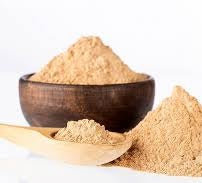
Vijaysaradi Kwath Yavakut from Riddhish Herbals is a multi-herb Ayurvedic Kwath in the Yavakut (coarsely powdered) grade, led by Vijaysar — Pterocarpus marsupium Roxb., family Fabaceae — supplied in a 100 g pack. Yavakut means ground coarsely, like barley grain, which is the traditional cut for a decoction. The pack names Vijaysar as the lead herb but does not declare the rest of the blend, and no ingredient list is asserted here. We also could not locate Vijaysaradi as a named formulation in the Ayurvedic Formulary of India, Sahasrayogam, Bhaishajya Ratnavali or Sharangdhara Samhita, and we say so rather than imply a classical pedigree we cannot show. The Nighantu literature records the lead herb as Kashaya and Tikta in Rasa, Kaphahara, and Pramehaghna; Prameha is a classical Ayurvedic category, not a modern diagnosis, and no claim is made on this page about any diagnosed condition. Use strictly under the guidance of a qualified Ayurvedic physician.
Reviewed by Dr. Riddhish Padiya — B.Pharm (Ayurveda), M.Pharm (Pharmacognosy), Ph.D. (Dravyaguna), ITRA Jamnagar. Publications under “Padiya RH”.
About Vijaysaradi Kwath Yavakut
The name follows a standard Ayurvedic convention: a lead herb, plus -adi, meaning “and the rest”. Vijaysar-adi is Vijaysar and the others. It is a useful convention when the formulation is documented somewhere, because the name is a pointer to a recipe. The section below is about what happens when it is not.
Yavakut is the grade rather than the recipe. It means coarsely powdered, like barley grain — Yava is barley — and it is the traditional cut for anything that will be simmered and strained. The reason is practical: a fine churna turns a decoction into sludge that will not strain, while a coarse cut gives up its water-soluble fraction cleanly. The previous version of this page said the coarse grade preserves volatile oils and active compounds better. That is a potency claim, we could not source it, and it has been removed. The grade is real; the claim about it was not ours to make.
The lead herb is Vijaysar, the heartwood of Pterocarpus marsupium. Its classical synonym verse names it Asana, Bijaka, Pitasara, Pitashalaka, Bandhukapushpa, Priyaka and Sarjaka, and the Nighantu literature records it as Kashaya and Tikta in Rasa, Kaphahara, and Pramehaghna.
On that last term. Prameha is a classical Ayurvedic category with its own long literature. It is not a modern diagnosis and does not map cleanly onto one. We record the classical category because Ayurvedic honesty requires it and Indian law permits it when it is attributed. We make no claim on this page about any diagnosed condition, and this product is not a medicine for one.
What is in it? The honest answer
We do not know the full composition, and we are not going to write one.
The pack names Vijaysar as the lead herb and describes the preparation as a multi-herb Kwath, but it does not list the remaining herbs or their proportions. That alone would be ordinary for this range. What is less ordinary is the second half of the problem.
We searched for Vijaysaradi as a named classical formulation — the Ayurvedic Formulary of India, Sahasrayogam, Bhaishajya Ratnavali, Sharangdhara Samhita, and the general formulation databases. We found nothing. Every result under that name was either unrelated or a single-herb Vijaysar product listing. That does not mean the formulation is not genuine — regional and paramparagata formulations exist that never reached the printed formularies, and a great many good ones do — but it does mean we cannot check this pack against a documented recipe, and neither can you.
So: no ingredient list appears on this page, because inventing one would be worse than leaving a gap. The listing is tagged for composition verification against the physical label. If your physician specified a particular Vijaysaradi formulation, please ask us before ordering and we will read you what the pack actually declares.
Sourcing, conservation and identity of the lead herb
Sourcing and conservation — what we know, and what we do not
This tree is assessed by the IUCN Red List as Near Threatened. That is a conservation-concern category rather than a legal prohibition, and it is worth knowing when you buy any heartwood drug.
To be precise about the legal position, because it is widely muddled: Pterocarpus marsupium is not CITES-listed. The genus does carry a CITES Appendix II listing, but that listing is scoped to African Pterocarpus populations and does not cover this Indian species. It is a different plant, Pterocarpus santalinus — Raktachandan, Red Sanders — that is CITES-listed and export-restricted from India. The two are frequently conflated online. They are not the same tree and they do not have the same legal status.
On adulteration, the dravyaguna literature names two substitutes for this drug: Terminalia tomentosa heartwood in some regions, and the dried trunk exudate of Butea monosperma, traded as Bengal kino, standing in for Indian kino. We have not had this lot botanically authenticated and do not claim to have. What we can say is that the substitution risk is documented, that we will tell you honestly what our supplier documentation says if you ask, and that we would rather you knew.
Key Features
- Vijaysar-led, and that is all the pack declares: the lead herb is Vijaysar, Pterocarpus marsupium Roxb. The remaining herbs in the blend are not named on the pack and are not invented here.
- We could not find this formulation in any formulary: we searched the Ayurvedic Formulary of India, Sahasrayogam, Bhaishajya Ratnavali and Sharangdhara Samhita for Vijaysaradi and found nothing. That is worth knowing before you buy it, so we have said it.
- Yavakut grade, explained honestly: Yavakut means coarsely powdered, like barley grain — the traditional cut for a decoction, because a fine powder turns a Kwath to sludge. We describe the grade; we make no potency claim for it.
- Classical names given as the texts give them: the lead herb's synonym verse names it Asana, Bijaka, Pitasara, Pitashalaka, Bandhukapushpa, Priyaka, Sarjaka.
- We name the conservation position of the lead herb: IUCN Near Threatened, and not CITES-listed — that is Pterocarpus santalinus, a different tree.
- No Regional Names block: this is a multi-herb formulation, and our rule keeps Regional Names to single-material listings. Alternate names are in the FAQ.
- Genuine, doctor-guided sourcing: bill provided with every pack; a store trusted since 2015, with pan-India delivery.
Research on the Constituents
◆ We are not attributing a finding to anyone on this page, and we will say why. There is a large published literature on Pterocarpus marsupium. Almost all of the clinical part of it concerns a single diagnosed metabolic condition, and Indian advertising law does not permit an Ayurvedic product page to make claims in that area. Quoting those papers here in any wording would be borrowing the authority of a real citation to point at a claim we are not allowed to make, so we have left them off entirely. No study finding is asserted on this page and nothing is attributed to any authors. We point you to the literature directly instead: Google Scholar — Pterocarpus marsupium. If you are managing a diagnosed condition, that literature is a conversation to have with your doctor, not a reason to buy a herb from a website. Individual results may vary. Consult your Ayurvedic physician before use.
Results were observed under study conditions. Individual results may vary. This is shared for general educational interest and is not a medical claim. Consult your Ayurvedic physician before use.
Composition (label-verified)
| Ingredient | Botanical | Part | Quantity |
|---|---|---|---|
| Vijaysar — lead herb, named on the pack | Pterocarpus marsupium Roxb., family Fabaceae | Heartwood (Sara) — the part specified in the Ayurvedic Pharmacopoeia of India | Lead herb; proportion not declared |
| Remaining herbs of the blend | Not declared on the pack | — | Not asserted here — no formulary source for this formulation was found |
A multi-herb Kwath in the Yavakut (coarse) grade, 100 g net, led by Pterocarpus marsupium heartwood. The remaining herbs and all proportions are undeclared on the pack, and no ingredient list is invented here. We were also unable to locate Vijaysaradi as a named formulation in the Ayurvedic Formulary of India, Sahasrayogam, Bhaishajya Ratnavali or Sharangdhara Samhita, so there is no documented recipe to check the pack against — see the composition section above. No botanical authentication of the lot, no extract ratio and no standardisation percentage are claimed. Tagged for composition verification against the physical label.
How to Use
Strictly as directed by your Ayurvedic physician. The classical Kwatha method simmers the coarse drug in water until the volume is reduced, then strains it; in household terms roughly one to two teaspoons in two to three cups of water, reduced to about half, strained well and taken warm. A Yavakut grade needs the simmer — heartwood in particular gives up very little to a brief steep. Prepare it fresh each time; a decoction is not meant to be kept. Because the full composition is not declared, take the quantity and duration your physician specifies for this particular pack rather than a figure from elsewhere. Children should be given this only on the direction of a qualified Ayurvedic physician.
Who Can Use It
For adults, on the direction of a qualified Ayurvedic physician. This is not a product to start on your own initiative — it is a multi-herb preparation whose full composition is undeclared, which is reason enough on its own. If you are managing a diagnosed condition of any kind, speak to your doctor before taking this or any herb, continue the care your doctor has advised, and do not reduce or stop any prescribed medicine because you have begun a herb. Not for use during pregnancy or lactation without medical advice; with an undeclared blend that caution has to be applied broadly rather than herb by herb. Children only on physician direction. If you are taking regular medication, tell your doctor about this preparation so they can advise you properly.
Safety Information
Vijaysaradi Kwath is a traditional Ayurvedic preparation and is not a substitute for professional medical care — please seek qualified medical attention directly for any health concern, and do not delay it in favour of a herb. This page makes no claim about any diagnosed condition, and this product is not a medicine for one. If you are under medical care, continue exactly the care your doctor has advised. Do not reduce, alter or stop any prescribed medicine because you have started taking this or any other herb, and tell your doctor that you are taking it. The full composition of this preparation is not declared on the pack and we could not find the formulation in any formulary — that is a material fact about this product and a reason to use it only under professional direction, since neither you nor we can check it against a documented recipe or screen it against your other medicines. Not for use during pregnancy or lactation without medical advice; with an undeclared blend that caution applies broadly. Children only on physician direction. Discontinue and consult a physician if any discomfort occurs. Keep out of reach of children. Results may vary from person to person.
Use strictly under the guidance of a qualified Ayurvedic physician. Consult your physician before use, especially if you are pregnant, lactating, taking any medication, or managing any medical condition. Keep out of reach of children. Results may vary from person to person.
Storage
Store in a cool, dry place away from direct sunlight, in a tightly closed airtight container. A Yavakut grade is coarse and takes up moisture more readily than whole material does, and it will clump if the pack is left open in humidity. Keep it firmly closed, keep damp spoons and damp hands out, and do not store the prepared decoction.
Frequently Asked Questions
What is Vijaysaradi Kwath Yavakut?
It is a multi-herb Ayurvedic Kwath — a decoction grade simmered in water and strained before drinking — supplied in the Yavakut (coarsely powdered) grade in a 100 g pack, with Vijaysar, Pterocarpus marsupium, named as the lead herb. The remaining herbs are not declared on the pack.
What exactly is in it?
We do not know the full composition and we are not going to write one. The pack names Vijaysar and describes a multi-herb blend but does not list the rest or the proportions. We also could not find Vijaysaradi as a named formulation in the Ayurvedic Formulary of India, Sahasrayogam, Bhaishajya Ratnavali or Sharangdhara Samhita, so there is no documented recipe to check it against. If your physician specified a particular Vijaysaradi formulation, ask us before ordering and we will read you what the pack declares.
Is it a classical formulation?
That is exactly what we could not establish. The -adi naming convention is classical, and regional or paramparagata formulations that never reached the printed formularies are common and often excellent. But we found no formulary entry for this one, so we will not call it classical on the strength of its name alone.
What does Yavakut mean?
Coarsely powdered, like barley grain — Yava is barley. It is the traditional cut for anything that will be simmered and strained, because a fine churna turns a decoction into sludge that will not strain while a coarse cut gives up its water-soluble fraction cleanly. An earlier version of this page also said the coarse grade preserves volatile oils and active compounds better. We could not source that, so we removed it.
Is this a medicine for a diagnosed condition?
No. We record the classical categories the texts record for the lead herb and make no claim on this page about any diagnosed condition. If you are under medical care, continue exactly the care your doctor has advised, do not alter any prescribed medicine because you have started a herb, and tell your doctor you are taking this.
How is it different from Vijaysar Kwath?
Vijaysar Kwath is the single herb: Pterocarpus marsupium heartwood alone, nothing else, fully declared. This one is a multi-herb blend led by the same drug with the rest undeclared. They are not interchangeable, and if you want to know exactly what you are taking, buy the single herb.
Why is there no Regional Names table on this page?
Because this is a multi-herb formulation, and our rule keeps Regional Names blocks to single-material listings. The vernacular names for the lead herb are on the Vijaysar Kwath page, where they belong.
What are the alternate names and spellings?
The preparation appears as Vijaysaradi Kwath, Vijayasaradi Kashaya, Vijaysar-adi Kwath and Vijaysaradi Kadha. The lead herb is Vijaysar, also written Vijayasar, Bijasar and Beejasar; in Sanskrit असन (Asana), बीजक (Bijaka), पीतसार (Pitasara); in Gujarat બીયો (Biyo); in Tamil வேங்கை (Vengai); in Malayalam വേങ്ങ (Venga). In English the tree is Indian Kino.
Is the lead herb endangered?
Pterocarpus marsupium is assessed by the IUCN Red List as Near Threatened — a conservation-concern category rather than a legal prohibition. It is not CITES-listed; that is Pterocarpus santalinus, Red Sanders, a different tree that is routinely confused with this one. The pack does not declare the harvest source and we have not asserted one.
Has this been studied scientifically?
The lead herb has a large published literature, but almost all of the clinical part of it concerns a single diagnosed metabolic condition that Indian advertising law does not permit an Ayurvedic product page to make claims about — so we have deliberately left those papers off rather than quote real references to gesture at a claim we cannot make. There is in any case no published work on this particular multi-herb preparation, and work on a single herb is not evidence about a blend. No finding is asserted on this page and nothing is attributed to any authors. Individual results may vary.
Can I take this without a doctor?
No. A multi-herb preparation with an undeclared composition is not something to self-prescribe, and we would rather say so plainly than make the sale easier. Take it on the direction of a qualified Ayurvedic physician and tell your doctor you are taking it.
How do I prepare it?
Roughly one to two teaspoons in two to three cups of water, simmered until reduced to about half, strained well and taken warm — or as your physician directs. Make it fresh each time and do not store the strained liquid.
How should I store it?
In a cool, dry place away from sunlight, in a tightly closed airtight container. A coarse Yavakut grade picks up humidity faster than whole material and will clump if the pack is left open. Keep damp spoons out and do not store the prepared decoction.
Is this AYUSH or GMP certified?
This pack is supplied under Riddhish Herbals' own label. Any AYUSH Standard Mark or GMP mark would appear on the physical pack, and we state such marks only where they are verified on the pack itself. We do not add Organic or ISO product claims unless they are documented on the label.
Is it available at Riddhish Herbals?
Yes — Vijaysaradi Kwath Yavakut is in stock at riddhishherbals.com and at our Gujarat retail stores, with pan-India delivery and a proper bill, doctor-guided selection since 2015.
Related at Riddhish Herbals
Vijaysar Kwath 100gm — the lead herb on its own, fully declared · Varunadi Kwath 100gm — another classical Kwath grade · Varunshigru Kwath 100gm — a two-herb decoction with both herbs named · Vidarikand Churna 100gm — a classical single-material tuber powder · Ayurvedic Raw Herbs & Materials
Share