
Skip to product information
1 of 1

Riddhish Herbals

Wheat Grass Powder (Ghau na Javara) – Triticum aestivum – Riddhish Herbals – 100g

Wheat Grass Powder (Ghau na Javara) – Triticum aestivum – Riddhish Herbals – 100g

Regular price Rs. 200.00
Regular price Rs. 200.00 Sale price Rs. 200.00
Sale Sold out

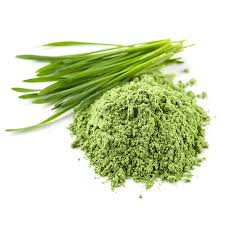
Wheat Grass Powder from Riddhish Herbals is the dried and milled young grass of wheat — Triticum aestivum L., family Poaceae — supplied in a 100 g pack. The material is the leaf blade, harvested young, before the plant joints. Wheatgrass is not a classical Ayurvedic dravya: Godhuma, the wheat grain, is recorded in the Dhanya Varga of Bhavaprakasha, Kaiyyadeva and Raja Nighantu, but the young grass appears in no nighantu and entered Indian use through the 20th-century Western health-food movement. No gluten-free claim is made: the grass blade is naturally gluten-free, but it is grown from and harvested near wheat seed, and no batch-level gluten assay is held for this pack, so anyone with coeliac disease or gluten sensitivity should consult a physician before use. Published human work on wheatgrass is limited; a 2025 narrative review (Bangera D et al. — Journal of Pharmacy and Bioallied Sciences; PMID 40511096) concludes as much. This is a food-type wellness powder, not a medicine.

About Wheat Grass Powder

This is the young grass of the ordinary wheat plant, cut before it joints, dried and milled. Nothing is added to it. The green is chlorophyll, which is simply what a green leaf contains.

It tastes emphatically of grass. That is not a criticism — it is what the material is — but it is worth knowing before you commit to a 100 g pack, and most people find it easier in juice or a smoothie than in plain water.

The honest description of wheatgrass powder is that it is a green vegetable in dried form. That is a perfectly respectable thing to be. It does not need the additional claims that usually get attached to it, and this page does not make them.

Is wheatgrass Ayurvedic? A straight answer

No, not in the classical sense, and we would rather say so than trade on an implication.

Godhuma — wheat, the grain — is unquestionably a classical dravya. It is recorded in the Dhanya Varga of Bhavaprakasha Nighantu, Kaiyyadeva Nighantu and Raja Nighantu, described as Madhura in Rasa, Sheeta in Virya, Guru and Snigdha, and Vata-Pitta shamaka. That is a real classical position for the grain.

The young grass is a different matter. It does not appear as a distinct medicinal substance in the nighantus or the samhitas. Wheatgrass as a health product — juiced, or dried and powdered — is a 20th-century Western innovation, popularised in the United States, which reached the Indian wellness market much later and was retrofitted with Ayurvedic-sounding language on the way.

So this listing sits in our raw-materials range as a food-type wellness powder, honestly labelled. If you want a classical Ayurvedic green, that is a different conversation and we are happy to have it — ask us. What we will not do is dress a modern product in a classical costume.

Gluten: the thing this page will not gloss over

This matters enough to have its own section rather than a line in the small print.

The wheat grass blade is naturally gluten-free. Gluten is a storage protein of the grain, and the young leaf does not contain it. That much is straightforward.

The difficulty is agricultural rather than botanical. Wheatgrass is grown from wheat seed and cut close to the growing medium, so seed and seed fragments are physically present throughout cultivation and harvest. The National Celiac Association's published position is that it is very difficult to guarantee a wheat or barley grass product is free of seed material, and that where a gluten-free label is applied it reflects a regulatory threshold — below 20 parts per million — rather than an absolute absence. Their practical advice is to look for R5 ELISA testing on the specific product before use.

We hold no batch-level gluten assay for this pack, and therefore make no gluten-free claim anywhere on this page. If you have coeliac disease or a diagnosed gluten sensitivity, please consult your physician before using this product, and do not rely on a general statement that grass is gluten-free. If you would like us to ask our supplier whether any gluten testing exists for a given lot, ask us and we will find out.

Key Features

  • One material: dried young wheat grass, Triticum aestivum L., milled to a powder. No blend, no carrier, no sweetener, no added colour.
  • We do not claim a classical pedigree: Godhuma, the wheat grain, is a classical dravya of the Dhanya Varga. The young grass is not in any nighantu. It is a 20th-century health-food product, and pretending otherwise would be dishonest.
  • No gluten-free claim: the grass blade is naturally gluten-free, but it is grown from and harvested near seed. Without a lab test on the batch, no one can responsibly promise a gluten-free product, and we hold no such test. Read the safety block.
  • Two human references, honestly framed: including a 2025 review whose own conclusion is that the human evidence is limited. We quote that conclusion rather than working around it.
  • Green because of chlorophyll, not because of anything added: the colour is the plant's own. We make no nutritional claim for it.
  • Easy to take: stirred into water or juice, or blended. It tastes strongly of grass, which is worth knowing before you buy 100 g of it.
  • Genuine, doctor-guided sourcing: bill provided with every pack; a store trusted since 2015, with pan-India delivery.

Research on the Constituents

A narrative review that is honest about the state of the evidence. Bangera and colleagues reviewed the published human work on wheatgrass juice — reported associations with oxidative-stress markers, haemoglobin levels and general wellness outcomes — and concluded that the existing human evidence base is limited and needs more rigorous validation — (Bangera D et al., 2025 — Journal of Pharmacy and Bioallied Sciences). PMID 40511096. We are quoting the reviewers' own conclusion rather than picking the flattering sentences out of their paper.

The one properly controlled human trial, and what it was not. Ben-Arye and colleagues ran a randomised, double-blind, placebo-controlled trial of wheat grass juice in a hospital setting, in patients under medical supervision for a specific diagnosed gastrointestinal condition — (Ben-Arye E et al., 2002 — Scandinavian Journal of Gastroenterology). PMID 11989836. We give you the PMID so you can read it for yourself. We are not extending it to this product: it studied fresh juice rather than dried powder, in a supervised clinical setting, in patients with a diagnosed condition being managed by doctors. It is not a reason to buy a powder, and we will not present it as one.

Results were observed under study conditions. Individual results may vary. This is shared for general educational interest and is not a medical claim. Consult your Ayurvedic physician before use.

Composition (label-verified)

Ingredient Botanical Part Quantity
Wheat grass — dried and milled Triticum aestivum L., family Poaceae Young grass (leaf blade), harvested before jointing Single material, 100 g net; nothing added

A single material: dried young wheat grass, milled, 100 g net, with no carrier, sweetener, colour or blend. No gluten-free claim is made — see the gluten section above; no batch-level gluten assay is held. No nutrient quantities, no chlorophyll percentage and no vitamin or mineral figures are claimed, because no batch analysis is held for this pack and a green powder's nutrient profile varies with harvest age and drying method. Growing medium, harvest age and drying method are not stated on the pack. Tagged for pack-level confirmation.

How to Use

Commonly taken as one to two teaspoons stirred into water or juice, or blended into a smoothie, once daily. It disperses better in something cold and slightly acidic — lemon water or a fruit juice — than in plain warm water, and it tastes strongly of grass either way. This is a food-type powder rather than a medicine, so the quantity is a matter of preference rather than prescription, but if you are taking it alongside Ayurvedic or allopathic medicines, mention it to whoever is looking after you. Children can have a smaller amount; if a child has any diagnosed condition, ask a physician first.

Who Can Use It

Suitable for most adults and, in smaller amounts, for children. Anyone with coeliac disease or a diagnosed gluten sensitivity should consult a physician before use — see the gluten section above; the grass blade is naturally gluten-free but is grown from and harvested near seed, and no batch assay is held for this pack. Anyone with a wheat or grass-pollen allergy should be as careful with this powder as with the plant itself. If you are pregnant, lactating, on regular medication or managing a diagnosed condition, mention this product to your doctor before adding it to your routine — it is a food, but it is a concentrated one.

Safety Information

Wheat Grass Powder is a food-type wellness product, not a medicine, and it is not a substitute for professional medical care. No gluten-free claim is made on this page. The grass blade is naturally gluten-free, but wheatgrass is grown from and harvested near wheat seed, and the National Celiac Association's published position is that seed cross-contact makes an absolute guarantee impractical without specific laboratory testing on the product. We hold no such test for this batch. If you have coeliac disease or a diagnosed gluten sensitivity, consult your physician before use. Anyone with a wheat or grass-pollen allergy should be equally careful. Some people find a green powder unsettling to the stomach when they first take it; starting with a smaller amount is sensible. If you are pregnant, lactating, on regular medication or managing a diagnosed condition, mention it to your doctor before adding this to your routine. Discontinue and consult a physician if any discomfort occurs. Keep out of reach of children. Results may vary from person to person.

Storage

Store in a cool, dry place away from direct sunlight, in a tightly closed airtight container. Light is the enemy here: chlorophyll fades, and a wheatgrass powder that has gone from bright green to dull khaki has been sitting in the light or the warmth. Colour is the one quality signal you can read on this product without a laboratory, so keep it dark, keep it sealed, and keep damp spoons out of the pack.

Frequently Asked Questions

What is Wheat Grass Powder?

It is the dried, milled young grass of the wheat plant, Triticum aestivum L., harvested before the plant joints, in a 100 g pack. Nothing is added to it. The green colour is the plant's own chlorophyll.

Is wheatgrass an Ayurvedic herb?

Not in the classical sense, and we would rather be direct about it. Godhuma — wheat, the grain — is a classical dravya recorded in the Dhanya Varga of Bhavaprakasha, Kaiyyadeva and Raja Nighantu. The young grass appears in no nighantu; it is a 20th-century Western health-food product that reached India later. We sell it as an honest food-type wellness powder, not as a classical medicine.

Is it gluten-free?

We do not claim that it is. The grass blade is naturally gluten-free, but wheatgrass is grown from and harvested near wheat seed, and the National Celiac Association's position is that seed cross-contact makes a guarantee impractical without specific lab testing on the product. We hold no batch-level gluten assay for this pack. If you have coeliac disease or a diagnosed gluten sensitivity, consult your physician before use.

Can people with coeliac disease take it?

That is a decision for your physician, not for a product page. What we can tell you is that we hold no gluten test for this batch, that the raw material is grown from wheat seed, and that we will ask our supplier about testing for a specific lot if you ask us to. We would rather lose the sale than give you a comfortable answer here.

What are the alternate names?

The names in the table below are the names for wheat — गोधूम (Godhuma) in Sanskrit, गेहूँ (Gehun) in Hindi, ઘઉં (Ghaun) in Gujarati, गहू (Gahu) in Marathi, গম (Gom) in Bengali, கோதுமை (Kotumai) in Tamil, గోధుమ (Godhuma) in Telugu, ಗೋಧಿ (Godhi) in Kannada, ഗോതമ്പ് (Gotampu) in Malayalam. The young grass has no distinct classical vernacular in most of these languages; where a word exists it is a compound, like the Gujarati ઘઉંના જવારા or Hindi गेहूँ के जवारे.

Has wheatgrass been studied in humans?

A little, and the honest summary is that the evidence base is thin. A 2025 narrative review in the Journal of Pharmacy and Bioallied Sciences (Bangera D et al., PMID 40511096) concludes that the existing human evidence is limited and needs more rigorous validation — that is the reviewers' own conclusion, not our gloss on it. There is one randomised double-blind placebo-controlled trial from 2002 (Ben-Arye E et al., PMID 11989836), but it studied fresh juice in a supervised hospital setting in patients with a diagnosed condition, and we do not extend it to a dried powder. Individual results may vary.

How should I take it?

One to two teaspoons in water, juice or a smoothie, once daily. It disperses better in something cold and slightly acidic than in warm water. It tastes strongly of grass, which is worth knowing in advance.

Does it stay green?

Only if you keep it dark. Chlorophyll fades with light and warmth, and a wheatgrass powder that has gone dull khaki has been stored badly. Colour is the one quality signal you can read on this product without a laboratory, so it is worth protecting.

Does this cleanse or purify the system?

We do not use that language, and the previous version of this page leaned on it heavily, which is one of the reasons the page was rewritten. Wheatgrass is a dried green vegetable. Your liver and kidneys handle what they handle; a green powder is food, not an intervention.

Can children take it?

In smaller amounts, generally yes — it is a food. If a child has any diagnosed condition, or any wheat or grass-pollen allergy, ask a physician first.

How should I store it?

In a cool, dry place away from sunlight, in a tightly closed airtight container. Keep damp spoons out of the pack; a green powder cakes and darkens once moisture gets into it.

Is it available at Riddhish Herbals?

Yes — Wheat Grass Powder is in stock at riddhishherbals.com and at our Gujarat retail stores, with pan-India delivery and a proper bill, doctor-guided selection since 2015.

Regional Names & Spelling Variants

Language Name
Local / common name (Gujarat) — ઘઉં (Ghaun) · ઘઉંના જવારા (Ghaunna javara) Ghaun is wheat. Javara is the young sprouted grass — the everyday Gujarati word for what is in this pack.
Sanskrit गोधूम (Godhuma) — the wheat plant and grain
Hindi गेहूँ (Gehun) · गोधूम (Godhum) · गेहूँ के जवारे (Gehun ke jaware)
Gujarati ઘઉં (Ghaun)
Marathi गहू (Gahu) · गोधूम (Godhuma)
Bengali গম (Gom) · গোধূম (Godhuma)
Tamil கோதுமை (Kotumai / Godumai)
Telugu గోధుమ (Godhuma)
Kannada ಗೋಧಿ (Godhi) · ಗೋಧೂಮ (Godhuma)
Malayalam ഗോതമ്പ് (Gotampu) · ഗോധൂമം (Godhumam)
English · Botanical · Part used Wheatgrass · Triticum aestivum L., family Poaceae · Young grass (leaf blade), harvested before the plant joints and dried
A note on this table These are the names for wheat. The young grass has no distinct classical vernacular in most of these languages, because it was not traditionally used as a separate substance — where a word exists it is a compound, as with the Gujarati and Hindi javara / jaware. We would rather explain that than invent nine names.
Romanised search variants Wheatgrass · Wheat grass powder · Gehun ke jaware · Ghau na javara · Godhuma · Triticum aestivum
Common misspellings Wheatgras · Wheet grass · Wheatgrass powdar · Triticum astivum

Related at Riddhish Herbals

Since 2015Genuine ProductsBill ProvidedDoctor-Guided Selection4000+ Ayurvedic Products130+ Trusted BrandsPan-India Delivery
રીધ્ધીશ હર્બલ્સ — ગુજરાતનો વિશ્વાસપાત્ર આયુર્વેદિક સ્ટોર, જ્યાં સાચી સલાહ અને genuine Ayurvedic products એક જ જગ્યાએ મળે છે.
View full details
%}