
Riddhish Herbals
Ajma Na Phool (Sat Ajwain / Thymol Crystals) – Trachyspermum ammi – Riddhish Herbals
Ajma Na Phool (Sat Ajwain / Thymol Crystals) – Trachyspermum ammi – Riddhish Herbals
Couldn't load pickup availability
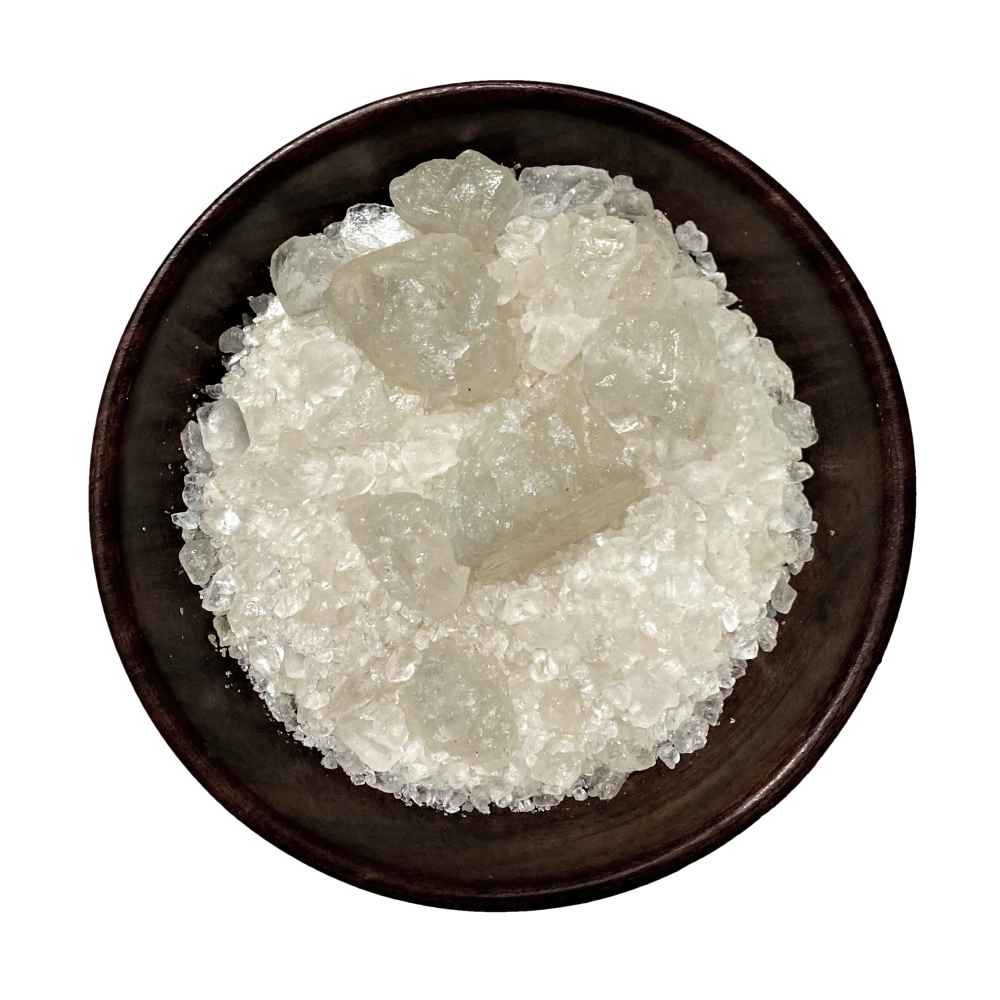
Ajma na Phool — better known as Sat Ajwain or Thymol — is the natural crystalline extract (thymol, thymolum) obtained from the seeds of Trachyspermum ammi (ajwain / carom), supplied by Riddhish Herbals. These aromatic crystals are traditionally used externally and in classical fragrant preparations. Researchers have studied the essence of Trachyspermum ammi, the source of thymol, in laboratory models (Hejazian et al., 2014). Each pack is genuine, bill-provided material from a doctor-guided store operating since 2015.
About Ajma na Phool (Sat Ajwain / Thymol)
Ajma na Phool is the Gujarati name for Sat Ajwain — the naturally occurring crystalline form of thymol that separates from the volatile oil of ajwain (Trachyspermum ammi) seeds. It is not the seed itself but its concentrated aromatic essence in crystal form, prized for its sharp, warming fragrance.
Riddhish Herbals supplies these thymol crystals as a single-ingredient raw material for traditional external and aromatic use, with a bill on every order under our doctor-guided sourcing standard. The crystals are highly concentrated and are used sparingly.
Traditional Ayurvedic Importance
Ajwain (Yavani) is a classical Deepana–Pachana dravya, Katu–Tikta in rasa and Ushna in virya. Sat Ajwain — its crystalline sat (essence) — concentrates that warming, aromatic character. In traditional practice these crystals are used externally and in fragrant preparations rather than eaten by the spoonful.
Because the crystals are so concentrated, classical practice is to use them in very small amounts and, for any internal use, only under the direction of a qualified Ayurvedic physician who can judge the right quantity and vehicle for the individual.
Key Features
- Natural thymol crystals: the aromatic crystalline extract (thymol / thymolum) of Trachyspermum ammi (ajwain) seed.
- Highly concentrated & fragrant: a small quantity carries the intense, warming aroma of ajwain.
- Traditional external & aromatic use: used externally and in classical fragrant preparations.
- Single-ingredient purity: pure Sat Ajwain crystals, nothing else added.
- Genuine, doctor-guided sourcing: bill provided with every pack; a store trusted since 2015.
- Available in 10g, 50g and 80g: choose the quantity that suits your need.
Research on the Constituents
◆ Researchers studied the essence of Trachyspermum ammi (the plant source of thymol) for its effect on smooth-muscle activity in a laboratory (rat ileum) model — (Hejazian SH et al., 2014 — North American Journal of Medical Sciences, 6:643–647). PubMed PMID: 25599053
Results were observed under study conditions. Individual results may vary. This is shared for general educational interest and is not a medical claim. Consult your Ayurvedic physician before use.
Ingredients (single-ingredient, label-verified)
| Ingredient | Source (botanical) | Form | Proportion |
|---|---|---|---|
| Sat Ajwain / Ajma na Phool (Thymol) | Trachyspermum ammi (Sprague) — thymol (thymolum) | Natural aromatic crystals | 100% thymol crystals |
Single-ingredient natural crystalline extract of ajwain seed volatile oil. Highly concentrated; use sparingly. Nothing else added.
How to Use
As directed by your Ayurvedic physician. Ajma na Phool crystals are traditionally used externally and in aromatic preparations — for example dissolved in a suitable carrier for external application, or used as a fragrant material. The crystals are highly concentrated; any internal use should be only in the minute quantity and manner advised by a qualified Ayurvedic physician.
Who Can Use It
Adults, primarily for external and aromatic use, ideally with advice from a qualified Ayurvedic physician. Not advised during pregnancy or lactation without professional advice. Keep away from children; children should use only as directed by a qualified Ayurvedic physician.
Safety Information
Thymol crystals are highly concentrated and aromatic. For external and aromatic use: avoid contact with the eyes and mucous membranes, and dilute appropriately in a carrier before applying to skin. Any internal use should be only under a qualified Ayurvedic physician's guidance and in minute quantity. Discontinue if irritation occurs. Keep out of reach of children. Consult your physician before use if pregnant, lactating, on medication, or managing any health condition. Results may vary from person to person.
Storage
Store in a cool, dry place in a tightly closed container away from direct sunlight and heat, as the crystals are volatile and aromatic. Keep away from open flame.
Frequently Asked Questions
What is Ajma na Phool / Sat Ajwain?
It is the natural crystalline form of thymol that separates from the volatile oil of ajwain (Trachyspermum ammi) seeds — a concentrated aromatic essence, not the whole seed.
Is Sat Ajwain the same as ajwain seeds?
No. Ajwain seeds are the whole spice; Sat Ajwain (Ajma na Phool) is the concentrated crystalline thymol extracted from them, so it is far stronger and used in much smaller amounts.
Is this for internal or external use?
It is supplied mainly for external and aromatic use. Because it is so concentrated, any internal use should be only under the guidance of a qualified Ayurvedic physician.
What are the alternate names of Ajma na Phool?
It is known as Sat Ajwain, Ajwain ke Phool or Ajwain Satva (Hindi), Ova Phool (Marathi), Vamu Puvvu (Telugu), and Thymol or Thyme camphor in English.
How is Ajma na Phool used traditionally?
The crystals are used externally and in fragrant preparations, often dissolved in a suitable carrier, as advised by your Ayurvedic physician.
Is Ajma na Phool from Riddhish Herbals genuine?
Yes. Riddhish Herbals supplies genuine Sat Ajwain crystals with a bill for every purchase, under our doctor-guided sourcing standard.
How should I store thymol crystals?
Keep them in a cool, dry, tightly closed container away from sunlight, heat and open flame, as the crystals are volatile and aromatic.
Has ajwain (the source of thymol) been studied scientifically?
Yes — researchers have studied the essence of Trachyspermum ammi, the plant source of thymol, in laboratory models. This is shared for general educational interest, not as a medical claim.
Regional Names & Spelling Variants
| Language | Name |
|---|---|
| Local / common (Gujarat) | Ajma na Phool / Ova Phool (અજમાનાં ફૂલ) |
| Sanskrit | Yavani Sat (यवानी सत्त्व) |
| Hindi | Sat Ajwain / Ajwain ke Phool / Ajwain Satva (अजवाइन के फूल) |
| Marathi | Ova Phool / Ovyache Phool |
| Bengali | Jowan Phool |
| Tamil | Omam Sat / Omam Poo |
| Telugu | Vamu Puvvu (వాము పువ్వు) |
| Kannada | Oma Phool |
| Malayalam | Ayamodakam Sat |
| English / chemical + Botanical | Thymol (Thymolum) / Thyme camphor — from Trachyspermum ammi (Sprague) — crystalline phenol of the seed oil |
| Search variants | sat ajwain, ajwain ke phool, ajma na phool, thymol crystals, ova phool, vamu puvvu |
| Common misspellings | satt ajwain, ajwain phool, ajma phool, thymolum |
Related at Riddhish Herbals
Ajmo Whole (Ajwain Seeds) · Ajwain Churna (Yavani) · Hing Churna (Asafoetida) · Ayurvedic Raw Herbs & Materials