
Riddhish Herbals
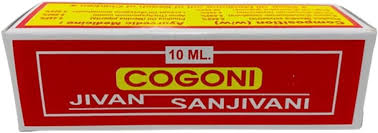
Cogoni Jivan Sanjivani – Karpuradi Aromatic Ayurvedic Drops – Cogoni – 10 ml
Cogoni Jivan Sanjivani – Karpuradi Aromatic Ayurvedic Drops – Cogoni – 10 ml
Couldn't load pickup availability
Cogoni Jivan Sanjivani is a concentrated Ayurvedic aromatic-oil preparation, supplied in a 10 ml dropper pack. Its composition is dominated by Nilgiri (Eucalyptus) oil at 59.994% w/w, with Karpura (camphor) and Yavani (ajwain) at 8.890% each, Pudina and Lavanga at 6.668% each, and peppermint and Twak (cinnamon) oils at 4.445% each. It belongs to the classical Ayurvedic family of Karpuradi aromatic preparations, where a few drops of a potent volatile-oil blend carry the qualities of several dravyas at once. Because it is a concentrated volatile-oil formulation containing camphor, it is intended for adult use under the direction of a qualified Ayurvedic physician. Stocked at Riddhish Herbals with a genuine bill and doctor-guided selection.
About Cogoni Jivan Sanjivani
This is a volatile-oil concentrate rather than a churna or a kwath. Seven aromatic materials are combined in a single dropper bottle, and the whole design rests on potency by concentration — a very small quantity carries a great deal of aromatic material. That is also precisely why the dose matters so much.
The formulation sits in a long Ayurvedic lineage. Classical Nighantu literature devotes a whole varga — the Karpuradi Varga of the Bhavaprakasha Nighantu — to camphor, clove and their aromatic relatives, describing them as laghu (light) and tikshna (penetrating) dravyas whose action is carried by their scent and their volatility rather than by bulk. Cogoni Jivan Sanjivani follows that same logic in a modern dropper format.
Riddhish Herbals stocks this as genuine, brand-sealed stock with a proper bill. Because it is a camphor-bearing concentrate, our Ayurvedic physicians will tell you plainly whether it suits you, and at what quantity, before you buy. That has been our way since 2015.
The Ingredients, Individually
Nilgiri — Eucalyptus oil (Eucalyptus globulus), 59.994%. The bulk of the formula and the source of its cooling, penetrating character. Its principal constituent is 1,8-cineole (eucalyptol), a monoterpene oxide. Eucalyptus is not a Bruhat-Trayi herb — it entered the Indian aromatic repertoire comparatively recently — and we say so plainly rather than inventing a classical pedigree for it.
Karpura — Camphor (Cinnamomum camphora), 8.890%. A cornerstone of the classical Karpuradi Varga. Ayurvedic literature describes Karpura as sheeta (cooling) in virya and laghu, valued for its distinctive penetrating aroma. It is also the reason this preparation demands respect: camphor is potent in small quantity, and the drop count on the pack is not a suggestion.
Yavani — Ajwain (Trachyspermum ammi), 8.890%. One of the most established Deepana (appetising) and Pachana (digestive) dravyas in Ayurveda, and a carminative in the ordinary sense of that word. Its essential oil is dominated by thymol, with γ-terpinene and p-cymene alongside.
Pudina — Mint (Mentha sylvestris), 6.668%, and Peppermint oil (Mentha piperita), 4.445%. Two distinct mint materials appear on the label. Both are classically and popularly valued as carminative, cooling and refreshing; menthol is the characteristic constituent of the peppermint fraction.
Lavanga — Clove oil (Syzygium aromaticum), 6.668%. Also grouped in the Karpuradi Varga, and classically described as Deepana and Ruchya (appetite-kindling). Eugenol is its principal constituent, and it is the source of the warm, spicy note in the blend.
Twak — Cinnamon oil (Cinnamomum zeylanicum), 4.445%. Twak is a classical Ayurvedic aromatic, one of the trio Twak-Ela-Patra, traditionally valued as a Deepana and a warming aromatic.
The Combination
Read together, the composition is coherent. Roughly six parts in ten are a single cooling, penetrating aromatic (eucalyptus). Camphor and clove add the classical Karpuradi character. Ajwain, mint and cinnamon bring the Deepana-Pachana and carminative side of the blend, which is the lawful, traditional pharmacological description of what these dravyas do. The two mint materials, one leaf-derived and one distilled oil, sit at different concentrations and contribute different notes.
This is a preparation to be taken in drops, in an anupan of warm water, and not otherwise. Nothing about the composition is subtle, and it does not need to be taken in quantity to be felt.
Research on the Constituents
The references below characterise the ingredients — what they are made of. They are not claims about what this product does.
◆ Peer-reviewed analysis of ajwain (Trachyspermum ammi) essential oil characterised thymol as its principal chemical constituent — Singh, Maurya, Catalan & de Lampasona (2004), Journal of Agricultural and Food Chemistry 52(11):3292–3296 — PMID 15161185.
◆ A separate GC–MS study of ajowan essential oil identified thymol, γ-terpinene and p-cymene as the major components — Mirniyam et al. (2022), Foods 11(19):3084 — PubMed PMID 36230162.
◆ 1,8-cineole (eucalyptol) is documented in the pharmacological literature as the principal constituent of Eucalyptus globulus essential oil — PubChem compound record, National Center for Biotechnology Information (CID 2758).
These are compositional and phytochemical characterisations of the individual ingredients, shared for general educational interest. They are not medical claims about this product, and individual results may vary. Consult your Ayurvedic physician before use.
Composition (label-verified, % w/w)
| Ingredient (label name) | Botanical | % w/w |
|---|---|---|
| Nilgiri Oil (Eucalyptus) | Eucalyptus globulus | 59.994% |
| Kapoor (Karpura / Camphor) | Cinnamomum camphora | 8.890% |
| Ajmo (Yavani / Ajwain) | Trachyspermum ammi | 8.890% |
| Phudina (Mint) | Mentha sylvestris | 6.668% |
| Lavanga Oil (Clove) | Syzygium aromaticum | 6.668% |
| Phudina Oil (Peppermint) | Mentha piperita | 4.445% |
| Taj Oil (Twak / Cinnamon) | Cinnamomum zeylanicum | 4.445% |
Quantities transcribed directly from the printed pack. Botanical binomials are given in their accepted scientific form; the pack prints three of them with typographic variations (Trichyspermum ummi, Mentha selvestris, Cinnamum zeylanicum), which we have corrected to Trachyspermum ammi, Mentha sylvestris and Cinnamomum zeylanicum so the plant identity is unambiguous. An Ayurvedic Proprietary Medicine.
How to Use
For adults, strictly as directed by a qualified Ayurvedic physician. This is a concentrated volatile-oil preparation, taken in drops only, in an anupan of warm water. Never take it undiluted, and never exceed the quantity your physician directs. The pack itself carries a suggested adult drop direction; regard it as an upper limit, not a target.
We do not recommend giving this preparation to children on the basis of a pack direction alone. It contains camphor, which is potent in small quantities and behaves differently in children. If a child is to take it at all, that decision, and the quantity, belong to a qualified physician who has seen the child.
Who Can Use It
Adults, under Ayurvedic guidance. Not recommended during pregnancy or lactation without a physician's direction. Not recommended for infants or young children except on the direct advice of a qualified physician. Consult your physician before use if you take any medication or manage any health condition.
Safety Information
This preparation contains camphor and concentrated volatile oils. Take only in the drop quantities directed by a qualified Ayurvedic physician, always diluted in warm water. Do not exceed the directed dose. Do not take undiluted.
Keep out of reach of children. Consult your physician before use, especially if you are pregnant, lactating, taking any medication, or managing any medical condition. Discontinue and seek advice if any discomfort occurs. Results may vary from person to person. This is a traditional Ayurvedic preparation and is not a substitute for professional medical advice or care.
Storage
Store in a cool, dry place away from direct sunlight. Keep the cap tightly closed after every use — these are volatile oils and they will escape an open bottle. Keep out of reach of children.
Frequently Asked Questions
What is Cogoni Jivan Sanjivani?
It is a concentrated Ayurvedic aromatic-oil preparation in a 10 ml dropper pack, made up of seven volatile oils — principally Nilgiri (Eucalyptus) oil at 59.994% w/w, with camphor, ajwain, mint, clove, peppermint and cinnamon oils. It belongs to the classical Karpuradi family of aromatic Ayurvedic preparations and is intended for adult use under physician direction.
What exactly is in it?
Per the pack (w/w): Nilgiri/Eucalyptus oil 59.994%, Kapoor/Camphor 8.890%, Ajmo/Ajwain 8.890%, Phudina/Mint 6.668%, Lavanga/Clove oil 6.668%, Phudina oil/Peppermint 4.445%, and Taj/Cinnamon oil 4.445%. The full table with botanical names is above.
Can children take it?
Not on our recommendation. The preparation contains camphor at 8.890% w/w, and camphor is potent in small quantities. Any decision to give it to a child — and the quantity — should be made by a qualified Ayurvedic physician who has examined the child, not from a pack direction.
How should an adult take it?
In drops only, diluted in warm water, and strictly as directed by a qualified Ayurvedic physician. Never undiluted, and never above the directed quantity. Warm water is the anupan.
Why does it contain so much Eucalyptus oil?
Eucalyptus oil makes up nearly 60% of the formula and gives it its cooling, penetrating character. Its principal constituent is 1,8-cineole (eucalyptol). Eucalyptus is a relatively modern addition to the Indian aromatic repertoire rather than a classical Bruhat-Trayi herb, and we prefer to state that honestly.
What is Karpuradi Varga?
It is the section of the classical Bhavaprakasha Nighantu that groups camphor, clove and their aromatic relatives — dravyas described as laghu (light) and penetrating, whose action is carried by aroma and volatility rather than by bulk. Karpura and Lavanga in this blend both belong to that group.
What are ajwain and clove classically valued for?
Yavani (ajwain) is one of the established Deepana (appetising) and Pachana (digestive) dravyas of Ayurveda, and a carminative. Lavanga (clove) is classically described as Deepana and Ruchya. These are traditional descriptions of classical pharmacological action, not promises of any outcome.
Have the ingredients been studied scientifically?
The constituents have been characterised in the literature — thymol is documented as the major component of ajwain essential oil (PMID 15161185), and 1,8-cineole as the principal constituent of eucalyptus oil (see the Research section). These are compositional analyses of the ingredients, not medical claims about this product; individual results may vary.
How should I store it?
Cool, dry, out of direct sunlight, cap firmly closed — volatile oils escape an open bottle. Keep out of reach of children.
Is it available at Riddhish Herbals with a bill?
Yes. Cogoni Jivan Sanjivani 10 ml is stocked as genuine, brand-sealed product with a proper purchase bill, doctor-guided selection, and pan-India delivery.
Related at Riddhish Herbals
Explore related at Riddhish Herbals
Cogoni Balm 25g · Othmir Jeeru (Isabgol) · Triphala Churna 100gm