


Riddhish Herbals
Rasashram Chhachh Masala (Chaas / Buttermilk Masala) – Ayurvedic Digestive Blend
Rasashram Chhachh Masala (Chaas / Buttermilk Masala) – Ayurvedic Digestive Blend
Couldn't load pickup availability
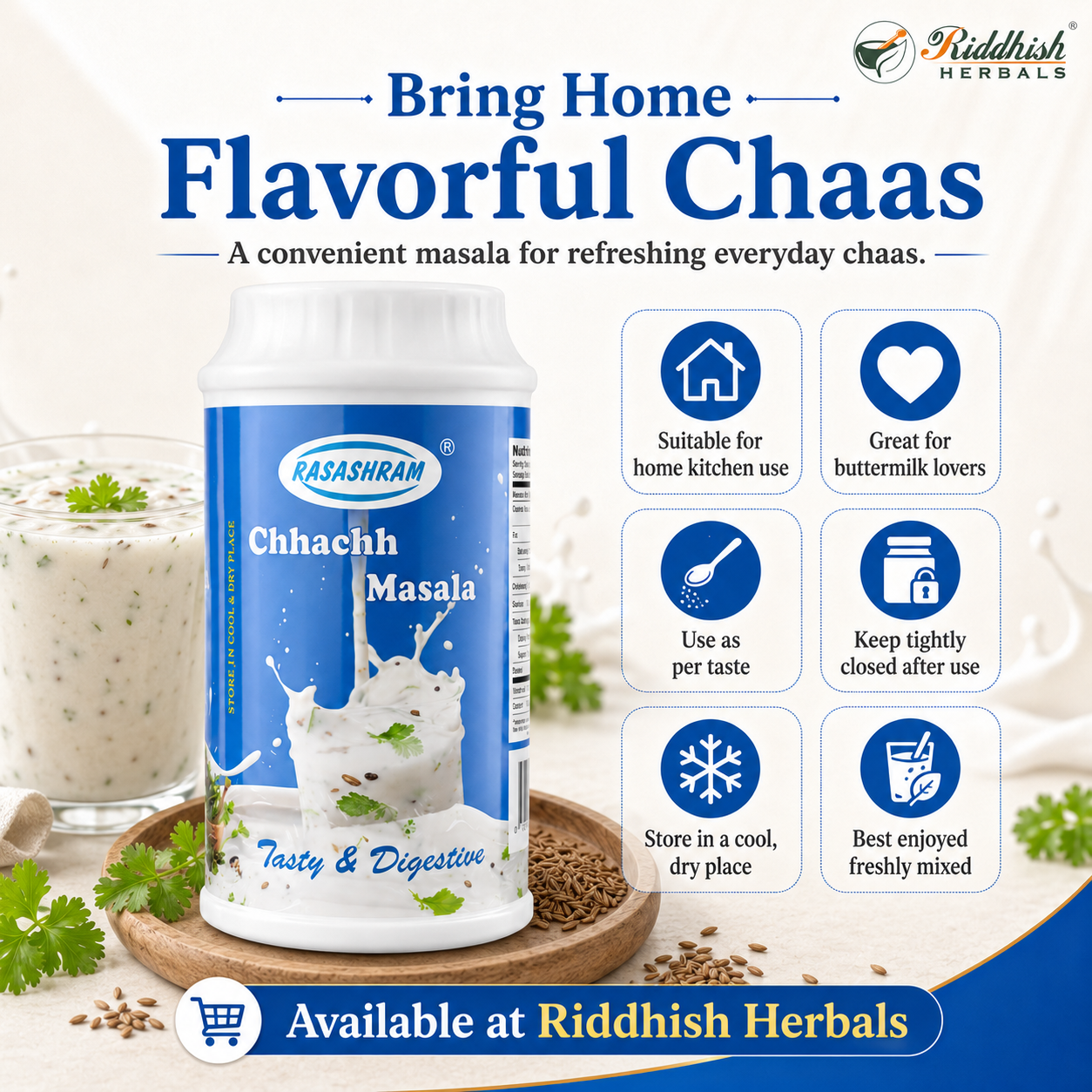
Rasashram Chhachh Masala — also sold as Chaas Masala, Chhash Masala or Buttermilk Masala — is a proprietary food: a four-ingredient Ayurvedic digestive spice blend made by Rasashram Pharma Laboratories (P.) Ltd., Gondal, Gujarat, under Mfg. Lic. No. 000784. The label-verified composition is Panchlavan (a five-salt blend) 55%, Jeerak / cumin (Cuminum cyminum) 30%, Dhanyak / coriander (Coriandrum sativum) 10% and Shahjeera (Carum bulbocastanum) 5%. Because Panchlavan makes up more than half the blend, this is a salt-forward masala: the pack declares 6496.2 mg of sodium per 100 g. It is used as a sprinkle — a quarter to half teaspoon in a glass of buttermilk, or over raita and salads. Stocked by Riddhish Herbals since 2015 with a genuine bill.
A 125-Year Legacy — Born in the Royal Dispensary of Gondal
In 1901, Rajvaidya Shri Jivram Kalidas Shastri and Rasavaidya Prankunvardevi Shastri founded the Rasashala Ausadhashram in Gondal, on land granted by the Gondal state of Saurashtra. In 1961, Bhishagratna Rajvaidya Maheshwar J.K. Shastri re-established Rasashram Pharma Laboratories in the same historic premises, and a modern plant with a Gaushala and botanical garden was commissioned near Gondal in 2002.
The point of that history, for a jar of masala, is this: the same licensed facility produces classical Bhasma, Pishti and Rasayana preparations. A masala coming out of a pharmaceutical plant is made to a fixed formula every time. That is the real difference between this and a supermarket chaat masala — not a health promise, just consistency. Riddhish Herbals has stocked Rasashram since 2015.
What Is Actually In It
Panchlavan — 55%. The five-salt classical blend, and the majority of this product. Ayurvedic dietetics describes the lavana (salt) group as Deepaniya (kindling to the digestive fire), Pachana (digestive) and Ruchikara (taste-enhancing). These are classical action words, and lawful ones — but be clear about what 55% salt means: this is a seasoning to be sprinkled, never spooned.
Jeerak (cumin, Cuminum cyminum) — 30%. The dominant spice. The Charaka Samhita describes Jeerak as among the foremost Pachana dravyas. Its characteristic aroma comes from cuminaldehyde, the principal constituent of cumin's volatile oil.
Dhanyak (coriander, Coriandrum sativum) — 10%. Classically described as Tridoshahara — balancing to all three doshas — and cooling, which is why it pairs naturally with buttermilk in a Gujarati summer.
Shahjeera (Carum bulbocastanum) — 5%. Printed on the pack as Shahjeera; also known as Krishna Jeerak or black cumin. A small quantity, but it carries the warm, slightly smoky top note that distinguishes this blend from plain jeera-namak.
Nutrition — The Full Panel, Including the Sodium
We are printing it, because at 55% Panchlavan the sodium number is the single most important fact about this product — and you should be the one deciding what to do with it, not us.
| Per 100 g (as declared on pack) | Amount | % Daily Value* |
|---|---|---|
| Energy | 114.2 kcal (46.8 kcal from fat) | — |
| Total Fat | 5.2 g | 8.0% |
| of which Saturated | 2.5 g | 12.5% |
| of which Trans | 0 g | — |
| Cholesterol | 0 mg | 0.0% |
| Sodium | 6496.2 mg | 271.0% |
| Total Carbohydrate | 12.8 g | 4.0% |
| Dietary Fibre | 4.8 g | 19.0% |
| Sugars | 0.1 g | — |
| Protein | 4.0 g | 8.0% |
| Calcium | — | 178% |
| Iron | — | 21.7% |
| Vitamin A / Vitamin C | — | 1% / 5% |
*Percent Daily Values are based on a 2000-calorie diet, as printed on the pack. These figures are per 100 g of masala — not per serving. A serving is a sprinkle: roughly ¼ to ½ teaspoon (about 1–2 g), which works out to approximately 65–130 mg of sodium per glass of chaas.
Read that honestly. Per 100 g of masala, sodium is high — but nobody eats 100 g of masala. In normal use you are adding a pinch to a glass of chaas, which puts the sodium in the same range as lightly salting the drink yourself. That said, if you are on a sodium-restricted diet, or managing blood pressure or kidney concerns, this is exactly the number your doctor will want to see. Ask them before making it a daily habit.
Research on the Constituents
◆ A peer-reviewed food-science review covers the chemistry, processing technology and food applications of cumin (Cuminum cyminum), the dominant spice in this blend — Sowbhagya (2013), Critical Reviews in Food Science and Nutrition 53(1):1–10 — PMID 23035918.
◆ GC-MS analysis of cumin oils from four geographical origins identified cuminaldehyde, β-pinene, p-cymene and γ-terpinene as the major constituents — Wanner et al. (2010), Natural Product Communications — PMID 20922990.
Results were observed under study conditions. Individual results may vary. This is shared for general educational interest and is not a medical claim. Consult your Ayurvedic physician before use.
Composition — label-verified (“Proprietary Food · Each gm contains”)
| Ingredient (label name) | Botanical | % of blend |
|---|---|---|
| Panchlavan — five-salt blend | — | 55% |
| Jeerak — cumin | Cuminum cyminum | 30% |
| Dhanyak — coriander | Coriandrum sativum | 10% |
| Shahjeera — black cumin | Carum bulbocastanum | 5% |
Percentages transcribed directly from the printed Rasashram pack, which classifies the product as a Proprietary Food. Manufacturer: Rasashram Pharma Laboratories (P.) Ltd., N.H. 27, Nr. Gondal by-pass, Gondal 360 311, Gujarat — Mfg. Lic. No. 000784, GMP Certified Company. Best used within 2 years of manufacture. The pack prints the fourth ingredient as Shahjeera; it is the same dravya widely sold as Krishna Jeerak or black cumin.
How to Use
Add a quarter to half a teaspoon to a glass of plain buttermilk (chaas) and stir. It also goes over raita, fruit salad, vegetable salad, dahi bada, shikanji, boiled pulses and rice dishes. Classical Ayurvedic dietary practice puts Takra (spiced buttermilk) after the main meal — particularly after lunch, and particularly in summer. Use a dry spoon; moisture makes it clump.
Who Can Use It
Suitable for adults and families as an everyday culinary seasoning. Because the blend is 55% salt, anyone on a sodium-restricted diet, or managing blood pressure, heart or kidney concerns, should check with their doctor before using it regularly. If you are pregnant or lactating, the same applies. Use in moderation as a sprinkle, not a spoonful.
Safety Information
This is a food-grade proprietary seasoning for culinary use, not a medicine. It is 55% Panchlavan (salt blend) and the pack declares 6496.2 mg sodium per 100 g. Keep intake moderate, and consult your physician before regular use if you are on a sodium-restricted diet or managing blood pressure, cardiac or renal conditions. Keep out of reach of children. Not a substitute for professional medical advice.
Storage
Keep in the original airtight jar, in a cool dry place away from sunlight and moisture. Always use a completely dry spoon — a wet spoon will make the masala cake. Best used within two years of the manufacturing date printed on the pack.
Frequently Asked Questions
What exactly is in Rasashram Chhachh Masala?
Four ingredients, label-verified: Panchlavan (five-salt blend) 55%, Jeerak / cumin (Cuminum cyminum) 30%, Dhanyak / coriander (Coriandrum sativum) 10%, and Shahjeera (Carum bulbocastanum) 5%. The pack classifies it as a Proprietary Food.
How much salt is in it?
A lot, in absolute terms — Panchlavan is 55% of the blend, and the pack declares 6496.2 mg of sodium per 100 g. But you use it as a sprinkle: a quarter to half teaspoon in a glass of chaas works out to roughly 65–130 mg of sodium, comparable to lightly salting the drink yourself. If you are on a sodium-restricted diet or managing blood pressure or kidney concerns, show this figure to your doctor before making it a daily habit.
Why is Panchlavan 55% of the formula?
Because in Ayurvedic dietetics the lavana (salt) group is what carries the Deepaniya, Pachana and Ruchikara character of a digestive masala, and Panchlavan is a five-salt combination rather than plain table salt. It is also what makes the blend taste like chaas masala rather than jeera powder.
What are the alternate names and regional spellings?
Also written Chhash Masala, Chaas Masala, Chach Masala, Chhaas Masala and Buttermilk Masala. Regionally: Chhas Masalo (Gujarati), Tak Masala (Marathi), Mor Masala (Tamil), Majjiga Masala (Telugu), Majjige Masala (Kannada), Moru Masala (Malayalam). The fourth ingredient appears on the pack as Shahjeera and is elsewhere sold as Krishna Jeerak or black cumin.
Who makes it, and is it certified?
Rasashram Pharma Laboratories (P.) Ltd., Gondal, Gujarat, under Mfg. Lic. No. 000784. The pack states GMP Certified Company. We do not print any certification that is not on the pack — if a specific mark matters to you, ask us and we will check the current batch.
Can I use it for anything besides buttermilk?
Yes — raita, fruit salad, vegetable salad, dahi bada, shikanji, lemon drinks, boiled pulses, dal and rice dishes. The pack itself says sprinkling it on chaas and other foods makes them tastier and easier to digest.
When is the best time to drink masala chaas?
Classical Ayurvedic dietary practice places Takra (spiced buttermilk) after the main meal, especially after lunch, and especially in the hot months. Classical guidance advises against buttermilk at night.
What pack sizes are available and which is best value?
150 g, 500 g and 1 kg — all the same label-verified formulation. The 1 kg pack works out cheapest per gram and suits families, daily chaas drinkers, tiffin services and caterers. Choose the size from the dropdown on this page.
Is it available at Riddhish Herbals with a genuine bill?
Yes. We have stocked Rasashram since 2015. Genuine product, proper bill on every order, doctor-guided selection and pan-India delivery.
How should I store it?
Airtight jar, cool dry place, out of sunlight. Always a dry spoon — moisture causes clumping. Best used within two years of the manufacturing date on the pack.
Related at Riddhish Herbals


Excellent Product.... Very Tasty... Superb Quality
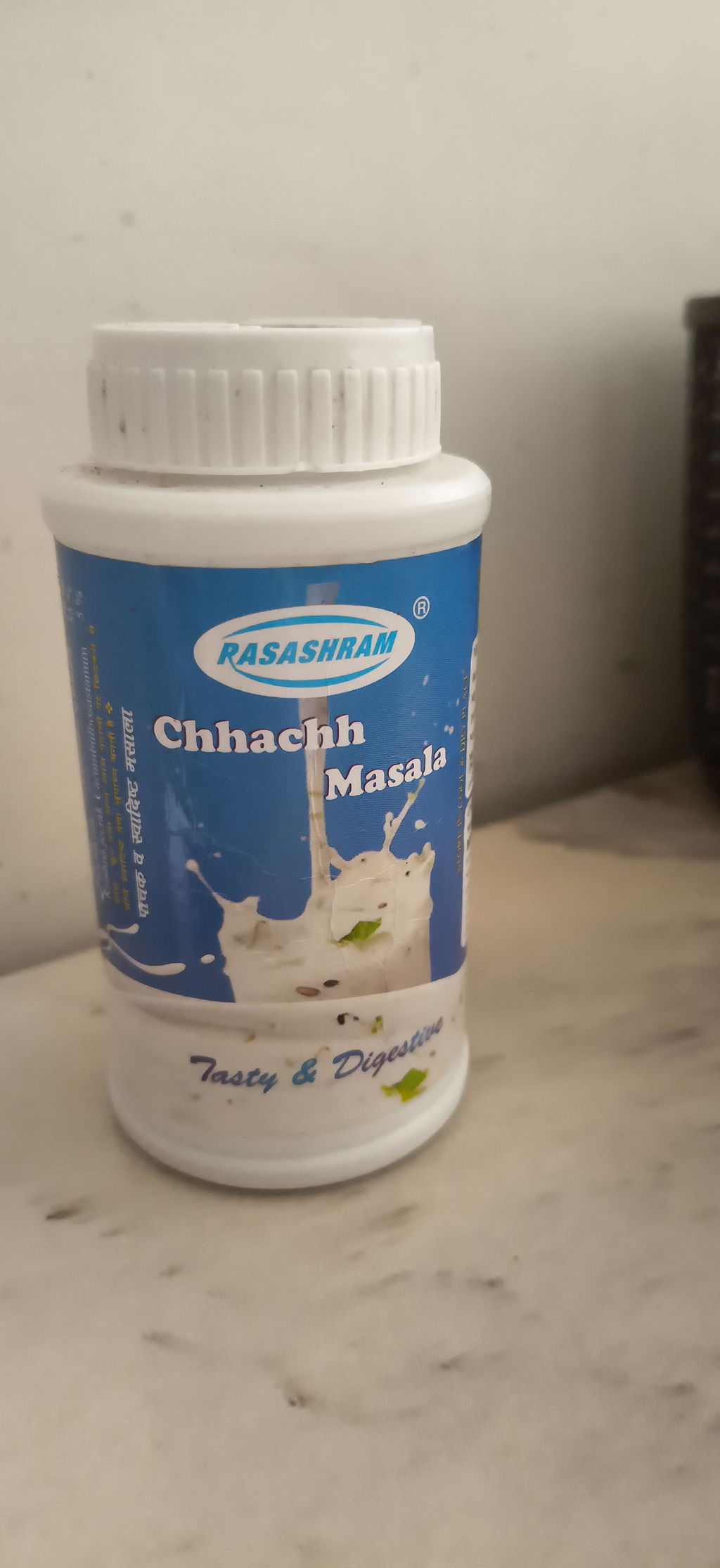
Fast and accurate Delivery. Good Service by the provider.
Excellent Product.... Very Tasty... Superb Quality
Fast and accurate Delivery. Good Service by the provider.