
Riddhish Herbals
Sunth Yavkut (Dry Ginger, Coarse Cut) – Zingiber officinale – Riddhish Herbals – 100g
Sunth Yavkut (Dry Ginger, Coarse Cut) – Zingiber officinale – Riddhish Herbals – 100g
Couldn't load pickup availability
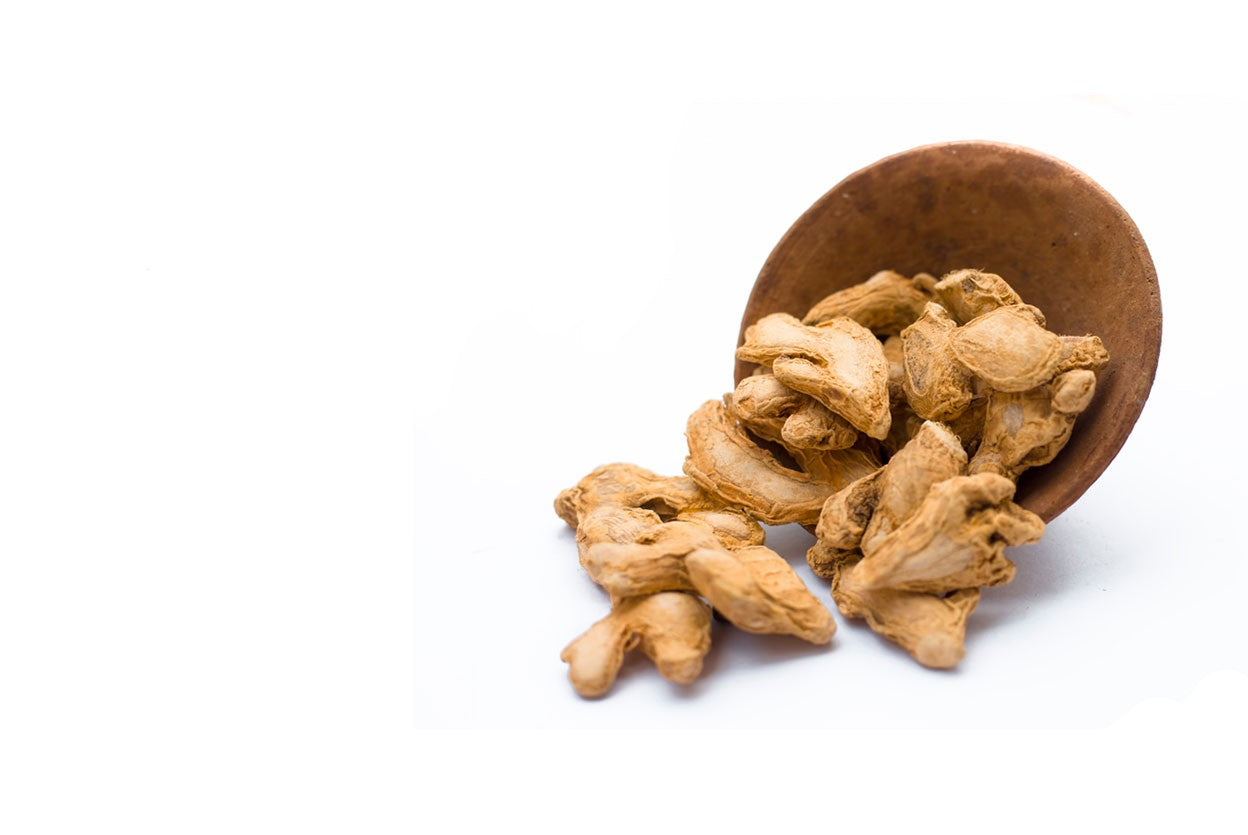
Sunth Yavkut from Riddhish Herbals is 100% dried ginger (Zingiber officinale, Sanskrit Shunthi) in a coarse-cut form intended for decoctions and ginger tea, rather than a fine powder. ‘Yavkut’ means ‘coarsely broken’ — the texture is made for simmering and straining. In Ayurveda, dry ginger is classically described as a Deepana–Pachana herb that kindles digestive fire (Agni), and is honoured as Mahaushadha, ‘the great medicine.’ For a fine powder to mix directly into drinks, see Riddhish Herbals' Sunth Powder. Each pack is genuine, bill-provided material from a doctor-guided store operating since 2015.
About Sunth Yavkut (Dry Ginger, Coarse Cut)
Dry ginger comes in two useful textures. A fine Churna dissolves straight into warm water or milk; a coarse Yavkut is the grade you simmer and strain to make a fresh decoction or a proper cup of ginger tea. The larger pieces release their warmth slowly and evenly during boiling and strain out cleanly, so the drink stays smooth rather than gritty.
Yavkut vs Powder — which to choose: both are the same herb; only the cut differs. Choose Yavkut (coarse) when you simmer and strain — ginger tea, Kwaths and household decoctions. Choose Sunth Powder (fine) when you stir the ginger directly into warm water, milk, honey or recipes without straining. Many households keep both.
Traditional Ayurvedic Importance
Few herbs carry the standing that Shunthi holds in classical literature. The Bhavaprakasha Nighantu (Haritakyadi Varga) describes dry ginger's pungent taste (Katu Rasa), hot potency (Ushna Virya) and sweet post-digestive effect (Madhura Vipaka), alongside its Deepana and Pachana qualities — the kindling of digestive fire and support of comfortable digestion. Tradition honours it as Mahaushadha, the great medicine, and Vishvabheshaja, the universal remedy.
A coarse decoction of dry ginger is one of the oldest and simplest preparations in the Ayurvedic household, valued for balancing Kapha and Vata and for supporting seasonal wellbeing.
Key Features
- Coarse cut for brewing: the right grade for decoctions and ginger tea — simmers evenly and strains clean, unlike a fine powder.
- Single-herb purity: 100% dried ginger (Zingiber officinale), no added colour, preservatives or fillers.
- Classically documented: described in the Bhavaprakasha Nighantu (Haritakyadi Varga) as a Deepana–Pachana herb; honoured as Mahaushadha, ‘the great medicine,’ and Vishvabheshaja, ‘the universal remedy.’
- Warming by nature: Ushna Virya (hot potency), traditionally valued for Kapha and Vata balance.
- Generous 100g pack: a good quantity for regular brewing.
- GMP-, ISO 9001:2015- and HACCP-certified manufacturer: made by Panchamrut Herbals, certified to GMP, ISO 9001:2015 and HACCP standards, Mfg. Lic. GA/1762.
- Genuine, doctor-guided sourcing: bill provided with every pack; a store trusted since 2015.
Research on the Constituents
◆ A systematic review of clinical trials found that ginger, taken in divided daily amounts, was associated with relief of nausea and general digestive comfort in adult subjects under study conditions — (Nikkhah Bodagh M, Maleki I & Hekmatdoost A, 2019 — Food Science & Nutrition, 7(1):96–108). PubMed PMID: 30680163
◆ A double-blind, placebo-controlled randomised trial examined standardised ginger root powder supplementation and gastrointestinal outcomes in healthy adults — (Crichton M, Marshall S, Marx W, Isenring E, Vázquez-Campos X, Dawson SL & Lohning A, 2023 — The Journal of Nutrition, 153(11):3193–3206). DOI: 10.1016/j.tjnut.2023.09.002 · Google Scholar
Results were observed under study conditions. Individual results may vary. This is shared for general educational interest and is not a medical claim. Consult your Ayurvedic physician before use.
Ingredients
| Ingredient (Sanskrit / Botanical) | Plant Part | Form | Quantity |
|---|---|---|---|
| Shunthi (Zingiber officinale) | Dried rhizome | Coarse cut (Yavkut) | 100% |
Single-ingredient composition; no other ingredients. Label-stated data as per the current listing, consistent with the sibling Sunth Powder listing.
How to Use
As directed by your Ayurvedic physician. To brew a decoction, simmer about ½ to 1 teaspoon of Sunth Yavkut in 1.5 cups of water until it reduces to roughly one cup, then strain and sip warm. For ginger tea, add a small quantity while boiling your tea and strain as usual. Anupan (vehicle): warm water is the everyday choice; a little honey, added after the decoction has cooled slightly, makes a warming morning drink.
Who Can Use It
Suitable for most adults as part of a balanced daily routine and as a brewing spice. If you are pregnant, lactating, taking any medication (especially blood-thinning medicines), or managing any health condition, consult a qualified Ayurvedic physician before regular use. Keep out of reach of children.
Safety Information
Use in moderation as part of a balanced routine. Pungent, heating herbs may not suit those prone to acidity or high Pitta. Consult a qualified Ayurvedic physician before use if pregnant, lactating, on medication, or managing any health condition. Results may vary from person to person.
Storage
Store in a cool, dry place away from direct sunlight. Keep the pack tightly closed in an airtight container to preserve aroma and potency.
Frequently Asked Questions
What is Sunth Yavkut?
Sunth Yavkut is dried ginger (Zingiber officinale) in a coarse cut. ‘Yavkut’ means coarsely broken — the texture made for simmering decoctions and ginger tea, rather than a fine powder you mix in directly.
How is Yavkut different from Sunth Powder?
Same herb, different cut. Yavkut is coarse, for brewing and straining; Sunth Powder is fine, for mixing straight into warm water, milk or recipes. Many households keep both.
Is this product AYUSH or GMP certified?
Panchamrut Herbals, the manufacturer of this product, holds GMP, ISO 9001:2015 and HACCP certification. Good manufacturing practice (GMP) relates to how the product is made; these are not claims about any medical outcome.
Can I take Sunth Yavkut without consulting a doctor?
As a single culinary herb, dry ginger is widely used in everyday cooking and tea. For regular wellness use — and always if you are pregnant, lactating, on medication or managing a health condition — it is best used under the guidance of a qualified Ayurvedic physician.
How do I make a ginger decoction with it?
Simmer about ½ to 1 teaspoon in 1.5 cups of water until it reduces to about one cup, then strain and sip warm. A little honey may be added once it has cooled slightly.
What are the other names for dry ginger?
Sonth, Soonth, Saunth, Sunthi, Shunthi, Nagara, Sukku (Tamil), Chukku (Malayalam), Sonti (Telugu). See the Regional Names table above.
How should I store it?
In a cool, dry place away from sunlight, in an airtight container kept tightly closed to preserve aroma.
Has ginger been studied scientifically?
Yes — dry ginger has been examined in peer-reviewed clinical research for its traditionally recognised digestive qualities (Nikkhah Bodagh et al., 2019, Food Science & Nutrition; Crichton et al., 2023, Journal of Nutrition). Results were observed under study conditions; individual results may vary.
Is it available at Riddhish Herbals?
Yes — in stock at riddhishherbals.com and at our Gujarat retail stores, with pan-India delivery and a proper bill, doctor-guided selection since 2015.
Regional Names & Spelling Variants
| Language | Name |
|---|---|
| Local / common name | Sunth Yavkut / Sonth Yavkut (highlighted) |
| Sanskrit | शुण्ठी · नागर · विश्वभेषज — Shunthi · Nagara · Vishvabheshaja (Mahaushadha) |
| Hindi | सोंठ यवकूट — Sonth Yavkut |
| Gujarati | સૂંઠ યવકૂટ — Sunth Yavkut |
| Marathi | सुंठ यवकूट — Sunth Yavkut |
| Bengali | শুকনো আদা যবকুট — Shukno Ada Yavkut |
| Tamil | சுக்கு யவகுட் — Sukku Yavakut |
| Telugu | సొంటి యవకుట్ — Sonti Yavakut |
| Kannada | ಶುಂఠಿ ಯವಕುಟ — Shunthi Yavakut |
| Malayalam | ചുക്ക് യവകുട് — Chukku Yavakut |
| English + Botanical + part | Dry Ginger (Coarse Cut) — Zingiber officinale — dried rhizome |
| Opportunistic — Punjabi | ਸੁੰਠ ਯਵਕੁਟ — Sunth Yavkut |
| Opportunistic — Odia | ଶୁଣ୍ଠି ୯ବକୁଟ — Shunthi Yavkut |
| Opportunistic — Urdu | سونٹھ یواکُٹ — Sonth Yavkut |
| Romanised search variants | Sunth Yavkut, Sonth Yavkut, Yavakut, dry ginger coarse cut, ginger for decoction, ginger tea cut, Sunthi, Shunthi, Sukku, Chukku |
| Common misspellings | Saunth Yavkut, Soonth Yavkut, Yavkoot |
Related at Riddhish Herbals
Ginger (Zingiber officinale) ingredient guide · Sunth Powder (Dry Ginger, fine) · Trikatu Churna · Ayurvedic Raw Herbs & Materials · Digestion Improvement
રીધ્ધીશ હર્બલ્સ — ગુજરાતનો વિશ્વાસપાત્ર આયુર્વેદિક સ્ટોર, જ્યાં સાચી સલાહ અને genuine Ayurvedic products એક જ જગ્યાએ મળે છે.