



Riddhish Herbals
Pratirakshak Ukalo Dry | Ayurvedic Kwath (Kadha) | Riddhish Herbals | 100g
Pratirakshak Ukalo Dry | Ayurvedic Kwath (Kadha) | Riddhish Herbals | 100g
Couldn't load pickup availability
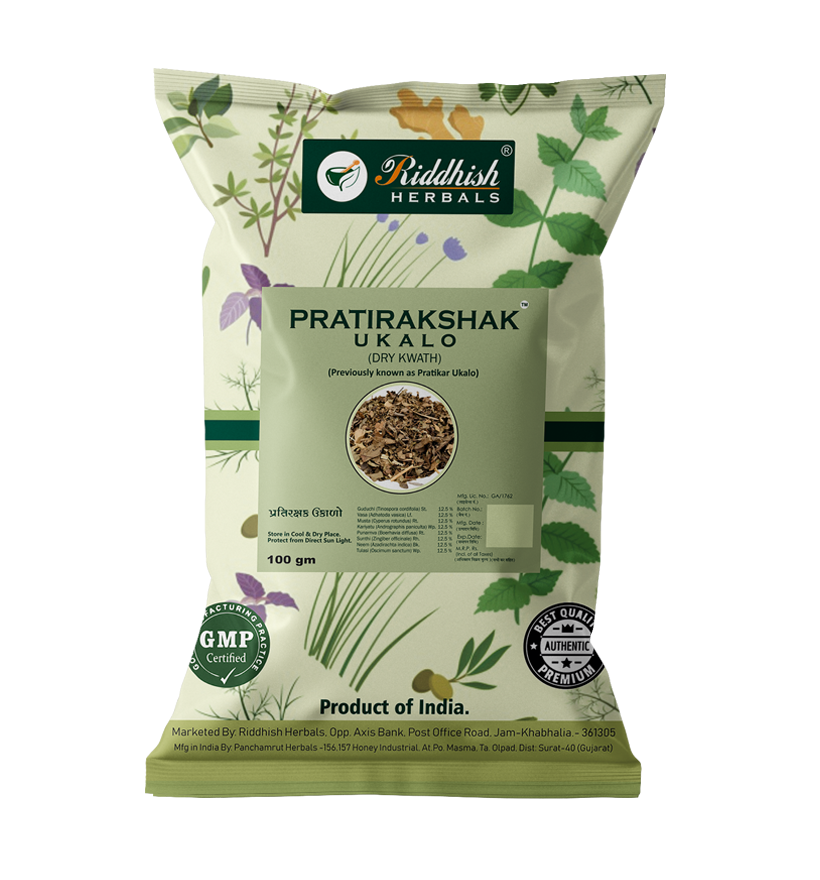
Pratirakshak Ukalo Dry by Riddhish Herbals is a dry Ayurvedic kwath, an ukalo, in a 100 gm pack: a coarse mix of eight herbs in equal parts, 12.5% each, namely Guduchi (Giloy), Vasa, Musta, Kariyatu, Punarnava, Sunthi, Neem and Tulasi. It is simmered in water and strained to make a traditional warm herbal ukalo for seasonal wellness, taken to support respiratory and throat comfort. Dose: As directed by the Ayurvedic physician. Supplied by Riddhish Herbals, Gujarat’s Ayurvedic store since 2015, with a bill on every order.
About Pratirakshak Ukalo Dry and Its Traditional Ayurvedic Importance
Ukalo (also written ukado) is the Gujarati word for a warm herbal decoction, the kadha or kwath of Hindi and Sanskrit. The Kwatha is one of the five basic forms of Ayurvedic preparation (Pancha Vidha Kashaya Kalpana) described in the Sharangadhara Samhita, in which coarse herbs are simmered in water and strained. Pratirakshak Ukalo Dry is a Riddhish Herbals proprietary formulation rather than a single classical recipe, supplied as dry, coarse herbs so the ukalo can be freshly prepared at home. It was earlier sold as Pratikar Ukalo.
Ayurveda gives close attention to the turn of the seasons (Ritucharya). The Charaka Samhita describes the rainy season (Varsha) as a time when digestion (Agni) tends to be weaker and Vata is easily disturbed. Kapha, which Ayurveda traditionally places in the chest (Ura) and throat (Kantha), is also given attention as the seasons turn. Warm, light preparations of bitter and pungent herbs have long been part of household practice at this time. Pratirakshak Ukalo brings eight such herbs together in equal parts:
- Guduchi (Giloy): called Amrita in the classical Nighantus; Tikta and Kashaya in taste, and traditionally regarded as balancing all three doshas.
- Vasa (Adusa): Tikta and Kashaya, cooling (Sheeta) in potency, and long valued in Ayurveda for the chest and breath.
- Tulasi (holy basil): a warming (Ushna), pungent and bitter herb, Kapha- and Vata-balancing, traditionally taken in warm drinks for throat comfort.
- Kariyatu (Kalmegh) and Neem (Nimba): two strongly bitter (Tikta) herbs, traditionally regarded as balancing Kapha and Pitta.
- Musta (Nagarmoth) and Sunthi (dry ginger): described as Deepana and Pachana, kindling and supporting Agni; Sunthi is called Vishwabheshaja in the classical texts.
- Punarnava: a classical herb of the Nighantus, Madhura, Tikta and Kashaya in taste, completing the formula.
Because it combines several bitter and warming herbs, Pratirakshak Ukalo Dry is best taken as your Ayurvedic doctor or Vaidya advises, who can decide the quantity, how long to continue and which diet should go with it.
Key Features
- Traditional eight-herb ukalo: Guduchi, Vasa, Musta, Kariyatu, Punarnava, Sunthi, Neem and Tulasi.
- Equal-part formula: each of the eight herbs at 12.5%.
- Seasonal-wellness tradition: a warm herbal kwath for the change of seasons, taken to support respiratory and throat comfort.
- Freshly prepared: dry, coarse herbs simmered in water and strained at home, so each cup is made fresh.
- Named plant parts: Guduchi stem, Vasa leaf, Musta and Punarnava root, Sunthi rhizome, Neem bark, and Kariyatu and Tulasi whole plant.
- Riddhish Herbals own brand: marketed by Riddhish Herbals; manufactured by Panchamrut Herbals, a GMP-, ISO 9001:2015- and HACCP-certified manufacturer, Mfg. Lic. No. GA/1762.
- Genuine and billed: 100 gm pack, supplied by Riddhish Herbals since 2015, with a bill on every order and pan-India delivery.
Composition
Pratirakshak Ukalo Dry is a coarse mix of the following eight herbs in equal parts:
| Ingredient | Botanical name | Part | Quantity |
|---|---|---|---|
| Guduchi | Tinospora cordifolia | Stem | 12.5% |
| Vasa | Adhatoda vasica | Leaf | 12.5% |
| Musta | Cyperus rotundus | Root | 12.5% |
| Kariyatu | Andrographis paniculata | Whole plant | 12.5% |
| Punarnava | Boerhavia diffusa | Root | 12.5% |
| Sunthi | Zingiber officinale | Rhizome | 12.5% |
| Neem | Azadirachta indica | Bark | 12.5% |
| Tulasi | Ocimum sanctum | Whole plant | 12.5% |
Pack: 100 gm · Form: Dry kwath (coarse herbs for decoction) · Category: Ayurvedic proprietary medicine · Mfg. Lic. No.: GA/1762 · Manufactured by Panchamrut Herbals. Marketed by Riddhish Herbals. Product of India.
How to Use
Dose: As directed by the Ayurvedic physician.
In traditional practice, a kwath is prepared by simmering the coarse herbs in water until the liquid reduces, then straining it and sipping it warm, with a light, easily digested diet kept alongside during the change of seasons. Your physician will advise on the quantity, the best time of day and how long to continue.
Safety, Storage & Pack Information
Use under the guidance of a qualified Ayurvedic physician. Consult your physician before use, especially if you are pregnant, lactating, taking any medication, or managing any medical condition. For children, use only as directed by a physician. Keep out of reach of children. Results may vary from person to person.
Storage: Store in a cool and dry place. Protect from direct sunlight. Close the pack well after each use.
Pack: 100 gm. Check the batch number, manufacturing date and expiry date on your pack before use.
Ingredient Names in Hindi, Gujarati and Sanskrit
| Ingredient | Hindi | Gujarati | Sanskrit | English — Botanical |
|---|---|---|---|---|
| Guduchi | Giloy | Galo | Guduchi | Indian tinospora — Tinospora cordifolia |
| Vasa | Adusa | Ardusi | Vasa | Malabar nut — Adhatoda vasica |
| Musta | Nagarmotha | Nagarmoth | Musta | Nut grass — Cyperus rotundus |
| Kariyatu | Kalmegh | Kariyatu | Kalamegha | Green chiretta — Andrographis paniculata |
| Punarnava | Punarnava | Satodi | Punarnava | Spreading hogweed — Boerhavia diffusa |
| Sunthi | Sonth | Sunth | Shunthi | Dry ginger — Zingiber officinale |
| Neem | Neem | Limdo | Nimba | Neem — Azadirachta indica |
| Tulasi | Tulsi | Tulsi | Tulasi | Holy basil — Ocimum sanctum |
Also searched as: Pratirakshak Ukado, Pratirakshak Ukalo Dry, Pratiraxak Ukalo, Pratirakshak Kadha, Pratirakshak Kwath, Pratikar Ukalo, Pratikar Ukado, Dry Ukalo, Dry Kwath, Herbal Kadha Mix, Ayurvedic Kwath Powder, પ્રતિરક્ષક ઉકાળો, Pratirakshak Ukalo Riddhish Herbals.
Frequently Asked Questions
What is Pratirakshak Ukalo Dry?
Pratirakshak Ukalo Dry (પ્રતિરક્ષક ઉકાળો) by Riddhish Herbals is a dry kwath, or ukalo: a coarse mix of eight Ayurvedic herbs in equal parts, 12.5% each, that is simmered in water and strained to make a warm herbal decoction. The herbs are Guduchi, Vasa, Musta, Kariyatu, Punarnava, Sunthi, Neem and Tulasi. It is a traditional warm ukalo for seasonal wellness, taken to support respiratory and throat comfort. It was earlier sold as Pratikar Ukalo. Pack: 100 gm.
What does Pratirakshak Ukalo Dry contain?
Guduchi (Tinospora cordifolia) stem, Vasa (Adhatoda vasica) leaf, Musta (Cyperus rotundus) root, Kariyatu (Andrographis paniculata) whole plant, Punarnava (Boerhavia diffusa) root, Sunthi (Zingiber officinale) rhizome, Neem (Azadirachta indica) bark and Tulasi (Ocimum sanctum) whole plant, 12.5% each.
How do I take Pratirakshak Ukalo Dry?
Dose: As directed by the Ayurvedic physician. In traditional practice, the coarse herbs are simmered in water until the liquid reduces, then strained and sipped warm. Your physician will advise on the quantity, the best time of day and how long to continue.
Do I need a doctor’s guidance to take it?
Yes. As a multi-herb Ayurvedic kwath, it is best taken under the guidance of a qualified Ayurvedic physician, who can match the dose and duration to your constitution, the season and any medicines you already take.
Is Pratirakshak Ukalo used for respiratory and throat comfort?
In Ayurveda, a warm ukalo of herbs such as Vasa, Tulasi, Guduchi and Sunthi is traditionally taken during the change of seasons to support respiratory and throat comfort, alongside a light, warm diet. Use it under the guidance of an Ayurvedic physician. Results may vary from person to person.
How is the dry ukalo different from the liquid?
Pratirakshak Ukalo Dry is a coarse herb mix that is simmered in water and strained at home, so each cup is freshly prepared. Riddhish Herbals also stocks Pratirakshak Ukalo Liquid, a ready-to-use liquid extract with its own composition and dose. Take the form your physician has advised.
Can I take it during pregnancy or while breastfeeding?
Please consult your physician before use if you are pregnant or breastfeeding, and use it only under their guidance. For children, use only as directed by a physician.
Who manufactures and markets Pratirakshak Ukalo Dry?
Manufactured by Panchamrut Herbals (Mfg. Lic. No. GA/1762). Marketed by Riddhish Herbals, Khambhalia, Gujarat.
Is this product GMP certified?
Panchamrut Herbals, the manufacturer of this product, holds GMP, ISO 9001:2015 and HACCP certification. Good manufacturing practice (GMP) relates to how the product is made; these are not claims about any medical outcome.
How do I know this is the genuine pack?
A genuine pack is a light-green pouch with a herb illustration and the Riddhish Herbals logo at the top. It carries the name PRATIRAKSHAK UKALO (Dry Kwath) with “Previously known as Pratikar Ukalo”, “100 gm”, the eight-herb composition at 12.5% each, Mfg. Lic. No. GA/1762, a GMP Certified mark, and its own batch number, manufacturing date and expiry date. Every order from Riddhish Herbals ships with a proper bill, and our team can help you confirm the pack you received.
What are the other names of Pratirakshak Ukalo and its herbs?
The product is also written Pratirakshak Ukado, Pratiraxak Ukalo or Pratirakshak Kadha, and was earlier sold as Pratikar Ukalo. Ukalo is the Gujarati word for a warm herbal kwath or kadha. Among its herbs, Guduchi is Giloy or Galo, Vasa is Adusa or Ardusi, Musta is Nagarmoth, Kariyatu is Kalmegh, Sunthi is Sunth or dry ginger, Neem is Nimba or Limdo, and Tulasi is Tulsi or holy basil.
Related Products
- Pratirakshak Ukalo Liquid 200ml — Riddhish Herbals
- Sunth Powder (Dry Ginger) 50g — Riddhish Herbals
- Trikatu Churna 50g — Riddhish Herbals
- Yastimadhu Powder (Mulethi) 100g — Riddhish Herbals
About Riddhish Herbals
Manufactured by Panchamrut Herbals. Marketed by Riddhish Herbals. Riddhish Herbals has supplied genuine Ayurvedic products across India since 2015. This is a traditional Ayurvedic product; information on this page is educational and is not a substitute for professional medical advice.
Since 2015 · Genuine Products · Bill Provided · Doctor-Guided Selection · 4000+ Ayurvedic Products · 130+ Trusted Brands · Pan-India Delivery


